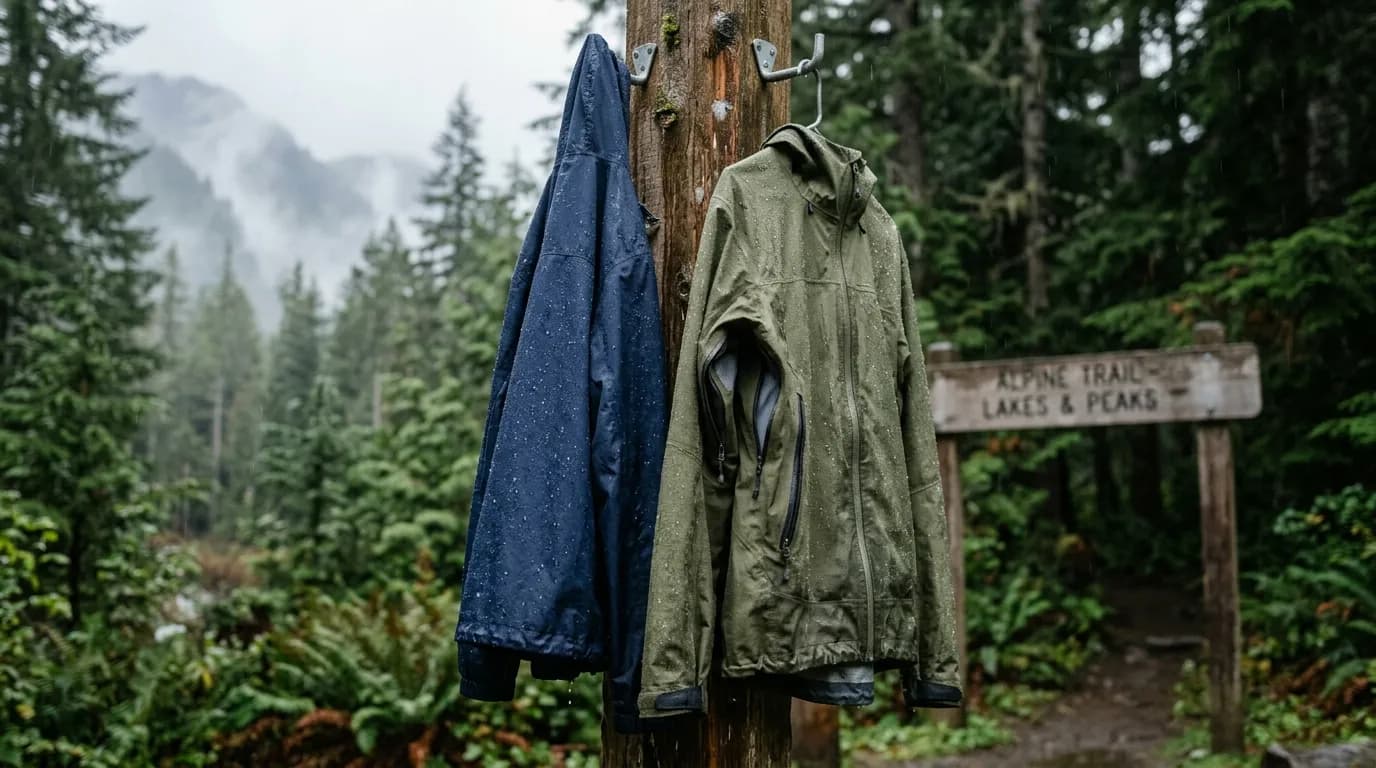
Rain jackets sit at the intersection of hope and physics. You hope to stay dry; physics says moving bodies produce sweat and clouds produce water. The market responds with fifty-dollar shells and four-hundred-dollar monuments to taped seams. Day hikers rarely need the monument. They do need honest protection when the forecast wobbles, and a jacket they will actually throw in the pack instead of leaving in the closet because it feels like a garbage bag.
This guide compares cheap versus premium rain jackets for same-day trails: what you pay for, where budget gear suffices, when upgrade improves comfort enough to matter, and how to care for either so it lasts. Plan wet-day strategy with rainy day hike plan, and frame the purchase against broader gear math in rent vs buy outdoor gear for beginners.
What a rain jacket must do on a day hike
Minimum job: block wind and shed enough rain that your insulating layers stay functional until you reach shelter or the car. Secondary job: allow enough moisture escape that you are not swimming in your own sweat on climbs. Tertiary job: pack small, survive abrasion from pack straps, and hood in a way that lets you see trail markers without turning your head into a tunnel.
Day hikes differ from multi-day trips because duration of exposure is shorter but intensity is spiky: you may hike hard uphill in rain for ninety minutes, then sit still on a cold shuttle ride. Jackets that feel “fine” walking may feel clammy stopped. Premium fabrics often target that climb-and-stop cycle; cheap shells may feel acceptable until you add pack weight and pace.
Neither price tag guarantees wisdom. A premium jacket left home is zero waterproof. A cheap jacket worn beats a flagship in the trunk.
What cheap rain jackets get right
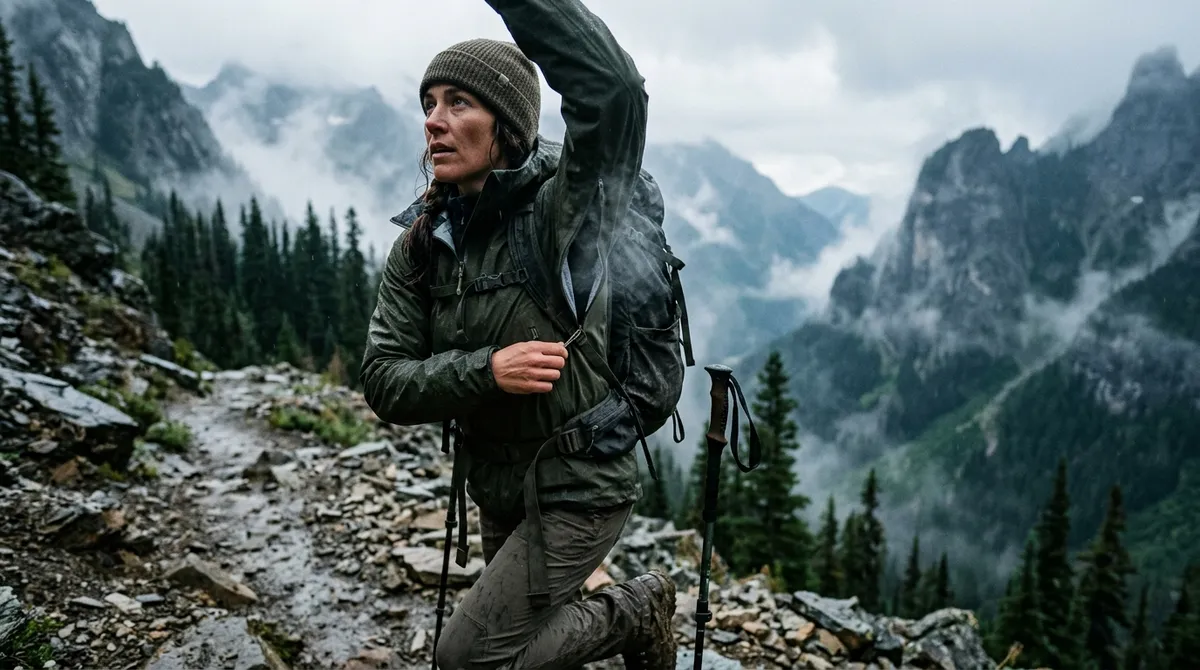
Budget shells around forty to ninety dollars often use 2-layer or 2.5-layer fabrics with DWR coating, non fully taped seams, or simpler construction. For occasional drizzle, short showers, and wind on ridge walks, they work. If you hike primarily in mild climates and treat rain as a reason to turn around early, budget gear matches actual risk.
Cheap jackets also reduce purchase paralysis. Beginners uncertain about commitment to hiking should not start with a flagship shell unless budget is comfortable. Renting or buying affordable rain protection lets you learn your sweat rate and fit preferences before investing.
Weight can be surprisingly low in budget lines because features are stripped: fewer pockets, simpler hoods, less robust face fabric. That aligns with outdoor gear light philosophy when the jacket is truly emergency-grade, not daily-driver grade.
Where cheap shells fall short
Sustained rain exposes weak points: untaped seams leak at shoulders under pack straps, DWR wears off faster, and breathability can collapse into sauna mode on long climbs. Cheap face fabrics may feel crinkly and loud, which sounds trivial until you hike with someone who hates swish noise for six hours.
Durability suffers. Brush, granite benches, and repeated stuffing into packs abrade thin budget nylon. If you hike weekly in wet regions, replacement cost over three years can approach one premium purchase anyway.
What premium rain jackets buy you
Premium shells—often using named membranes and three-layer construction—typically offer more consistent waterproofing, fully taped seams, tougher face fabrics, better hood articulation, and venting options like pit zips. Breathability still has limits; marketing exceeds physics. But the gap between “manageable damp” and “wrung-out base layer” often narrows on long wet ascents.
Fit and detail work improve too: laminated cuffs, chin guards that do not sandpaper your neck, hoods that move with helmets or hats, and quieter fabrics that feel less like wearing a tarp. For hikers who regularly commit to full-day routes in maritime climates, those details accumulate into less misery.
Premium does not mean indestructible. Membranes still need cleaning to maintain breathability. DWR still wears. Price buys margin, not magic.
Waterproof ratings and the numbers game
Manufacturers cite hydrostatic head numbers—how much water pressure fabric withstands before leaking. Higher numbers suggest better rain resistance. Real-world leakage often happens at seams, zippers, and soaked outer fabric stopping beading long before membrane fails.
For day hiking, focus on construction quality you can inspect: Are shoulder and hood seams taped? Does the zipper have a storm flap? Does water bead on a new jacket and still bead after ten outings? Numbers on hangtags matter less than maintenance and fit.
Breathability ratings are even murkier. Pit zips and layering discipline often beat marginal MVTR differences you cannot feel. If you run hot, prioritize vents and a looser fit over chasing the highest breathability score.
Fit: the hidden price divider
Expensive jackets sometimes fit better because patterning includes more sizes and articulation for reaching uphill. Cheap jackets in “unisex” cuts may strangle shoulders or balloon at waist, causing flapping and wet contact zones under pack hip belts.
Try jackets with your typical midlayer underneath. Raise arms overhead. Simulate pole grip. Hood should seal without blocking peripheral vision when you look down at roots. Sleeves should cover wrists when arms forward without drowning your hands.
Women’s-specific and tall sizes solve problems generic cuts ignore. A moderately priced jacket that fits beats a premium tent on your shoulders.
When cheap is enough
- You hike fewer than ten wet days per year and can choose fair-weather windows.
- Routes bail out quickly to car or shelter.
- You already turn back when sustained rain arrives.
- Your climate rain is brief showers, not horizontal Pacific storms.
- You are testing whether hiking sticks before building a dream kit.
In those cases, a budget shell plus disciplined rainy-day planning from rainy day hike plan is rational. Spend saved money on footwear or navigation skills that matter every hike.
When premium pays off
- You hike regularly in wet climates with multi-hour exposure.
- Your routes lack quick bailout once committed to ridge sections.
- You run cold or slow and spend long minutes stopped in rain.
- Pack weight and abrasion are high; you need tougher face fabric.
- You value comfort enough to hike more often instead of skipping muddy seasons.
Here premium is less about status and more about cumulative hours not spent miserable. If misery makes you skip trails half the year, a better shell may be cheaper per happy mile than therapy snacks.
The middle path: good-enough midrange
Many day hikers land between extremes: hundred-and-fifty-dollar range jackets with taped critical seams, decent hoods, pit zips, and reputable membranes from prior seasons’ closeouts. Shop last year’s colors, outlet racks, and reputable used gear if hygiene and return policies allow. Rain shells are one category where yesterday’s model often equals today’s performance.
Consider rent vs buy outdoor gear for beginners if you hike one wet vacation and then return to a desert home. Renting a quality shell for a week teaches you whether ownership matters in your life.
Care that makes any jacket last
Wash jackets when dirt and oils clog pores—hand-wash or gentle machine per label. Reapply DWR when water stops beading and sheets instead. Store dry, not crammed wet in trunk for a week. Repair small seam tears before they become rivers.
Budget shells die faster when neglected because face fabric is thinner. Premium shells die too if you never wash them and wonder why “this stupid expensive jacket steams.” Maintenance is the great equalizer.
Layering interaction
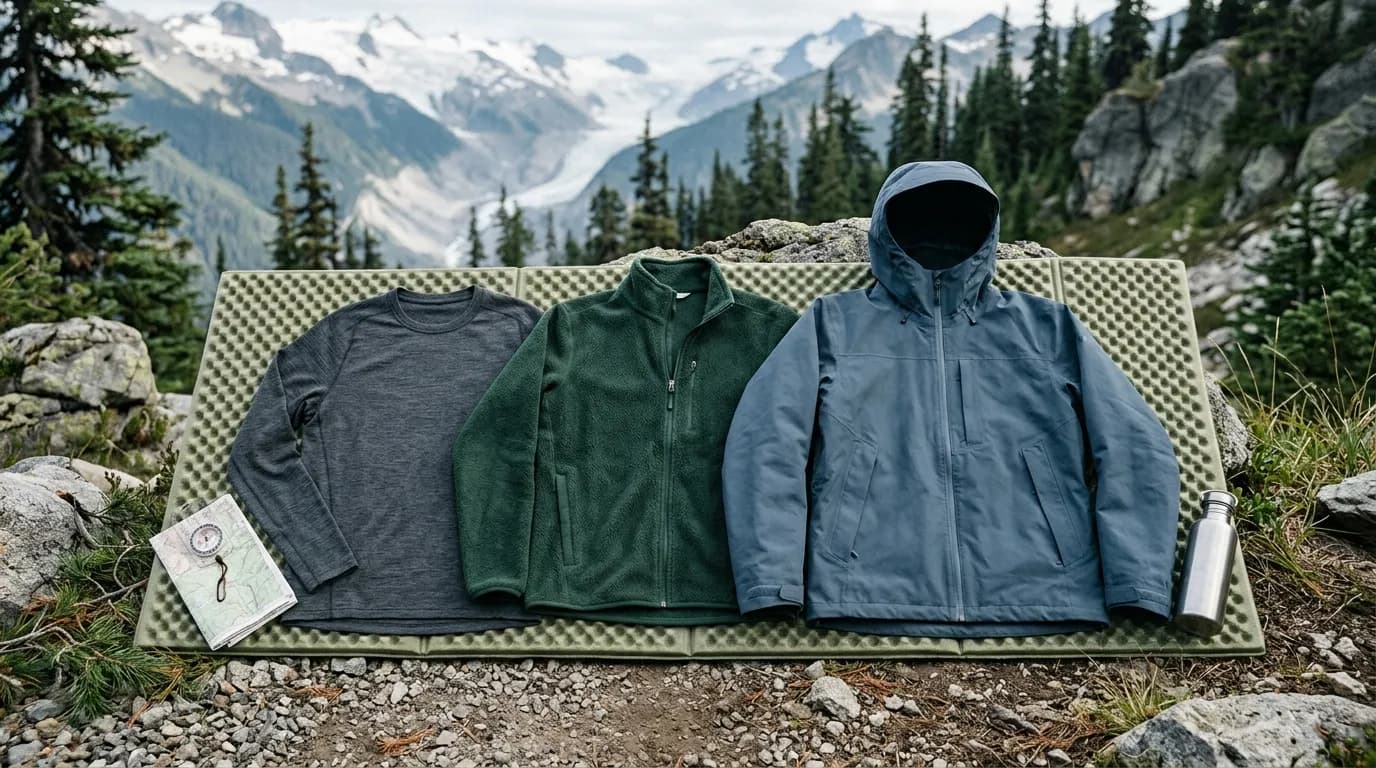
Rain jackets work as part of a system. A drenched cotton base layer defeats any shell. Quick-dry base plus optional midlayer under shell performs better than any membrane alone. Vent by opening front zipper on climbs even in rain if exposure is moderate; staying dry from inside matters.
Pack size: premium three-layer shells sometimes pack larger. If your daypack is fifteen liters, check stuffed size before buying online. A jacket that fits on body but not in pack tends to stay home.
Common mistakes
- Buying premium but skipping midlayer fit test.
- Assuming waterproof means you will not sweat.
- Never re-treating DWR and blaming the membrane.
- Choosing fashion color over hood visibility in photos-only thinking.
- Carrying a cheap emergency poncho with no hood tension in real wind.
- Replacing jacket before fixing cotton layering habits.
- Ignoring pit zips because they look uncool until overheating wins.
Starter plan: pick your tier in one rainy month
Track forecasts for thirty days. Mark hikes you would take in light rain, steady rain, or skip. If skips dominate, budget shell or even durable poncho plus turn-around discipline suffices. If you would go often in steady rain, borrow a midrange or premium shell for two outings before buying.
During those outings, note clammy back feeling, hood visibility, and pack strap leak points. Write three sentences after each hike. Your notes beat review stars.
Trail scenarios where jacket tier shows up fast
Scenario one: forty-minute shower on a forest loop with bailout in twenty minutes. Budget shell, hood up, keep moving—fine. Scenario two: four hours on an exposed ridge with wind-driven rain and no shelter until car. Premium breathability and hood mobility reduce the slow chill that makes descents sloppy. Scenario three: you planned dry weather, clouds build, you turn back at first drop—any packable shell beats none.
Scenario four: bushwhacking after rain through wet brush. Face fabric durability matters more than membrane bragging rights; cheap nylon may fail at elbows after one season of abuse. Scenario five: hiking with kids who move slower on descent. You spend more time in rain stationary; ventilation and fit under midlayer matter because you are not generating heat to dry from inside.
Color, visibility, and photography reality
Bright shells help companions spot you in mist and make trail photos easier to parse. Dark shells look sleek and disappear against wet rock when you set your pack down for a layer change. If you are the person who misplaces gear at every break, bias bright. If you hike solo in hunting seasons where visibility regulations apply locally, know those rules before picking camo-adjacent earth tones.
When to repair versus replace
Small seam leaks at cuff tape sometimes repair with gear seam sealer at home. Delaminating lining bubbles across the back usually mean retirement. Zippers can be replaced by gear repair shops for less than a new jacket if body fabric remains sound. Budget shells often fail at zipper and cuff first; premium shells often fail after years of DWR neglect rather than immediate membrane death. Track repair cost against replacement; emotional attachment to a jacket that leaked on three critical days is expensive in its own way.
Ultralight emergency shells versus daily drivers
Some hikers carry a sub-five-ounce emergency poncho or silnylon smock inside every pack while keeping a sturdier jacket for planned wet days. That split can work if you distinguish “forecast says rain all day” from “might sprinkle after 3 p.m.” Cheap ultralight shells tear on brush; treat them as insurance, not uniform. Premium daily drivers live on your body or top pocket when rain is the main character of the forecast.
Document which jacket you wore on which hike for one season. Patterns emerge: if the emergency shell never left the pack, downgrade its weight; if the daily driver soaked through twice, upgrade construction or maintenance before blaming weather luck.
FAQ
Is a thirty-dollar poncho good enough?
For emergency backup in calm conditions, maybe. Windy ridges and long hours expose poncho limits: flapping, snag risk, poor visibility. Many day hikers carry a poncho as backup inside a pack that primarily holds a real jacket.
Do I need Gore-Tex specifically?
No. Multiple membranes perform well. Compare fit, vents, weight, and price. Brand name matters less than construction and how you maintain the jacket.
How often should I replace a rain jacket?
When leaks appear at seams you cannot repair, when delamination bubbles spread, or when DWR refresh no longer restores beading on heavily abraded areas. Timeline varies from two seasons to a decade depending on use and care.
Are running jackets okay for hiking?
Light running shells excel for pace and minimal pack weight but may lack durability under heavy straps and brush. Fine for fast short routes; less ideal for bushwhacking with a loaded daypack.
Should I size up for layers?
Size for your typical hiking stack: base plus midlayer under shell. Oversizing too much creates flapping and wet contact zones; undersizing restricts movement and vents.
Related reading
Match jacket choice to trip planning in rainy day hike plan, and decide whether to invest or rent via rent vs buy outdoor gear for beginners. The best rain jacket is the one on your back when the sky opens.
Educational gear guidance only. Weather exposure varies; combine proper clothing with sound route decisions.