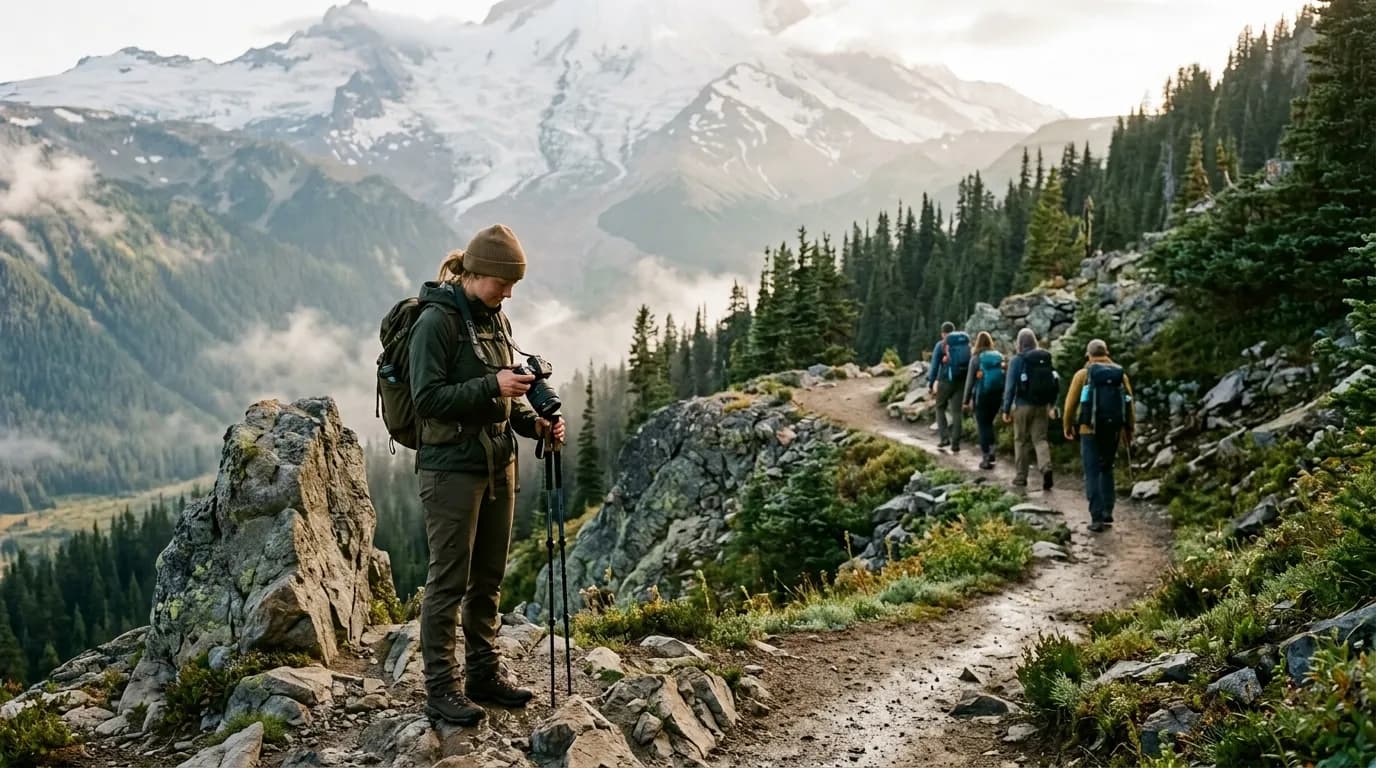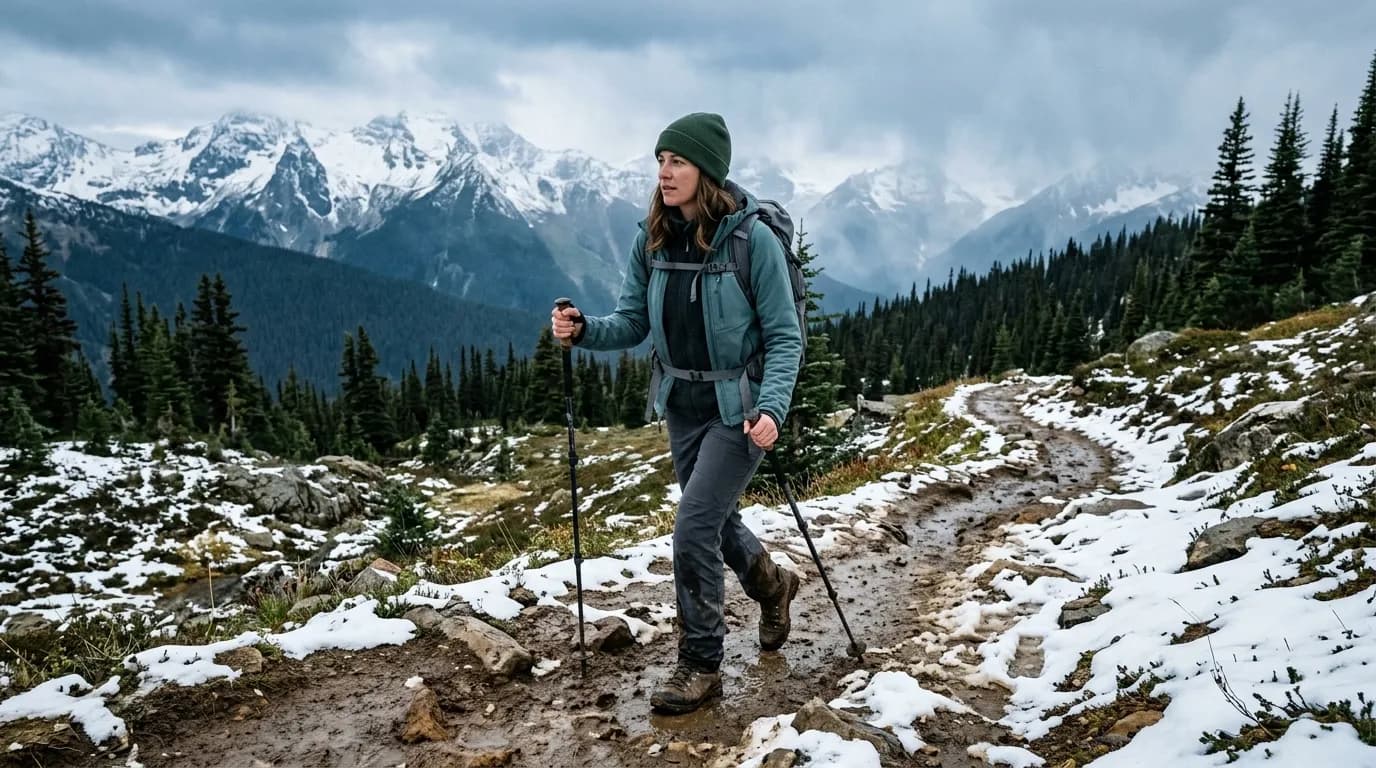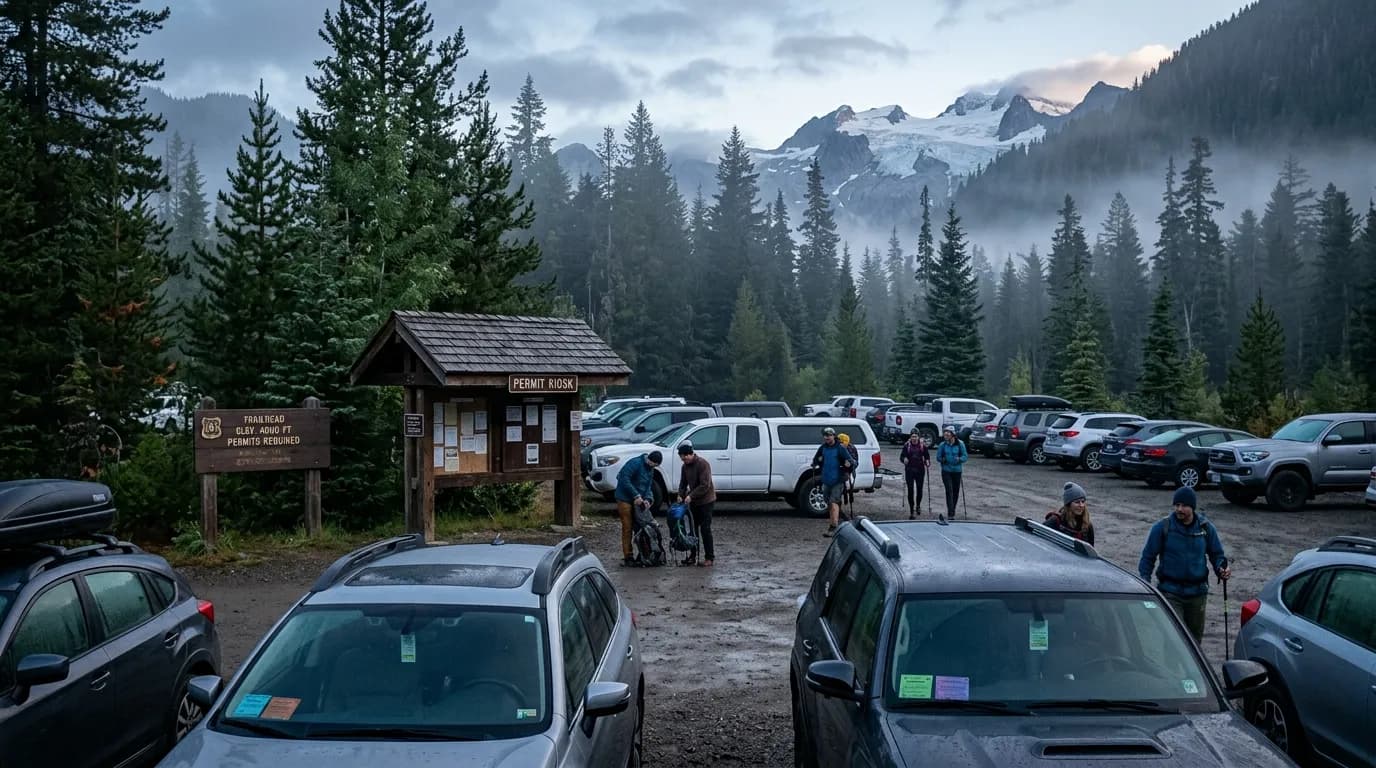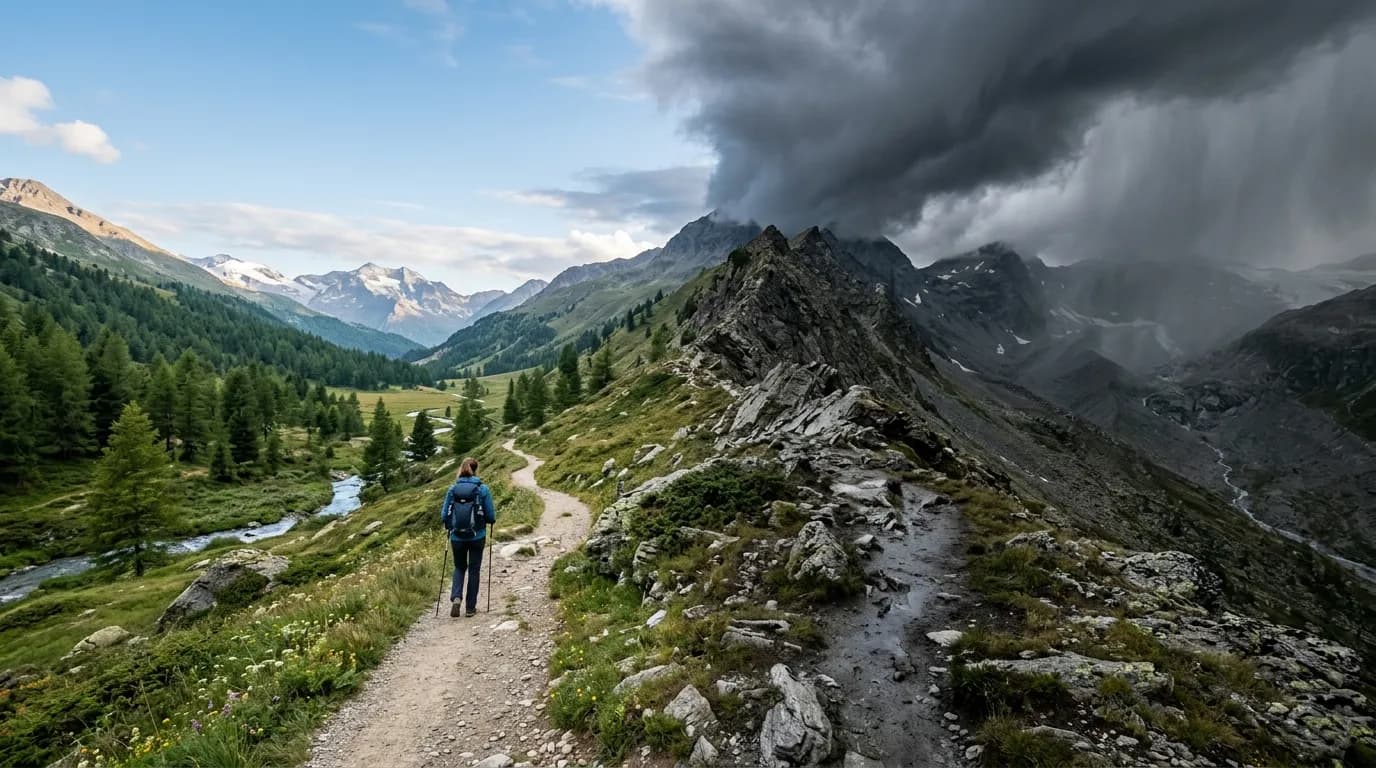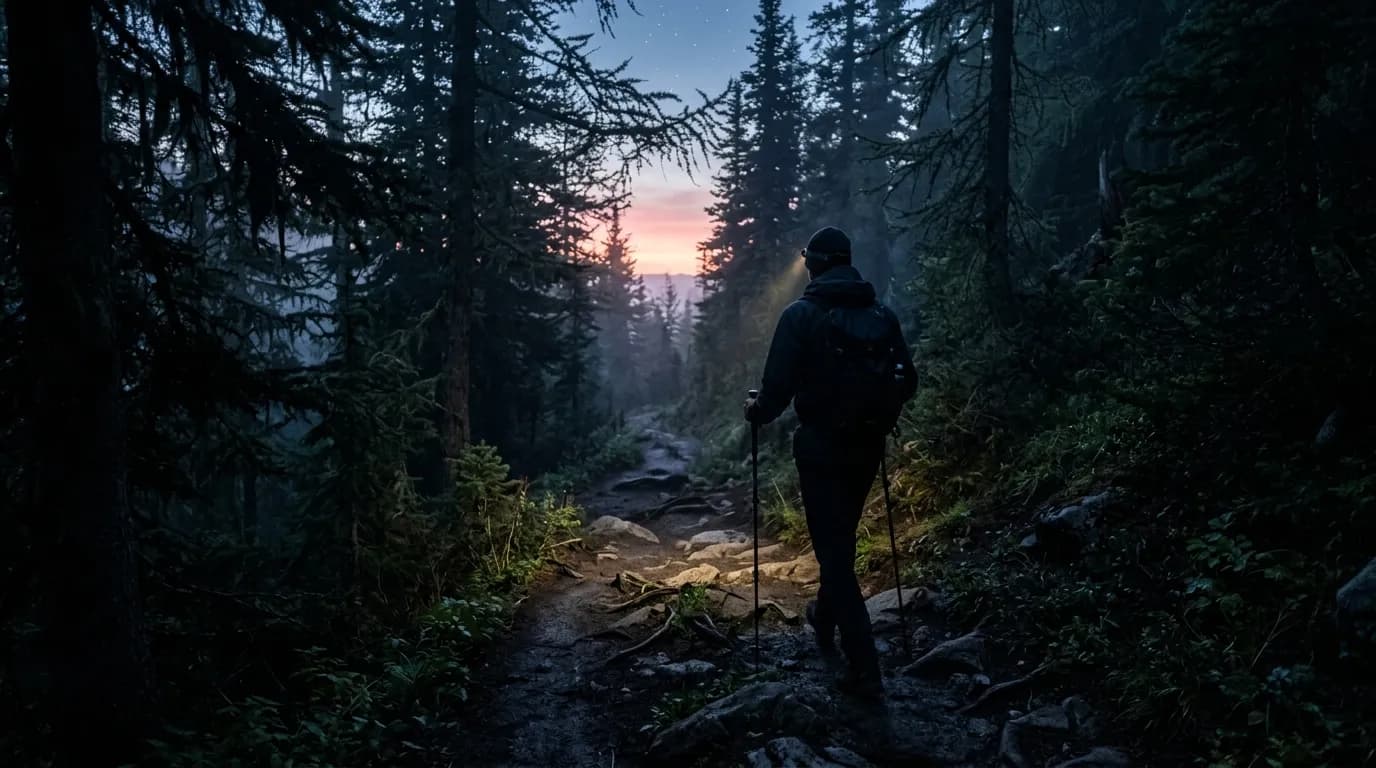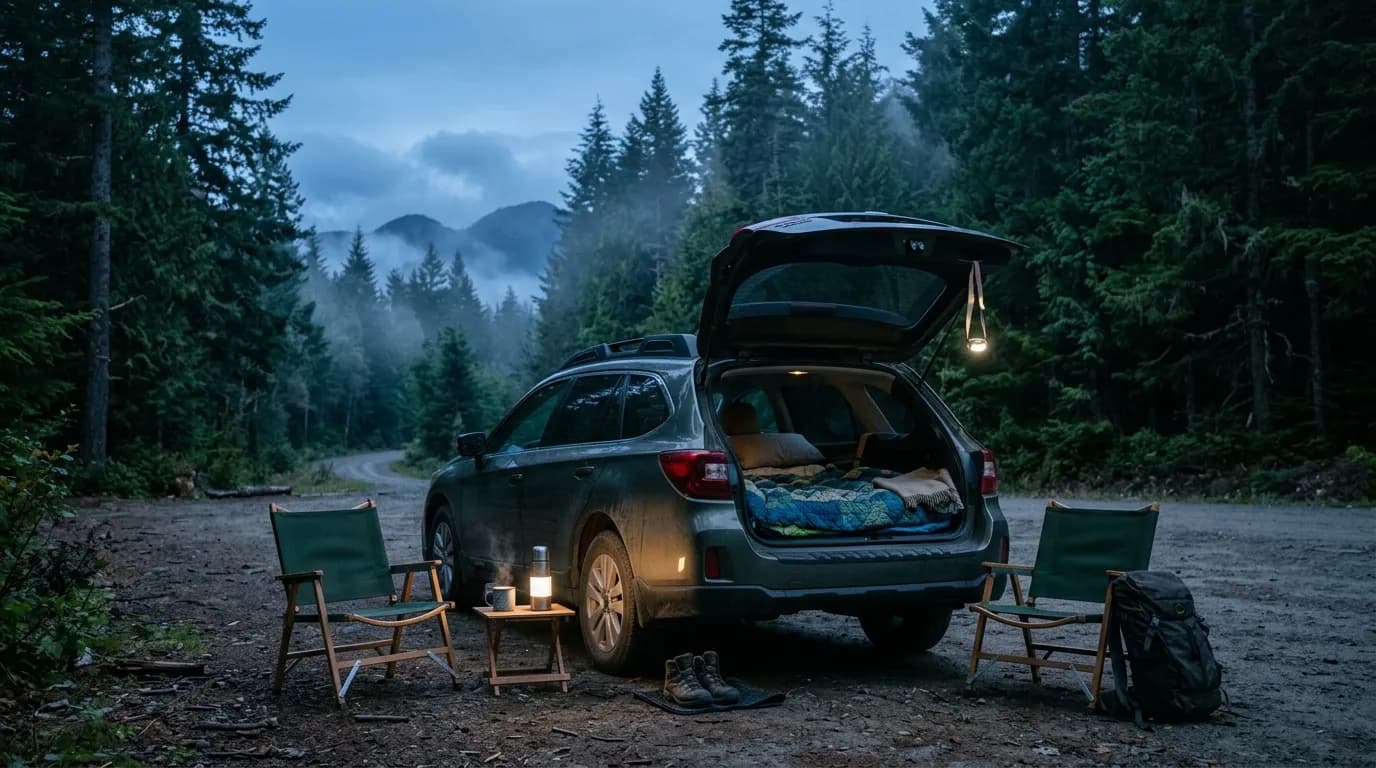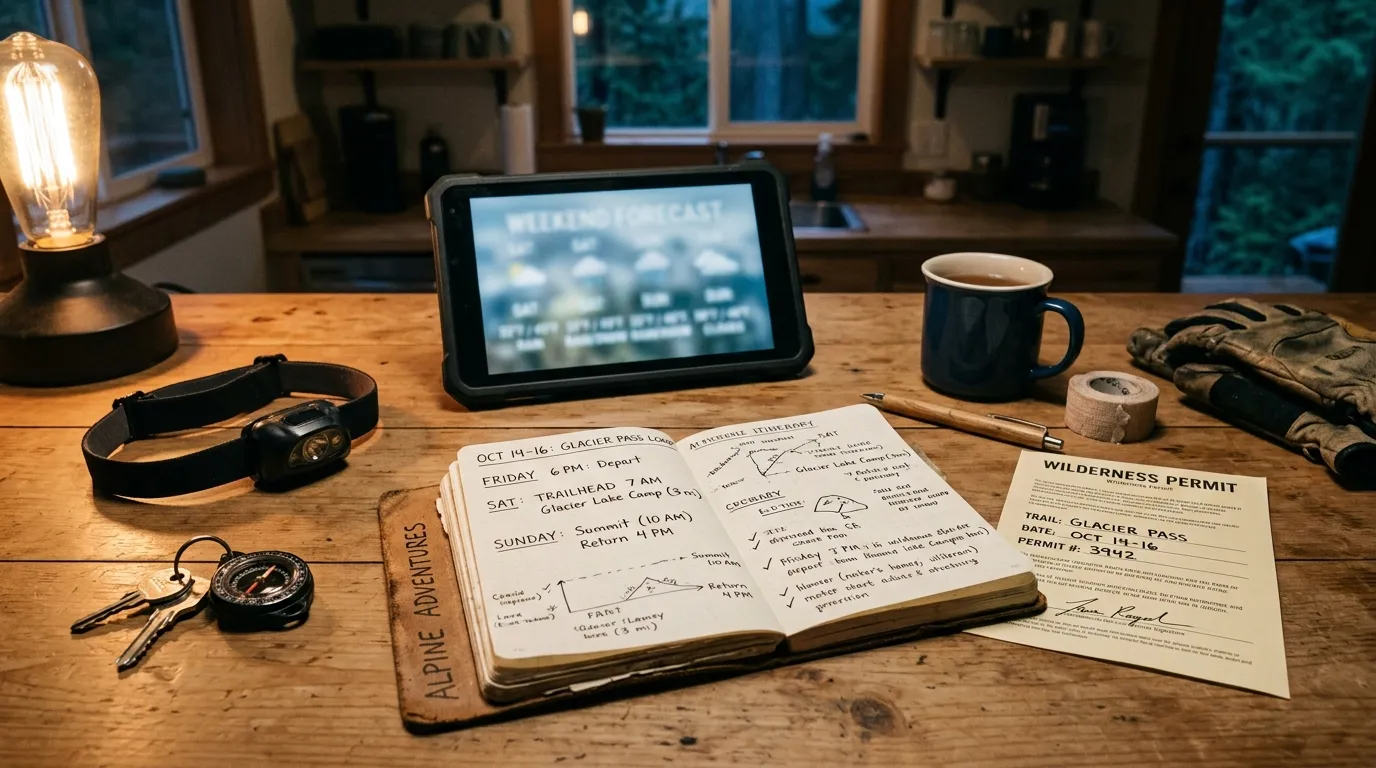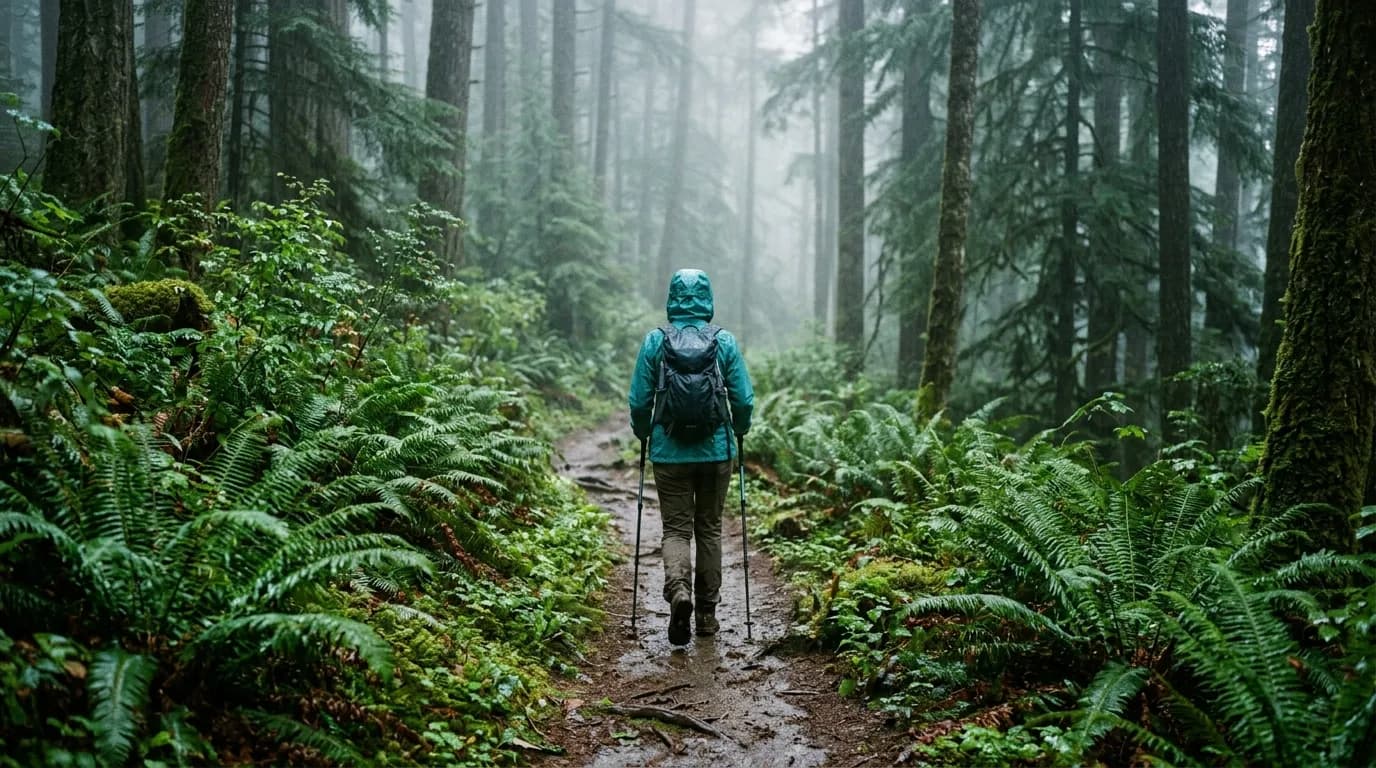
Rain does not have to steal a weekend. It rewrites it. The summit photo might disappear into cloud, but forest rain has its own mood: louder creeks, empty trails, sharper greens, and the small victory of returning to a dry car with warm drinks waiting. The hikes that feel wasted in rain are usually the ones still pretending to be fair-weather summit days—wrong route, wrong layers, wrong expectations. A rainy day hike plan accepts water from the sky and designs a day that still feels intentional.
This guide is for hikers who want to move on wet weekends without ignoring safety. We cover route swaps, gear discipline, pacing and warmth, food and morale, and when rain means postpone instead of push. For shell choices that actually keep you comfortable, read cheap vs premium rain jackets for hiking. For hard stops when rain crosses into hazard, use our hiking weather go/no-go checklist before you leave home.
Reset expectations: what a good rainy day looks like
A successful rainy hike might be a two-hour loop with hot soup afterward, not a tagged summit. Success metrics shift to: stayed warm enough, no slips near edges, group mood intact, gear worked, home without hypothermia shakes. Photos may be fewer; stories can still be good.
Tell the group explicitly: "We are hiking for atmosphere and movement, not peak bagging." That sentence prevents mid-trail arguments when someone wants to push an exposed scramble because "we drove all this way."
Go / no-go in rain specifically
Rain plus warm temps on forest trails with good footing is often go with downgraded miles. Rain plus cold wind above treeline, rising rivers on crossing-heavy routes, or thunderstorms embedded in the front is no-go or strict valley cap—see the full framework in our weather checklist.
Check recent rain totals. Three dry days after a storm differs from rain on already saturated slopes where mudslides or falling branches rise. Local trail reports beat generic weather icons.
Route design for wet days
Choose lower elevation, tree-covered routes with gentle grades. Avoid open ridges, scrambles, and crumbly rock when wet. Prefer loops that let you bail early without long exposed returns. Out-and-backs to a waterfall or lake give a clear turnaround when intensity increases.
Surface matters: rooted forest paths beat clay slick descents. Boardwalks and maintained urban-adjacent trails can shine on rainy weekends when alpine routes should wait. If you must climb, do it early while legs are fresh and descents happen before soil turns to slide.
Rain-friendly route traits
- Continuous tree cover for wind and chill reduction.
- Few or shallow stream crossings without flood sensitivity.
- Wide trail tread; avoid cliff-edge catwalks.
- Short driving distance so a bail home is easy.
- Shelter option: pavilion, visitor center, or large-coverage trees for lunch.
Gear discipline: stay dry where it counts
Rain hiking fails when everything gets wet at once. Prioritize torso and insulation dryness, accept that lower legs may stay damp, and protect pack contents with liners or dry bags. Shell quality matters—compare options in our rain jacket guide—but technique matters too: vent zips before you overheat, add puffy only under shell when stopped, avoid cotton entirely.
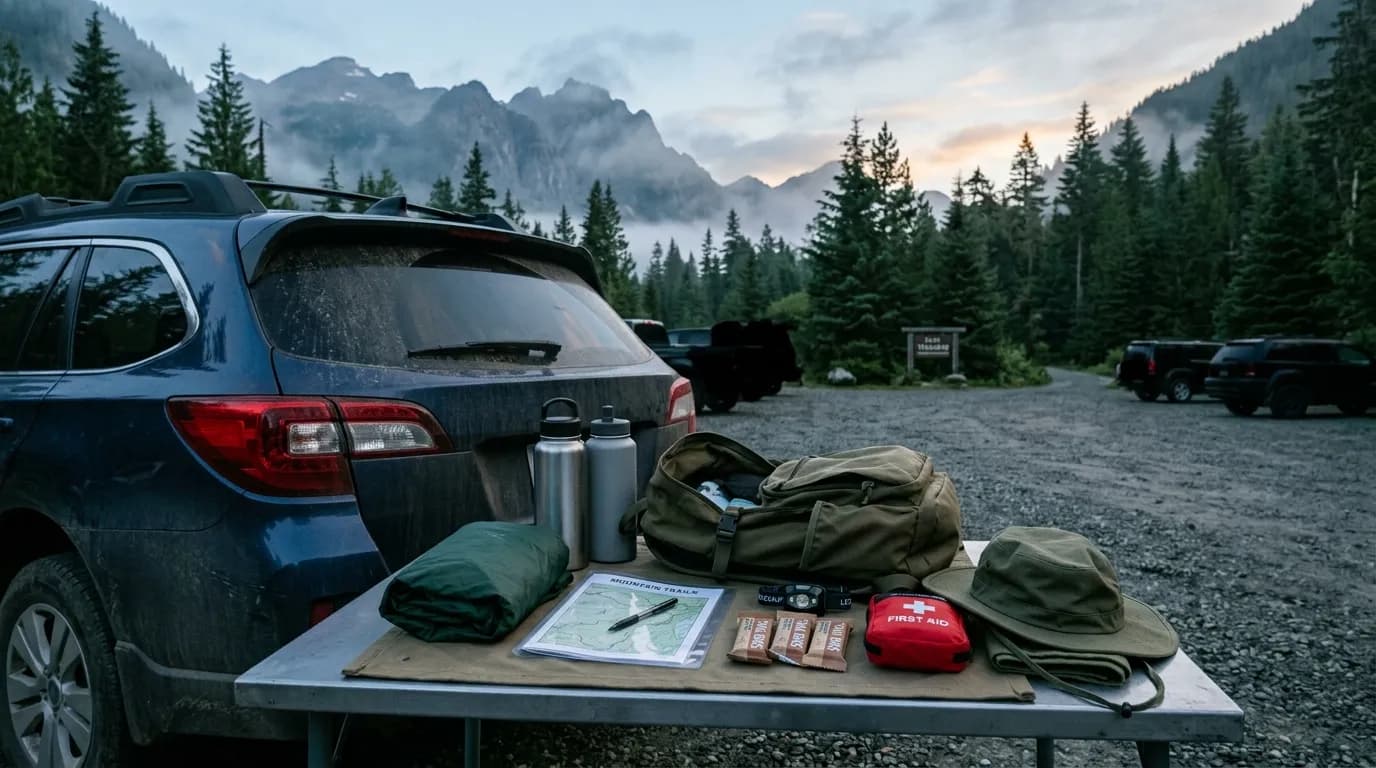
Pack extras in predictable places: spare socks in a zip bag, beanie, lightweight gloves, sit pad for breaks. Trekking poles improve balance on slick roots. Footwear choice trades off: waterproof boots hold water once overwhelmed; mesh trail runners drain faster for some hikers. Know your preference before trailhead mud argues with you.
Small items that save rainy days
- Pack rain cover or internal liner that actually fits your pack.
- Microfiber towel for face and hands before snack breaks.
- Zip bags for phone, map, and snacks you open often.
- Whistle and headlamp—dim flat light under thick canopy feels like dusk early.
- Plastic bag for wet layers in the car post-hike.
Pacing, warmth, and the stop problem
Move steady, not fast. Sweat is the enemy in cold rain. Open vents on climbs; add layers immediately when you stop. Lunch should be quick calories you can eat standing under tree cover, not a sprawling picnic. Hypothermia starts as clumsiness and irritability—watch the quiet person who stops talking.
Plan a turnaround time independent of distance. Wet feet and fading light compress safety margins. If rain intensifies beyond forecast, turn at the next sensible junction rather than proving toughness.
Navigation and visibility
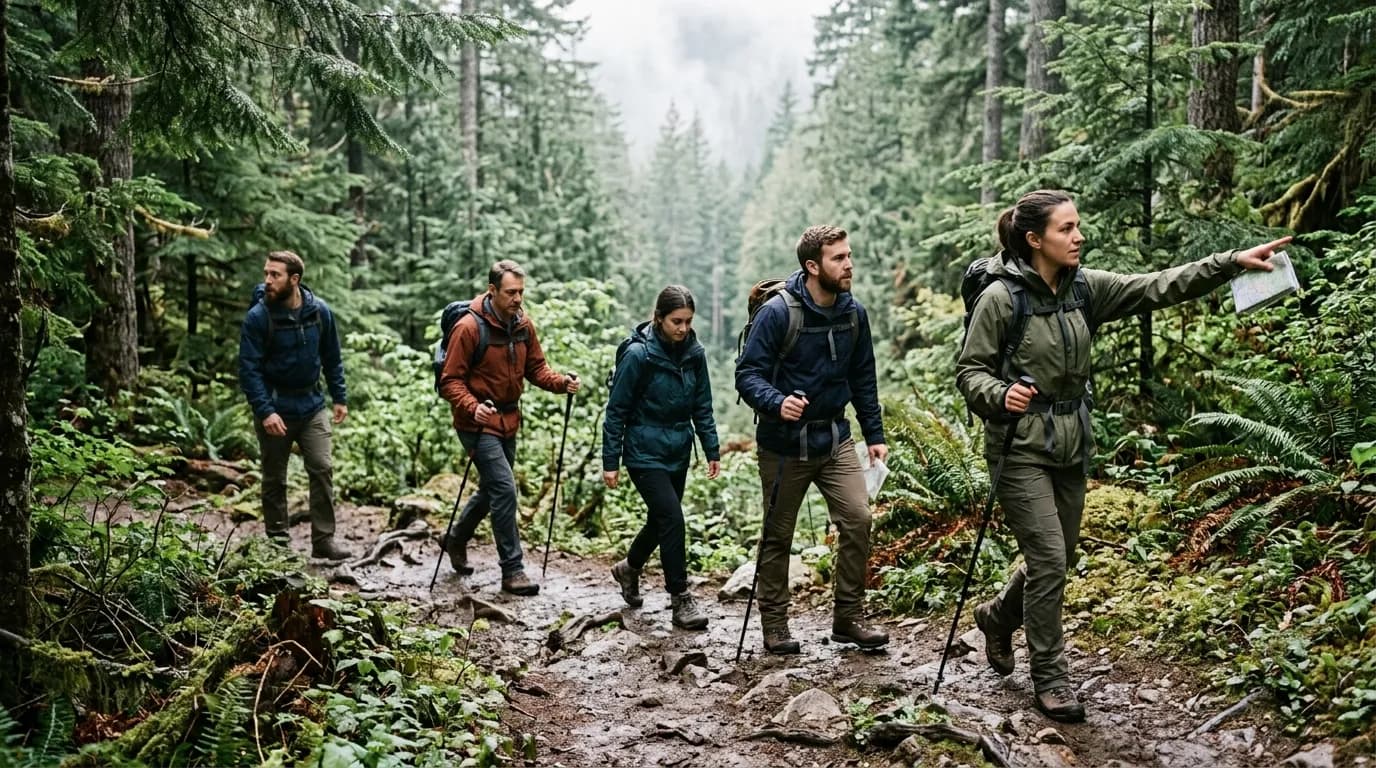
Rain and fog shrink visibility on open routes; under forest canopy GPS still jumps. Carry offline maps, know major junction distances, and mark a turnaround creek or sign. Bright colors help group visibility in grey light.
If trail markings fade or social trails multiply in wet seasons, slow down and confirm. Turning back on uncertainty is cheaper than bushwhacking toward a cliff you cannot see.
Food, drink, and morale engineering
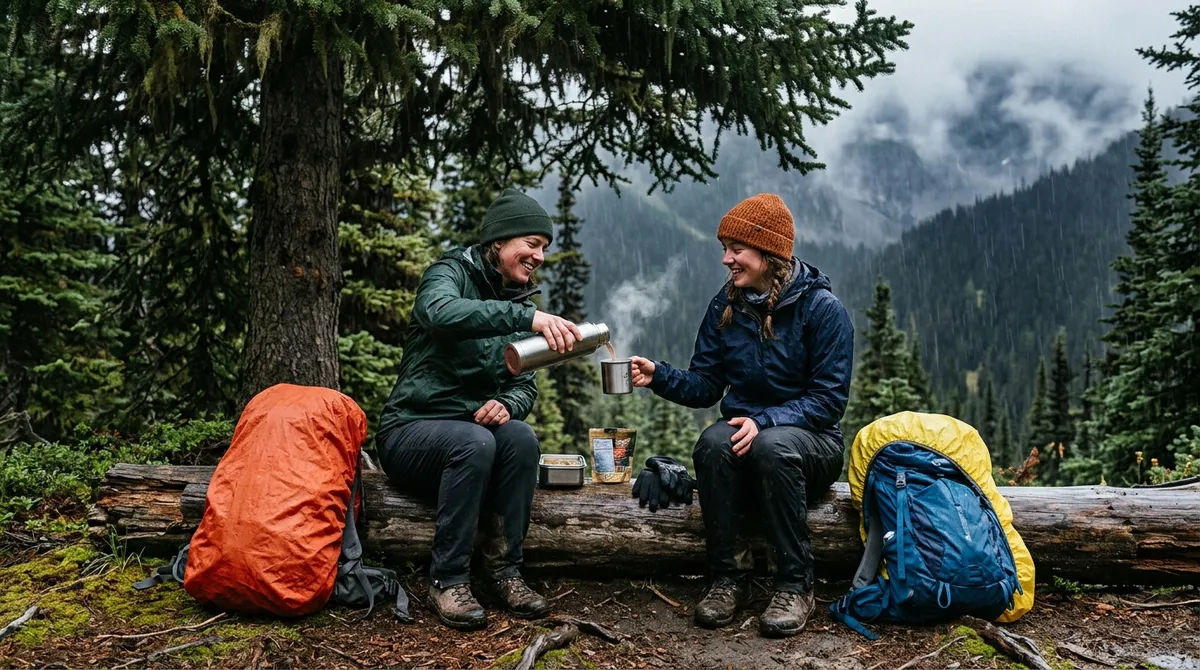
Cold rain drains calories. Pack warm drink in a thermos if weight allows—morale rises disproportionate to ounces. Sweet and salty snacks alternate well when appetites dip. Share food openly; rainy hikes expose petty hoarding fast.
Plan a post-hike reward everyone knows about: bakery stop, hot shower, dry clothes staged in the car. Anticipation carries the last soggy mile.
Group dynamics when everyone is damp
Assign roles: navigator, pace setter, mood checker. Normalize complaining within limits—venting is fine; guilt trips are not. If one person is clearly too cold, the whole group turns. Democracy fails on hypothermia edges.
Photograph mist if you like, but do not stop so long that chills set in. Some of the best rainy-day memories are sounds, not images.
Environmental care in wet conditions
Stay on trail—wet soils erode faster when cut. Do not widen muddy bypasses that damage vegetation. Pack out wrappers that get slick and slip from pockets. Leash dogs where required; muddy dogs jumping on strangers ruin more days than rain does.
Car and home transition
Stage dry clothes in the car trunk, not buried under packs. Plastic floor mats or old towels save upholstery. Remove insoles and stuff shoes with newspaper at home. Hang packs to dry before mold becomes a feature.
Log what worked: which trail handled rain, which jacket leaked at shoulders, which snack was too fiddly with gloves. Next wet weekend gets cheaper mentally.
When to swap rain plan for couch plan
Postpone when lightning joins rain on exposed plans, when flash flood warnings cover your canyon, when road access is unsafe, or when your group lacks minimum warmth layers. Postponement is not defeat; it preserves the trail for a safer window.
If you downgrade to a twenty-minute local walk in drizzle, that still counts as honoring the weekend—you are building a identity that weather does not own your joy entirely.
Sample rainy Saturday script
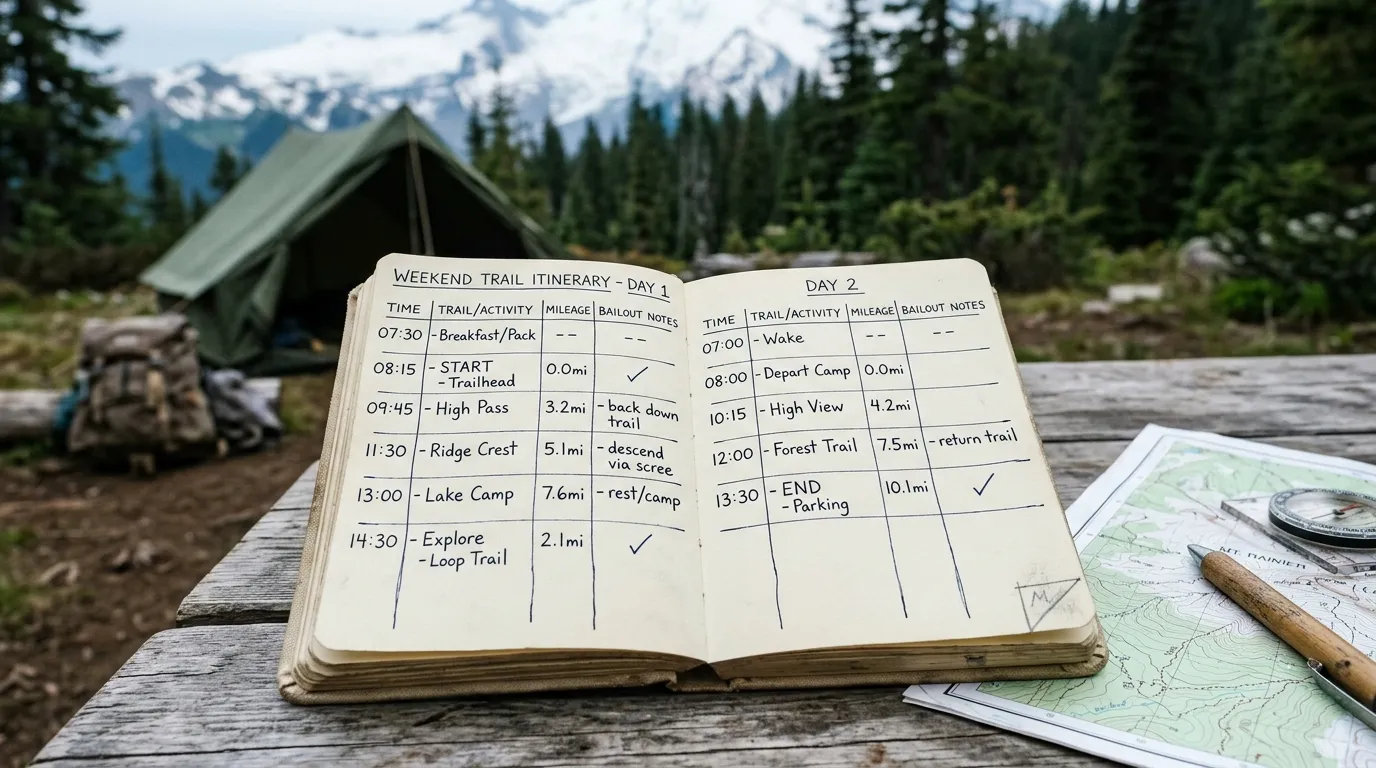
Friday night: pick forest loop under eight miles, check go/no-go thresholds, pack shells and dry bags. Saturday: late-ish start after heaviest radar band, coffee and layers adjusted at trailhead, hike to waterfall turn-around, thermos at lunch, out by mid-afternoon. Car: dry shirts, heat on, bakery. Sunday: optional short stroll if legs fresh; otherwise gear dry and plan next sunnier objective.
Footwear and traction in wet conditions
Mud changes gait. Shorten steps, plant feet flat, use poles on downhills. Leather boots absorb water and dry slowly; synthetic mesh drains faster but offers less warmth. Gaiters keep debris out and reduce soaked socks from wet grass. Accept that feet may be wet hours—focus on keeping core warm.
On rock slabs, test each step; lichen is slicker than it looks in photos. On leaf-covered forest tread, assume hidden roots. Slow group pace is a feature, not a failure.
Rain layers in practice: venting rhythm
Start slightly cool at the trailhead so you do not overheat five minutes in. Open pit zips on climbs; close before stops. Remove soaking wet midlayers from under shell if you have dry spare—clammy fleece under waterproof fabric steams you from inside. Details on shell quality live in our rain jacket comparison, but vent discipline beats any price tag.
Trail types that shine in rain
Old-growth forest loops, river gorges with viewing platforms, lake shore paths, and waterfall routes reward rain visually. Open alpine ridges and scrambles hide the worst in cloud and slipperiness—save those for clearer days. Urban-adjacent greenways with cafes nearby make excellent rainy half-days when motivation is low.
Emergency warmth and bailout kits
Pack an emergency puffy in a dry bag even on short wet hikes. Include a small heat-reflective emergency blanket for group trips. Know the nearest shelter—a visitor center, ranger station, or large overhang on the map. If anyone shivers uncontrollably or slurs speech, abort and warm immediately.
Teaching newer hikers that rain days count
New hikers often treat rain as cancellation by default. One well-planned wet outing teaches more about gear and mood management than three perfect days. Choose an easy route, cap mileage, and debrief over hot food. You are building a skill, not proving toughness.
Combining rain plan with parking and timing
Rainy weekends see lower parking pressure—an upside easy to miss. Later start times work when thunder is not in play. Combine with weather thresholds so you still no-go when rain crosses into hazard terrain. Smart rain hiking is selective, not stubborn.
Long-term gear care after wet trips
Reproof shells when water no longer beads. Dry boots away from direct heat that cracks adhesives. Launder base layers without fabric softener. Rain days expose gear weaknesses early—log leaks and fix before a multi-day trip depends on the same jacket.
Sample packing list for a wet forest day
Waterproof shell with hood, quick-dry base, spare midlayer in dry bag, rain pants if cold, gloves, beanie, two liters water, hot drink in thermos, calorie-dense snacks, trekking poles, headlamp, offline map, whistle, small first aid, sit pad, full car change including socks. Leave cotton home. The list looks long until each item earns its place once.
Why rainy hikes build better all-weather hikers
Hikers who only move on bluebird days cancel half of life’s scheduled weekends. Hikers who know how to dress, route, and turn around in rain keep moving with less panic and less gear churn. Each successful wet outing reduces the mental cost of the next. That compounding beats one perfect summit photo you waited three months to attempt.
Pairing rain plans with jacket choices
A leaky shell ruins even the best route swap. Before a wet weekend, confirm your jacket still beads water on the shoulders and hood—common leak points. If not, reproof or upgrade using guidance from cheap vs premium rain jackets so the plan and the gear match.
FAQ
Is hiking in the rain actually safe for beginners?
Often yes on low-elevation forest trails when temperatures are mild, lightning is absent, and you carry a waterproof shell plus spare warmth. Rain becomes unsafe when combined with cold wind above treeline, rising rivers on crossing-heavy routes, or trails you cannot navigate in fog. Beginners should start with short loops under five miles, known tread, and a clear turnaround time—not exposed summits on storm fronts.
Should I wear rain pants or just a jacket?
In cool rain below roughly fifty-five degrees Fahrenheit, rain pants or waterproof over-trousers keep legs warmer and reduce chafing from wet fabric. In warm summer drizzle, a breathable shell jacket alone may suffice if pace stays steady. If you stop often for photos or kids, pants help more than athletes who never break stride. Pack what matches your stop frequency and temperature, not a generic list.
How do I keep my phone and map dry?
Use a zip-top bag or dedicated dry pouch for electronics. Keep the map in a map case or laminated print inside the pack, not a loose pocket you open every junction. Touchscreen gloves or a stylus reduce how often you unzip in steady rain. Backup paper in a zip bag beats trusting one phone in a drizzle-soaked hip pocket.
What is the best snack strategy when hands are wet and cold?
Choose snacks you can open with one gloved hand: soft bars in easy-tear wrappers, trail mix in pour spouts, cheese sticks pre-sliced at home. Avoid fiddly packaging and anything requiring a knife at every stop. Warm drink from a thermos often matters more than another bar when morale dips mid-loop.
When should I cancel instead of using a rainy-day plan?
Cancel or postpone when thunderstorms overlap your route window, flash flood advisories cover canyons you must enter, roads to the trailhead are unsafe, or your group lacks minimum insulation for the forecast temperature. A rainy-day plan is for steady rain on appropriate terrain—not for forcing alpine objectives because reservations were non-refundable.
Related Reading
- Hiking Weather Go / No-Go Checklist — thresholds before you leave home
- Cheap vs Premium Rain Jacket for Hiking — shell choices that match wet plans
- When to Turn Around on a Hike — on-trail stops when rain intensifies
- What to Wear Hiking by Season — layer basics beyond storm day only
This article is general outdoor education, not professional safety or medical advice. Conditions vary by region and day—use your judgment and local guidance.
Rainy day hikes feel worth it when the plan matches the sky: lower routes, honest layers, tight turnarounds, and warmth waiting at the end. You will not always get epic views—you will get proof that weekends belong to you, not only to bluebird forecasts.