What to wear hiking by season is not a fashion catalog. It is a small set of repeatable layers that keep you comfortable while moving, warm enough when you stop, and dry enough when weather shifts. Beginners often arrive in cotton hoodies and jeans, or they overpack three jackets “just in case.” Both extremes make the day harder than the trail requires.
Daily Peaks uses a simple layer plan: base layer for moisture, mid layer for warmth, shell for wind and rain, plus seasonal swaps for sun, bugs, and cold starts. This guide walks through what to wear hiking in spring, summer, fall, and winter-adjacent day hikes, how to adjust for shoulder season, and what to leave at home. You will get a starter wardrobe plan, common clothing mistakes, and FAQ answers.
Educational outdoor content only—not medical advice. Dress for your conditions, fitness, and local norms.
The simple three-layer system for day hikes
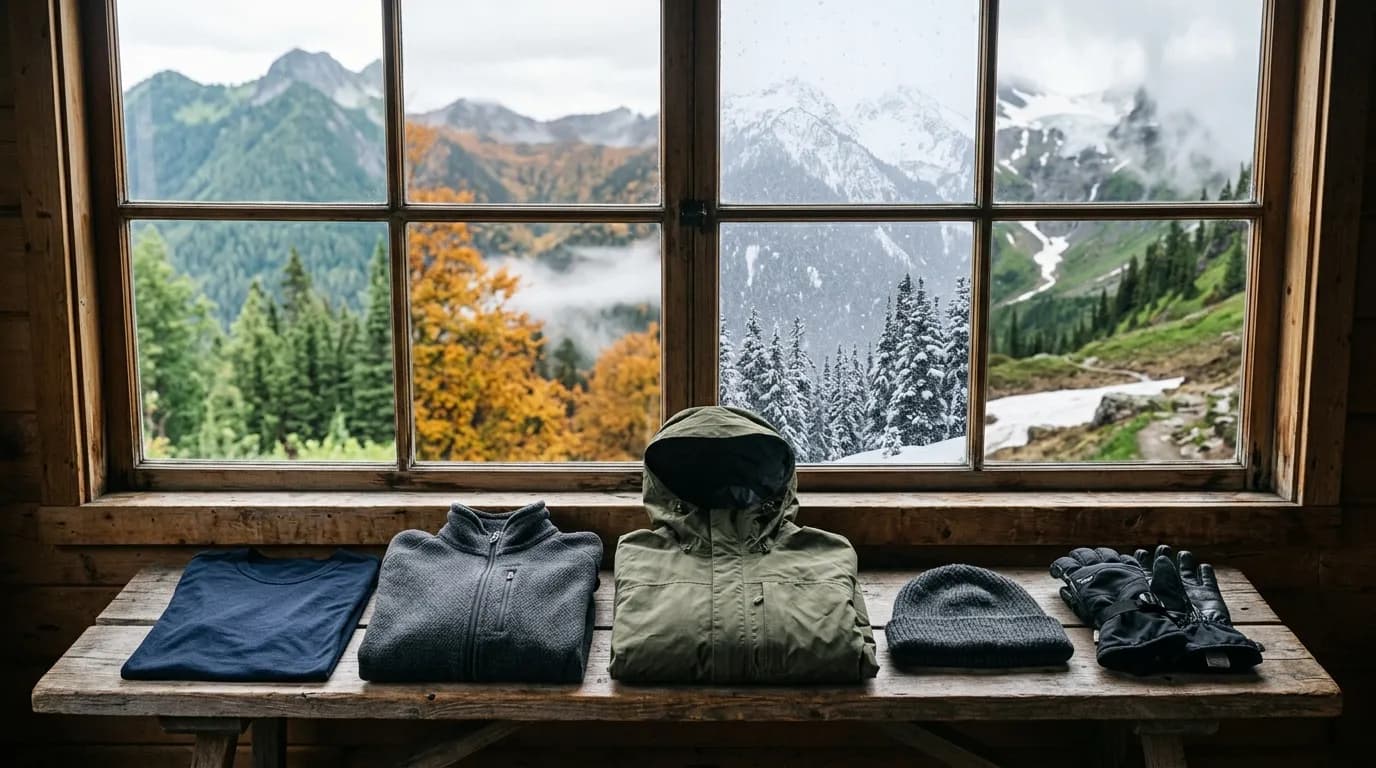
Think in roles, not outfits:
- Base layer: wicks sweat off skin—synthetic tee or merino, not cotton for serious effort
- Mid layer: traps warmth—fleece, light puffy, or thin insulated jacket
- Shell: blocks wind and rain—breathable rain jacket, not a plastic emergency poncho alone for all day
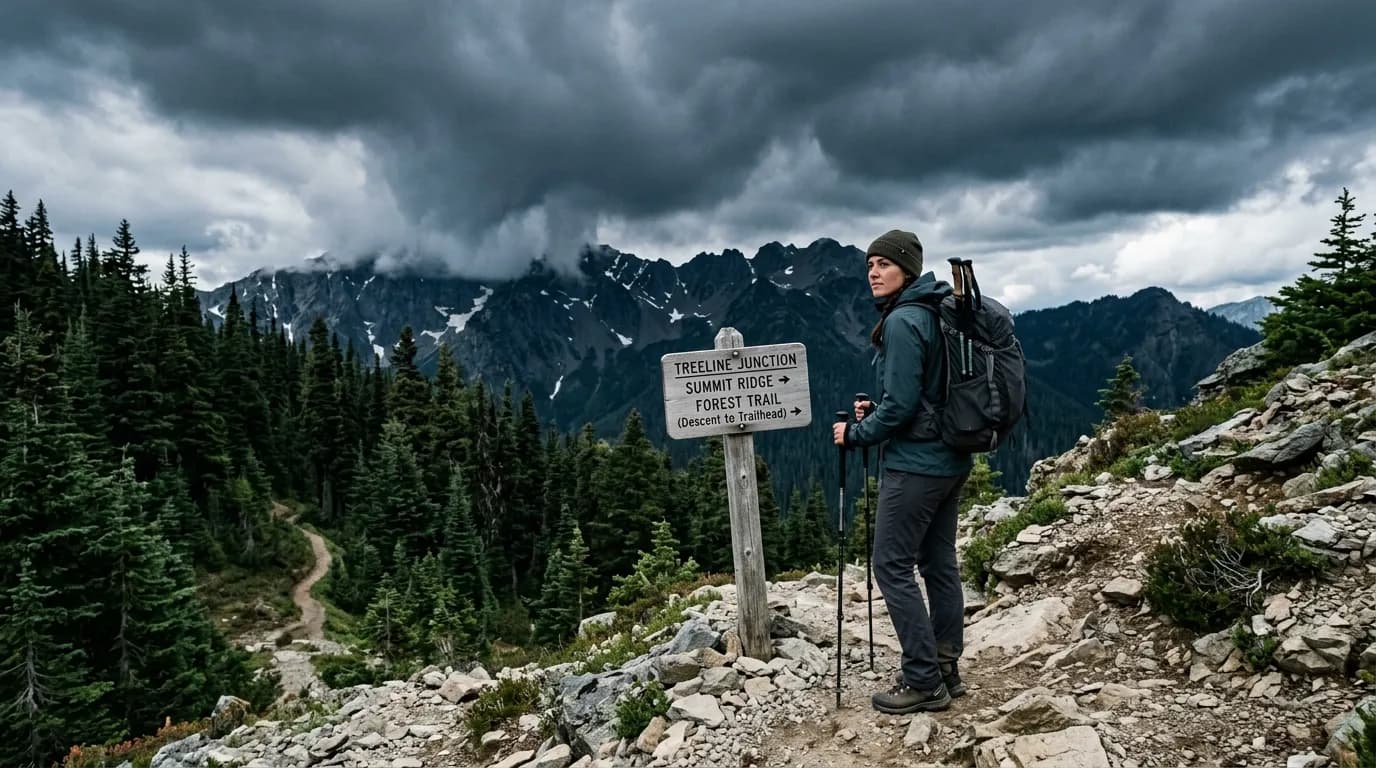
On warm days the base may be your only top while moving. The mid lives in the pack until a summit stop. The shell stays packed until wind or drizzle appears. That rhythm beats wearing everything at the trailhead because the parking lot felt chilly.
For a deeper dive into how layers work together, read Hiking Layering System Simplified. This article focuses on seasonal choices within that system.
Start at the trailhead, not on your couch
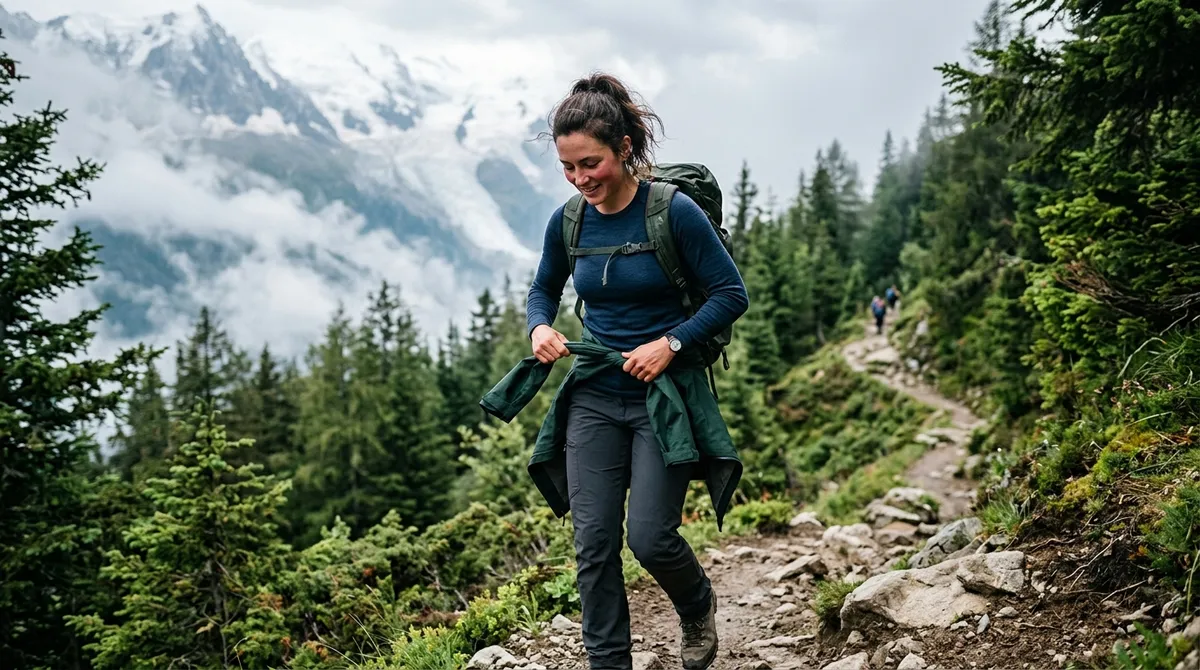
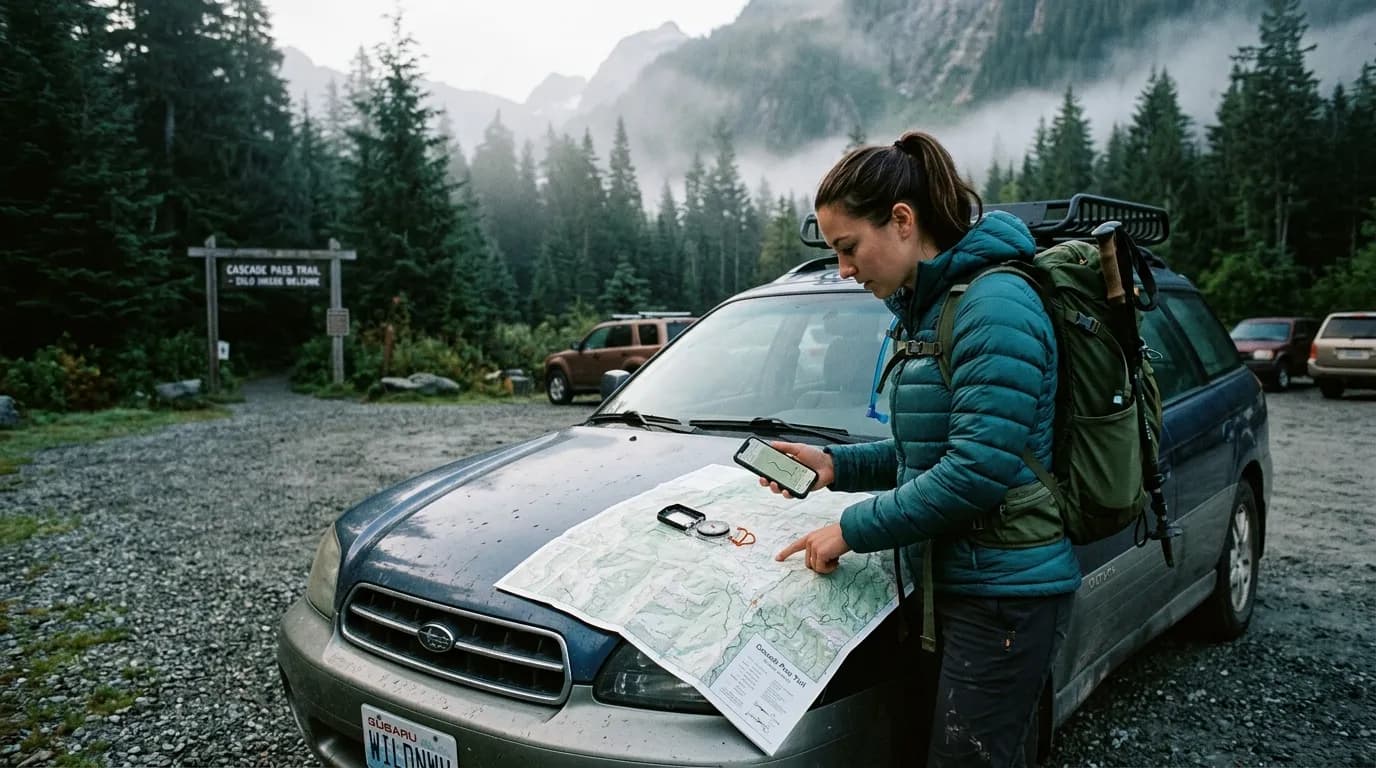
Parking lots lie. They are often lower, sheltered, and warmer or cooler than the ridge you want. Dress so you are slightly cool when you start walking in the first ten minutes. If you are cozy standing still at the car, you will overheat on the climb.
Pack what you are not wearing. The pack is your closet for the day. A mid layer you never use on a hot valley loop is still worth carrying on a 3,000-foot gain day in spring.
Spring day hikes: mud, chill, and false warmth
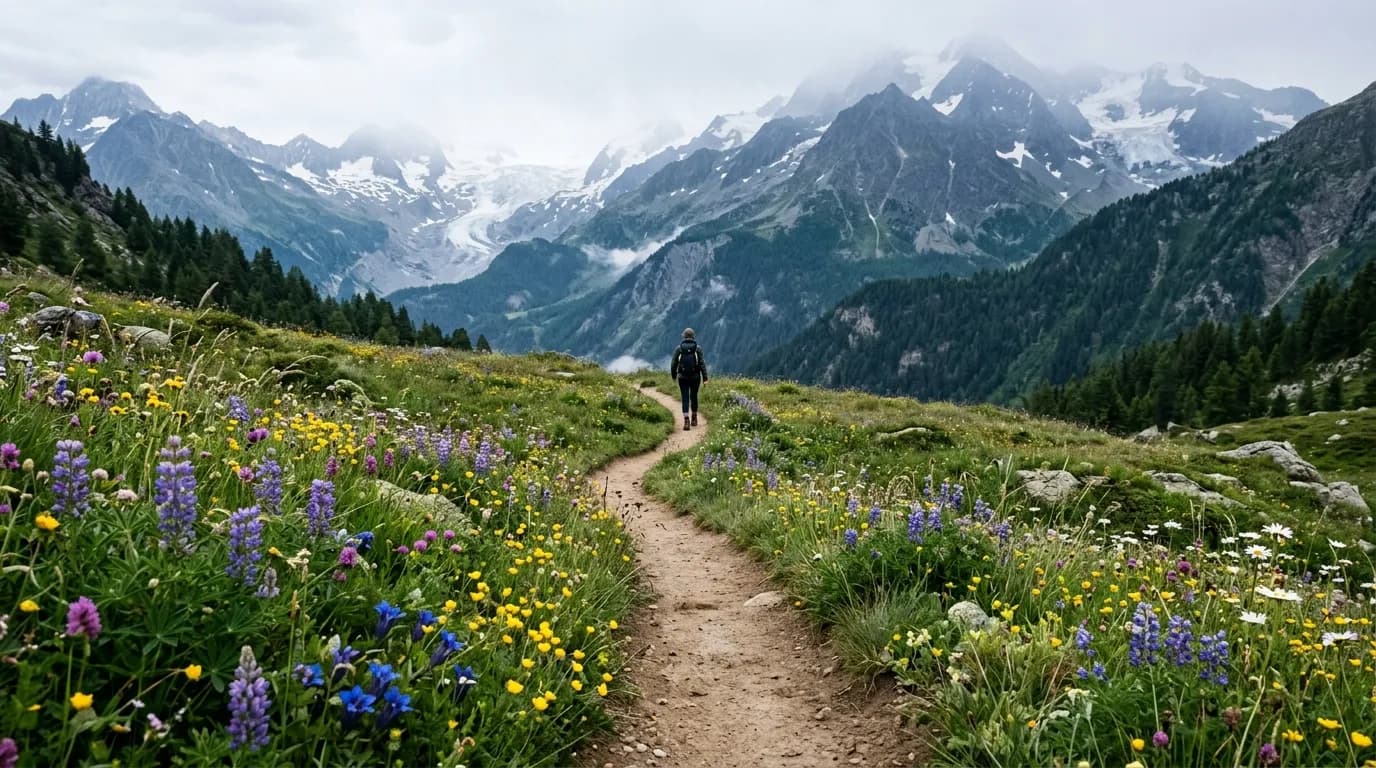
Spring is the season of mixed signals. Morning frost, afternoon sun, soft snow patches, and mud that steals shoes. Wear:
- Moisture-wicking base top; add a light long-sleeve if bugs or sun are not the main issue yet
- Thin fleece or active mid layer for stops
- Packable rain shell—showers arrive fast
- Quick-dry hiking pants or leggings; avoid heavy cotton joggers
- Water-resistant trail shoes or boots you do not mind getting muddy
- Thin gloves and beanie if mornings start near freezing
Spring footing favors traction you trust. Save worn-smooth sneakers for dry paths. Trekking poles help on muddy descents even if you skip them in summer.
Shoulder-season nuance—when spring still feels like winter on the ridge—is covered in Shoulder Season Layering for Weekend Trails.
Summer day hikes: heat, sun, and sweat
Summer dressing is mostly about not cooking yourself. Prioritize:
- Light-colored, loose or stretch-woven synthetic tee or tank that dries fast
- Optional long-sleeve sun hoodie for alpine or desert exposure
- Shorts or lightweight pants depending on brush, sun, and personal preference
- Brimmed hat and sunglasses
- Sunscreen on exposed skin; reapply on long days
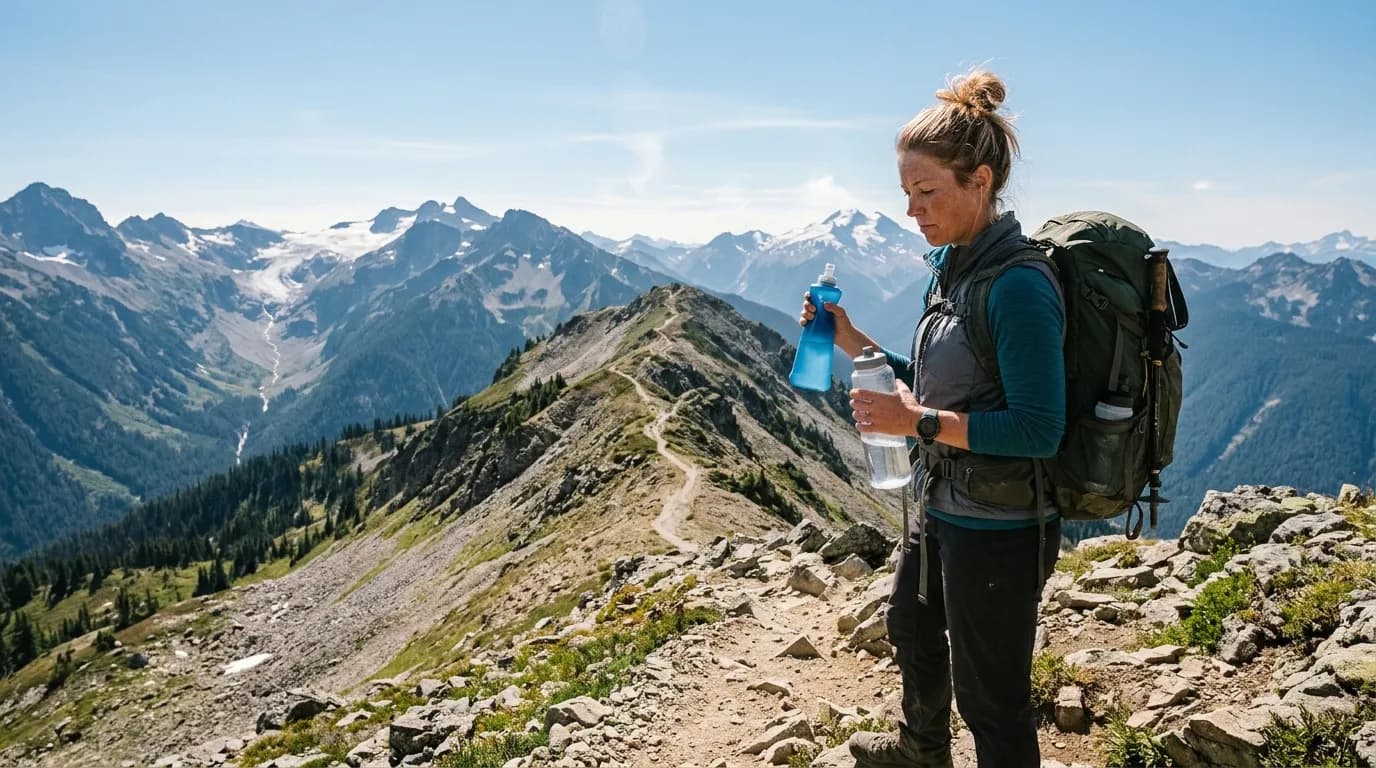
- More water capacity than spring—heat is a clothing-and-hydration problem together
Carry a wind shell or ultralight rain jacket anyway. Summer storms on ridges are rude and common in mountain regions. The shell lives deep in the pack until needed.
Footwear with breathable mesh dries faster after stream crossings. Pair with socks that wick and fit, not thick cotton tube socks.
Fall day hikes: crisp air and shorter daylight
Fall rewards layers you can cycle quickly. Mornings bite; afternoons glow; sunset arrives early.
- Base tee plus flannel-weight shirt or light fleece you can tie around waist
- Insulated mid layer for summit stops—puffy or heavier fleece
- Shell for wind on open ridges
- Long pants; consider thin long underwear under pants on cold starts
- Beanie and light gloves in the pack from late September onward in many regions
Fall leaves hide ankle-rolling rocks and roots. Shoes with stable soles matter as much as jackets. Start earlier than summer habits suggest.
Winter-adjacent day hikes: not full mountaineering, still serious
Many day hikers walk in cold seasons without alpine gear. That is fine on low trails with good access and short bailouts. Adjust clothing upward:
- Merino or synthetic base top and bottom
- Insulated mid layer; puffy for long stops
- Windproof shell; waterproof if mixed precipitation
- Softshell or insulated pants depending on temperature
- Warm hat, gloves, spare thin glove liner
- Microspikes or traction devices if local reports mention ice—match to trail, not ego
Winter-adjacent does not mean “wear everything always.” Overdressing sweats you out; sweat freezes you out on stops. Adjust while moving; add layers when you pause.
Fabrics: what to favor and what to skip
Favor: nylon, polyester blends, merino wool, fleece, softshells, breathable rain fabrics.
Skip for active hiking: cotton tees and jeans that hold moisture, heavy fashion coats, non-breathable rain gear that turns you into a sauna.
Merino costs more but resists odor on multi-day trips. Synthetic is cheaper and dries fast. Either beats cotton for serious uphill days.
Legs: shorts versus pants
Shorts win on hot, dry, brush-free trails. Pants win with sun, mosquitoes, talus scrapes, and cool wind. Convertible pants are fine if they actually fit and breathe. Fashion cargo shorts with no stretch are a chafe factory on long descents.
Rain pants are optional for many day hikes in mild weather. Carry them when steady rain is forecast or when wet brush will soak legs for hours.
Footwear and socks: the hidden layer system
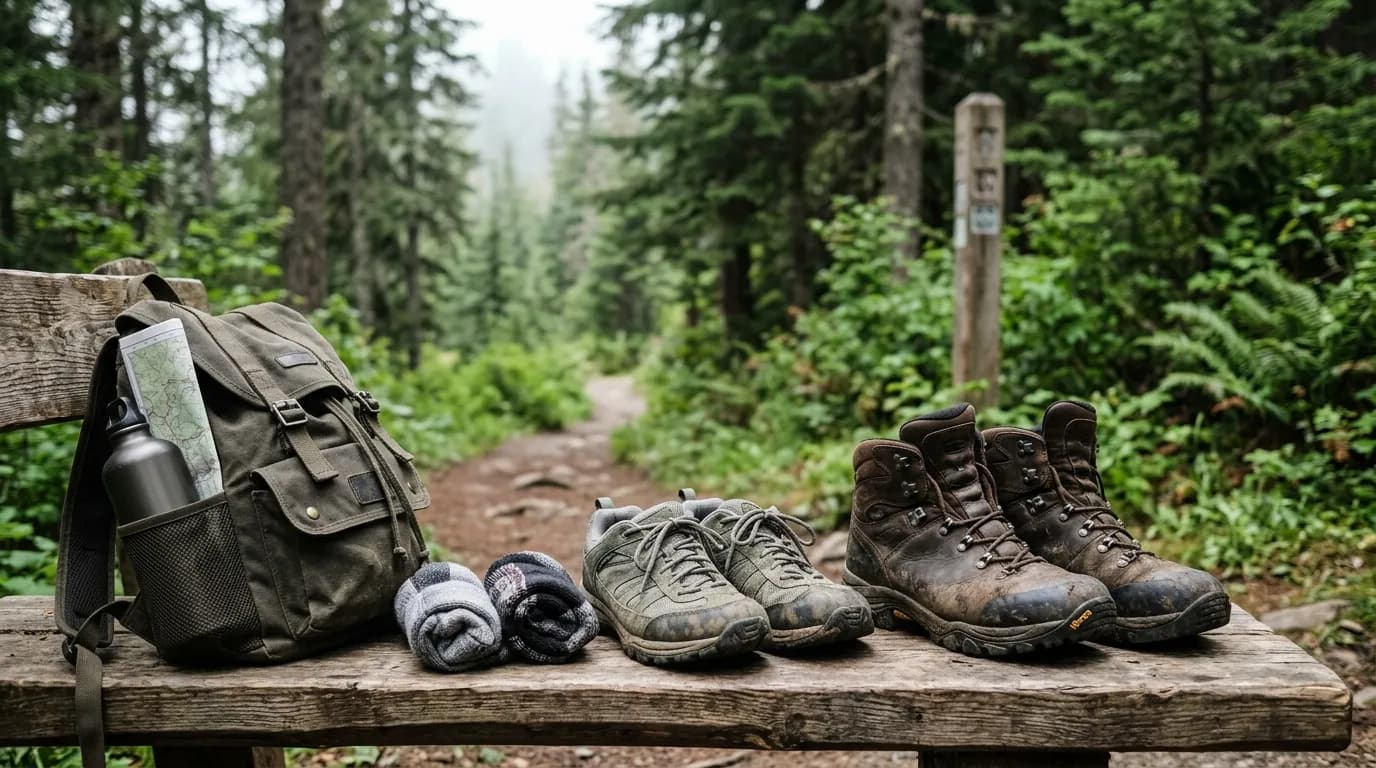
Shoes are part of what you wear. Match tread to trail: muddy spring needs lug; hot dry gravel tolerates lighter soles. Socks are your foot base layer—wicking, fitted, with no wrinkle hotspots.
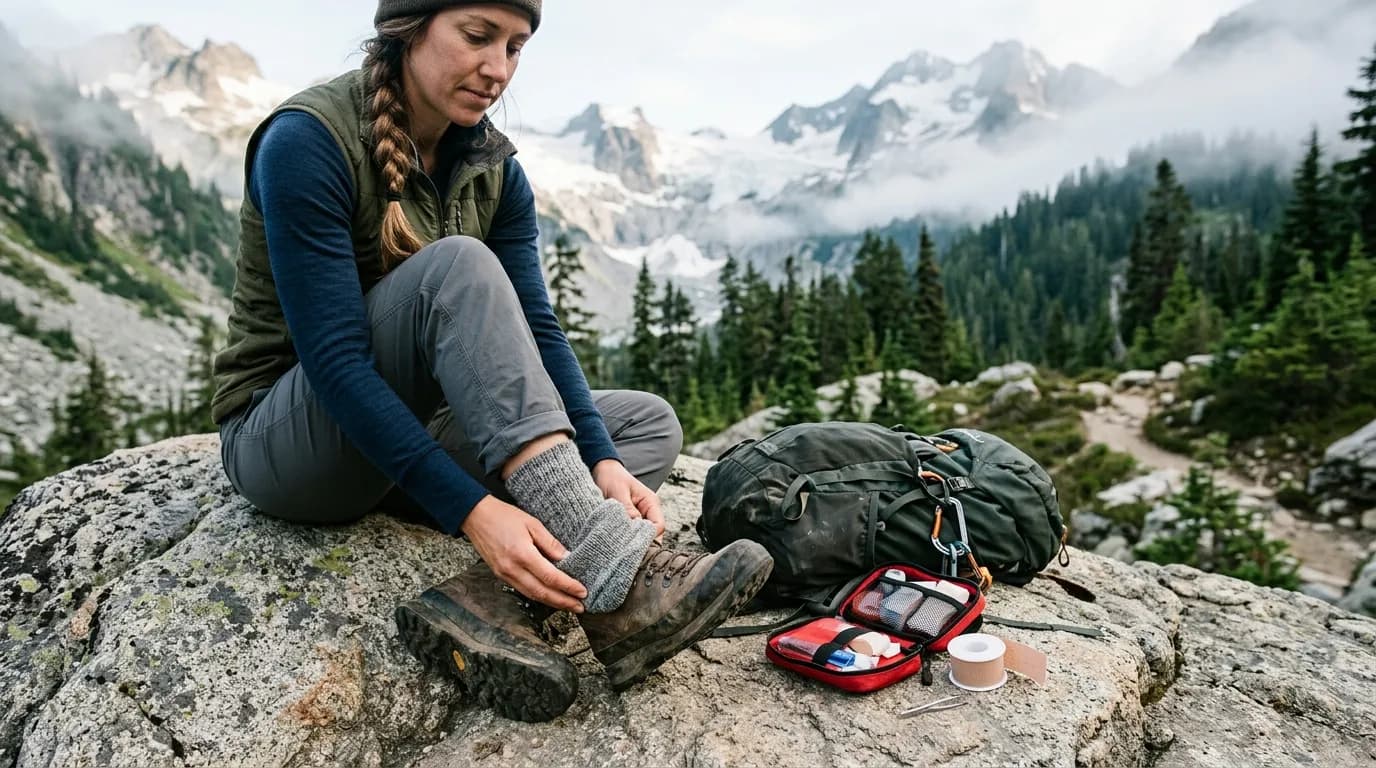
Break in shoes on easier trails before a big climb day. Blister prevention starts with sock and shoe pairing, not tape alone.
Accessories that earn pack space
- Hat: sun cap in summer; warm hat in cold
- Gloves: thin liners pack small and rescue cold fingers on windy overlooks
- Buff or neck gaiter: sun, wind, and bug flexibility
- Sunglasses: especially on snow, water, and high ridges
- Gaiters: mud, snow, or deep sand days
Skip heavy jewelry, dangly scarves, and cotton bandanas soaked with sweat that never dries.
How to adjust layers while moving
Use a simple rule: if you sweat through within fifteen minutes on a moderate climb, you are overdressed. Remove a layer early. If you stop for more than five minutes and feel chill, add mid layer or shell before teeth chatter.
Shells block wind even without rain. Many beginners underuse shells as wind layers and then blame the fleece for being “not warm enough.”
On descents, generate less heat. Add a layer before you are cold at slow walking speed.
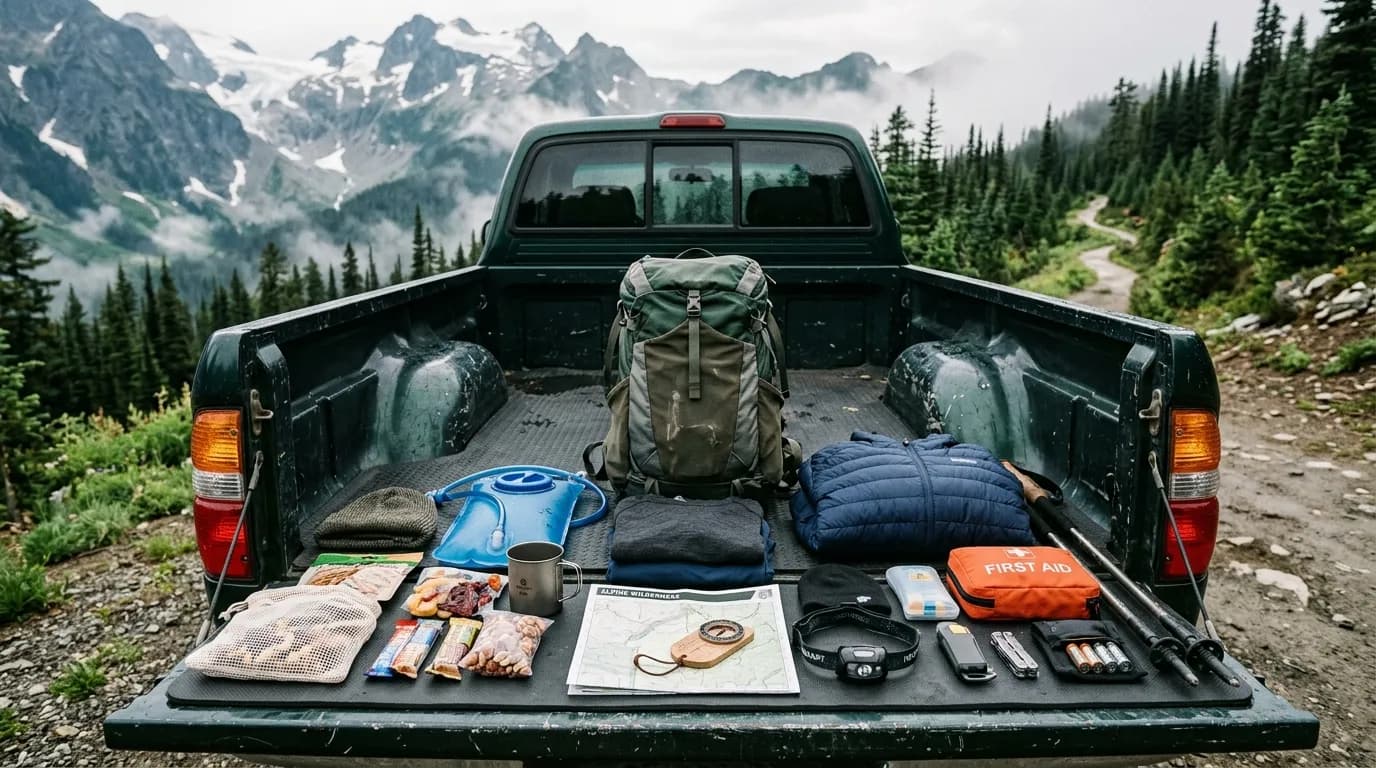
Seasonal pack list for clothing only
Spring pack: mid fleece, shell, beanie, light gloves, extra socks.
Summer pack: sun layer, shell, long-sleeve optional, hat.
Fall pack: mid + puffy or heavy fleece, shell, hat, gloves, headlamp for early dark.
Cold day pack: full base/mid/shell, spare gloves, spare hat, traction if warranted.
Clothing should not crowd food and water. If the clothing pile wins, audit ruthlessly—one mid, one shell, one spare warmth piece.
Special cases: desert, coast, and forest
Desert day hikes: sun coverage beats short sleeves; carry more water; morning starts beat midday heat.
Coastal trails: wind and fog layers matter in summer; cotton still loses here when mist persists.
Deep forest: fewer sun layers, more bug and moisture awareness; mud season clothing matches spring rules even in summer after rain.
Local beats generic. A “summer” hike above treeline is not the same as a valley walk.
Starter wardrobe plan for beginners
Minimum viable hiking clothes:
- Two synthetic or merino tops (short sleeve + long sleeve)
- One fleece or active mid layer
- One breathable rain shell
- One pair quick-dry pants you can move in
- Shorts optional for hot regions
- Hiking socks (two pairs)
- Trail shoes that fit
- Hat and sunglasses
That kit spans most day hikes for a year with seasonal swaps (gloves, puffy) rather than a new wardrobe each month.
Seven-day habit: learn your layer rhythm
Day one. Local flat walk. Wear base only. Notice sweat and comfort.
Day two. Short hill. Start cool; add mid at the top stop.
Day three. Carry shell; practice putting it on within sixty seconds of stopping in wind.
Day four. Try a long-sleeve sun layer instead of sunscreen-only arms if sun is strong.
Day five. Pack spare socks; swap at car after muddy sections if needed.
Day six. Morning cold start: wear mid for first twenty minutes, remove before big sweat.
Day seven. Review what never left the pack. Remove dead weight next trip.
Common clothing mistakes on day hikes
- Cotton tee on a long uphill day
- Wearing the puffy while climbing hard
- Leaving shell at home because “sky is blue”
- Jeans that chafe and never dry
- Brand-new shoes on the longest hike of the season
- One thick hoodie instead of adjustable layers
- No hat in high sun
- Overpacking three redundant mid layers
- Underpacking gloves on fall ridges
- Dressing for the Instagram summit photo, not the five-hour round trip
Clothing and turnaround judgment
Hypothermia and heat illness are clothing problems as much as weather problems. If you are shivering hard at a stop and cannot warm with layers, shorten the day. If heat and dehydration combine with dizziness, find shade, cool, drink, and bail if symptoms persist.
Clothing supports judgment; it does not replace turning around when conditions outrank your plan.
What to wear on your first three hikes of the year
Hike one (easy loop): Wear what you plan to use on moderate days. Overdress slightly to learn your sweat point, but carry the shell anyway. Note what you removed within twenty minutes.
Hike two (first real climb): Start in base only if warm; pack mid and shell accessible at pack top, not buried. Stop once at a viewpoint to practice adding a layer before you feel cold.
Hike three (longer day): Test spare socks and glove liners if season suggests. End-of-day fatigue makes you colder—plan one more layer than hike two required.
That three-hike arc beats buying a whole new wardrobe before you know whether you run hot or cold on climbs.
Laundry and gear care between hikes
Salt and dirt in socks and base layers stiffen fabric and hide thin spots. Wash technical layers per label, skip fabric softener on wicking gear, and air-dry heat-sensitive items. Rain shells benefit from occasional reproofing when water stops beading—otherwise you carry weight without function. Clean clothing performs better; performance reduces chafe and overheating on the next outing.
Layer swaps for multi-hour days
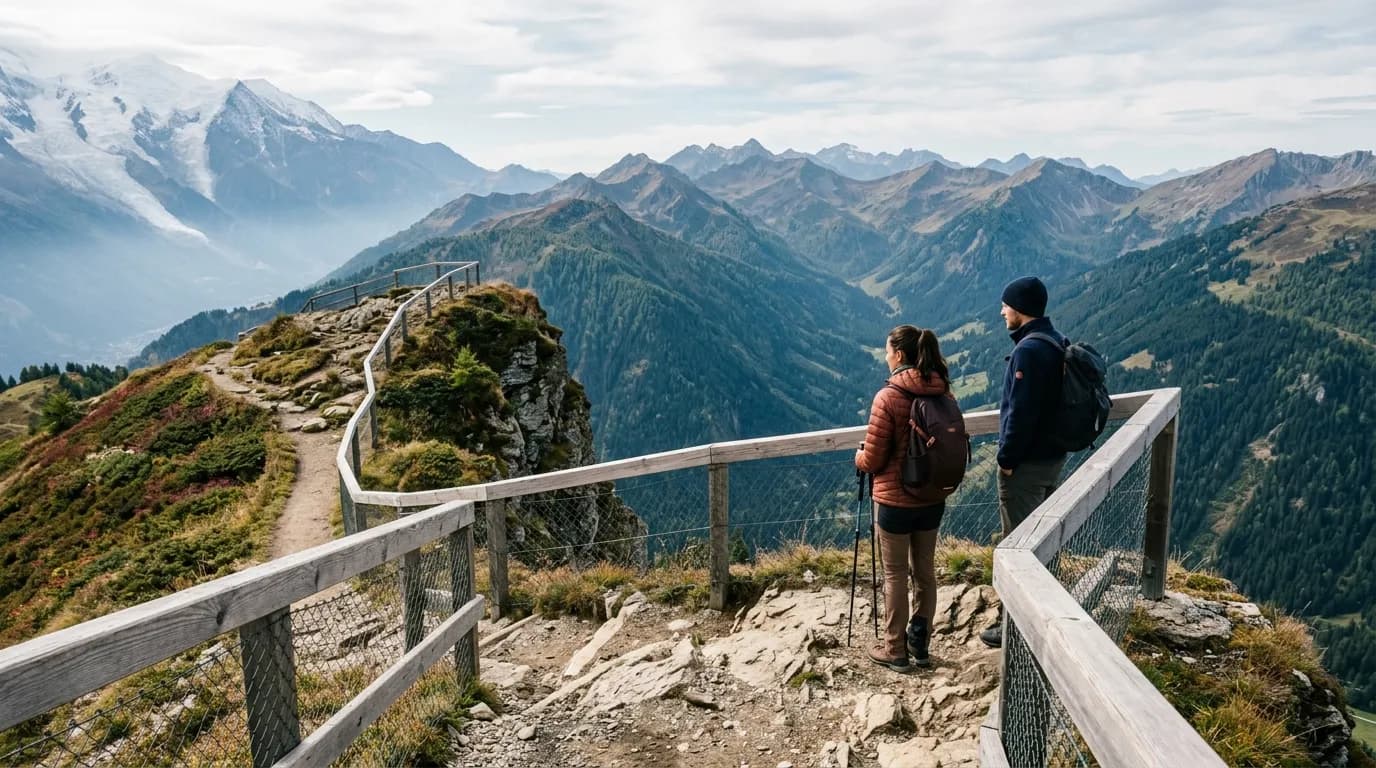
Long day hikes cross microclimates. A morning in cold shade at the trailhead can become afternoon sun on open rock, then windy chill at a viewpoint, then damp forest on the descent. Plan two layer changes: one on the climb when heat rises, one at the top or first long stop when sweat meets wind. Beginners who dress once at the car often wear too much for hours because repacking feels fussy. Treat layer swaps as normal trail hygiene, like drinking water.
On the descent, add warmth before you need it. Downhill generates less heat; wet base layers cool fast. A sixty-second stop to zip a shell or pull on a fleece prevents the last mile from feeling like a punishment.
What to leave in the car
Not everything belongs on your back. A clean shirt, dry shoes, and warm hoodie in the car turn a muddy finish into comfort without bloating the pack. Camp chairs and full wardrobe changes stay at the trailhead unless car camping is part of the plan. The hiking kit is for moving; the car kit is for the drive home.
FAQ
Do I need expensive hiking clothes to start?No. Start with moisture-wicking gym tops, athletic pants, a fleece you own, and a decent rain shell. Upgrade pieces as you hike more and learn what fails.
Are leggings okay for hiking?Yes, if they move comfortably, wick moisture, and tolerate brush without tearing. Carry a wind shell if leggings run thin. Some people prefer pants for sun and scratch protection.
How many layers should I carry in summer?At minimum a sun layer option and a light shell for wind and storms. Add a thin mid only for high elevations or long stops.
When should I wear a puffy jacket on a day hike?On cold starts, windy summits, and fall/winter-adjacent days. Pack it; do not hike hard uphill in it unless truly cold.
Are hiking sandals ever appropriate?On flat, dry, well-maintained trails some hikers use trail sandals. For beginners on rocky or muddy paths, closed shoes protect toes and ankles better.
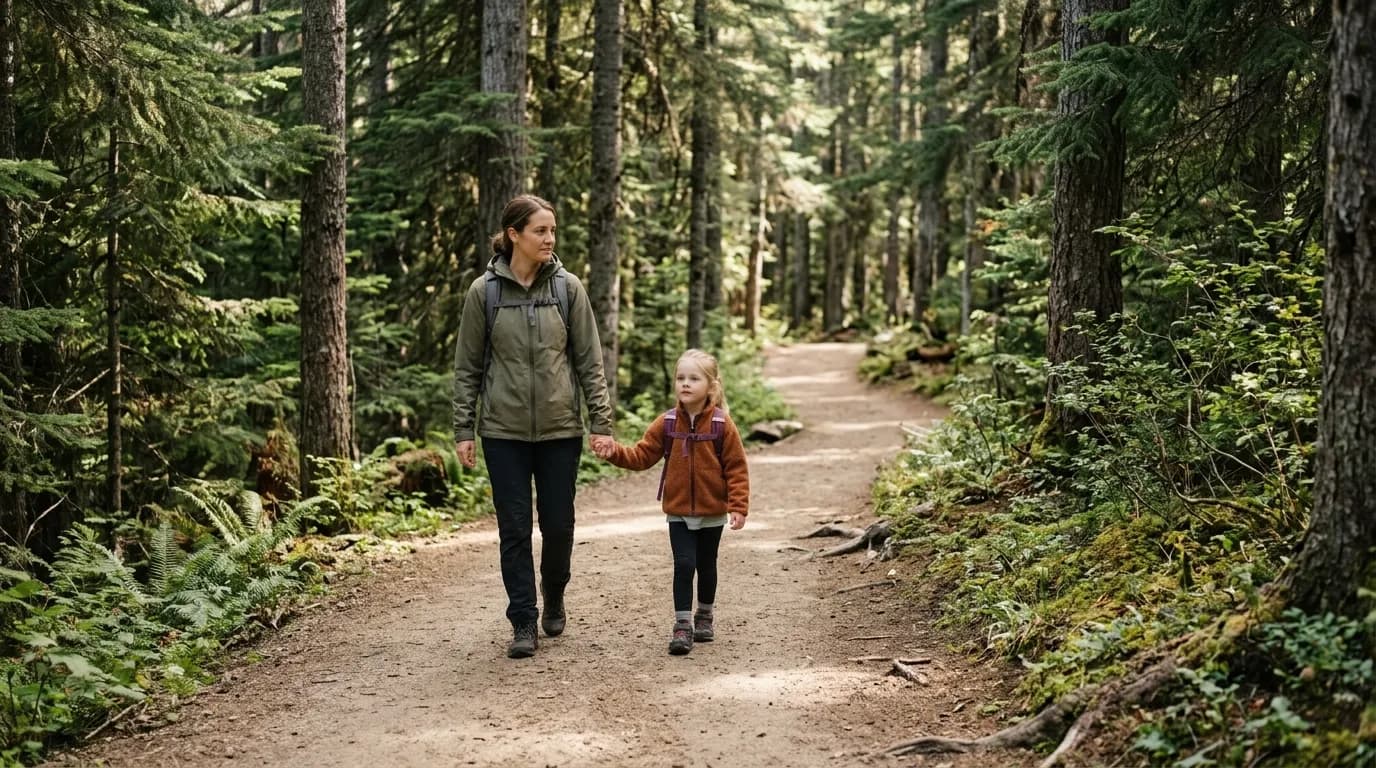
Should kids dress differently than adults?Same layer logic applies: avoid cotton for active kids, carry extra mid layer, hat, and rain shell. Kids cool and heat faster—check often.
What is the one clothing item beginners underestimate?A breathable rain/wind shell. It fixes more uncomfortable days than another fleece.
Related reading
Go deeper on layer mechanics with Hiking Layering System Simplified. For tricky spring and fall weekends, read Shoulder Season Layering for Weekend Trails.
What to wear hiking by season comes down to a small adjustable system: wicking base, warm mid, weather shell, and seasonal accessories you actually pack. Start slightly cool, adjust at stops, and let the trail—not the parking lot—dictate when you zip up or strip down.