Shoulder season sits between obvious summer and winter wardrobes. Spring and fall weekend trails refuse the single-outfit approach: you leave the parking lot in chill, climb into sun, and hit a windy col where both impressions collide. Comfortable hikers treat clothing as a system adjusted every forty-five minutes, not a costume chosen once at home.
Weekend days amplify the challenge because you move dawn to mid-afternoon without a warm car at every junction. Car-camp Friday, frost Saturday morning, tee-shirt weather on the same ridge by noon — then repeat on tired legs Sunday. Layering here is sequencing what you own so nothing critical lives at the pack bottom when clouds roll.
This guide targets day hikes and short overnight weekends on established trails. For the base-mid-shell framework see Hiking Layering System Simplified; for seasonal baselines see What to Wear Hiking by Season.
Why Static Outfits Fail
Your body is a moving thermostat. On sustained climbs, core temperature rises and fleece that felt essential at the car becomes a sauna. Stop on an exposed knob and sweat turns cold. Shoulder season adds squalls that sunny south faces hide from north-side hikers thirty minutes away.
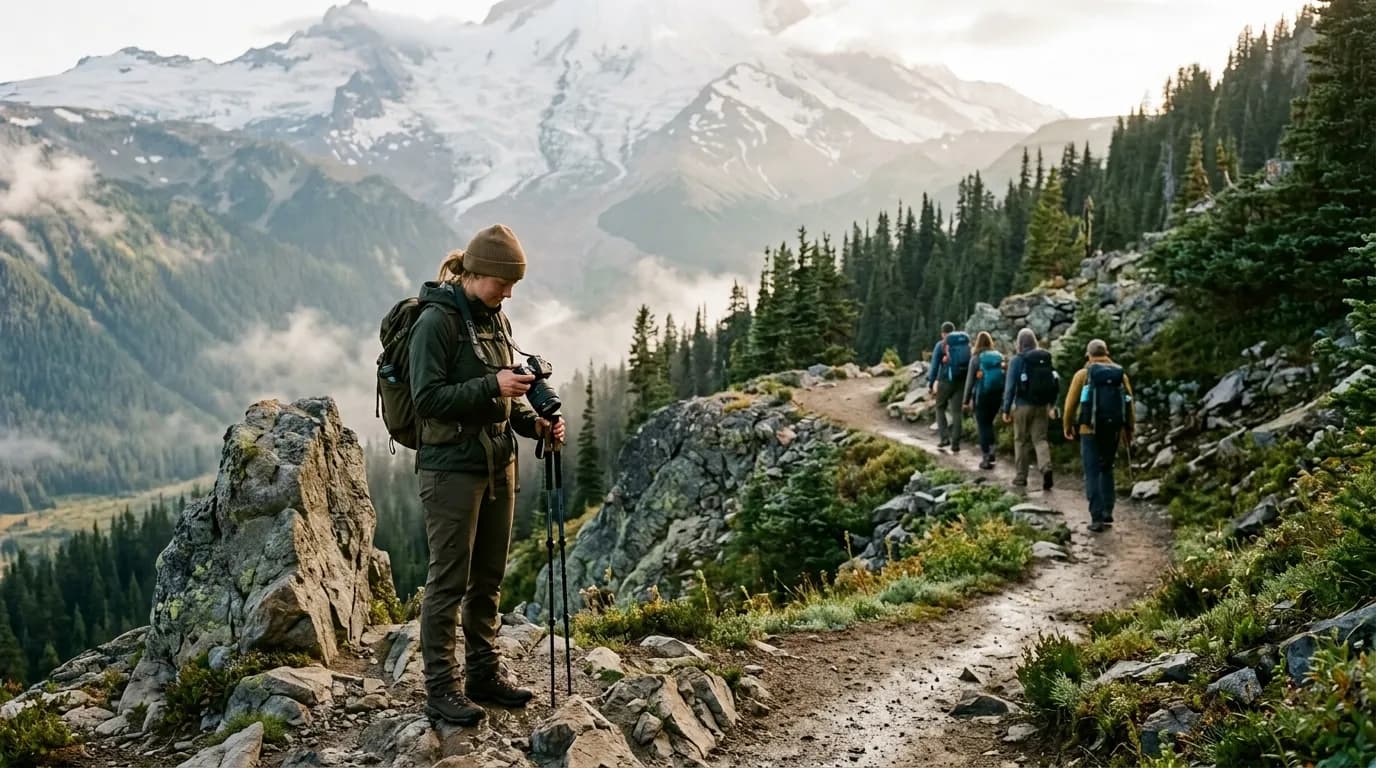
Elevation multiplies microclimates: creek bottom, meadow, talus, treeline fringe — each with different wind and sun. The layer that works in trees feels wrong above treeline at the same thermometer reading.
Three Zones, Not Three Garments
Zone one is active movement: start slightly cool. Zone two is steady cruising on flats. Zone three is stopped — insulation plus shell if wind or rain. Most errors are zone-three clothes during zone-one effort, then refusing to re-layer at stops to avoid slowing the group.
Building the Kit
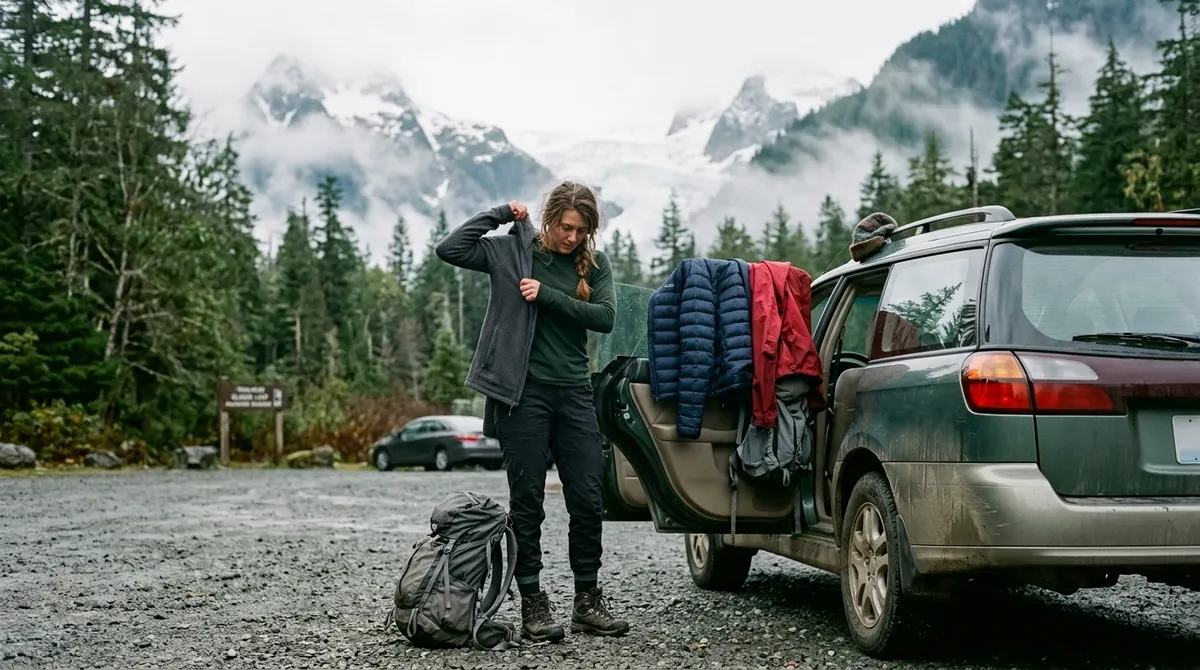
Base: wicking top, not cotton. Legs: same trekking pants or shorts many use in summer, or lightweight long underwear under pants when mornings sit below forty.
Mid-layer is your volume knob — grid fleece for breathability uphill, synthetic puffy for quick warmth at lunch. Down forgives less when you sweat hard then sit in drizzle.
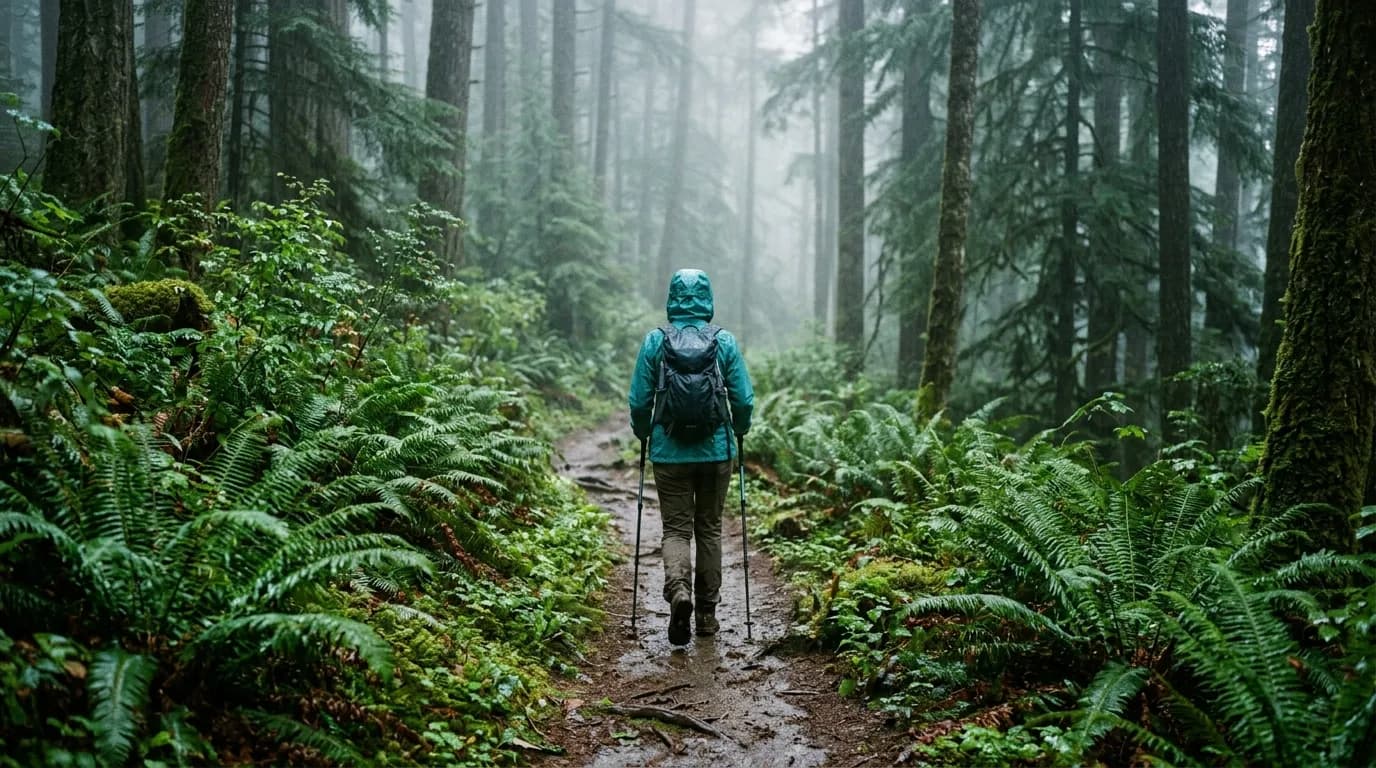
Shell is non-negotiable even on pretty forecasts. Breathable rain jacket blocks wind at stops; pack it reachable — top lid or stretch pocket.
Hands, Head, Extras
- Buff or light beanie for ear comfort on cols.
- Liner gloves for miserable breaks without bulk.
- Spare socks at the car before day two.
- Sun gear even when air feels autumnal.
When to Add and Shed
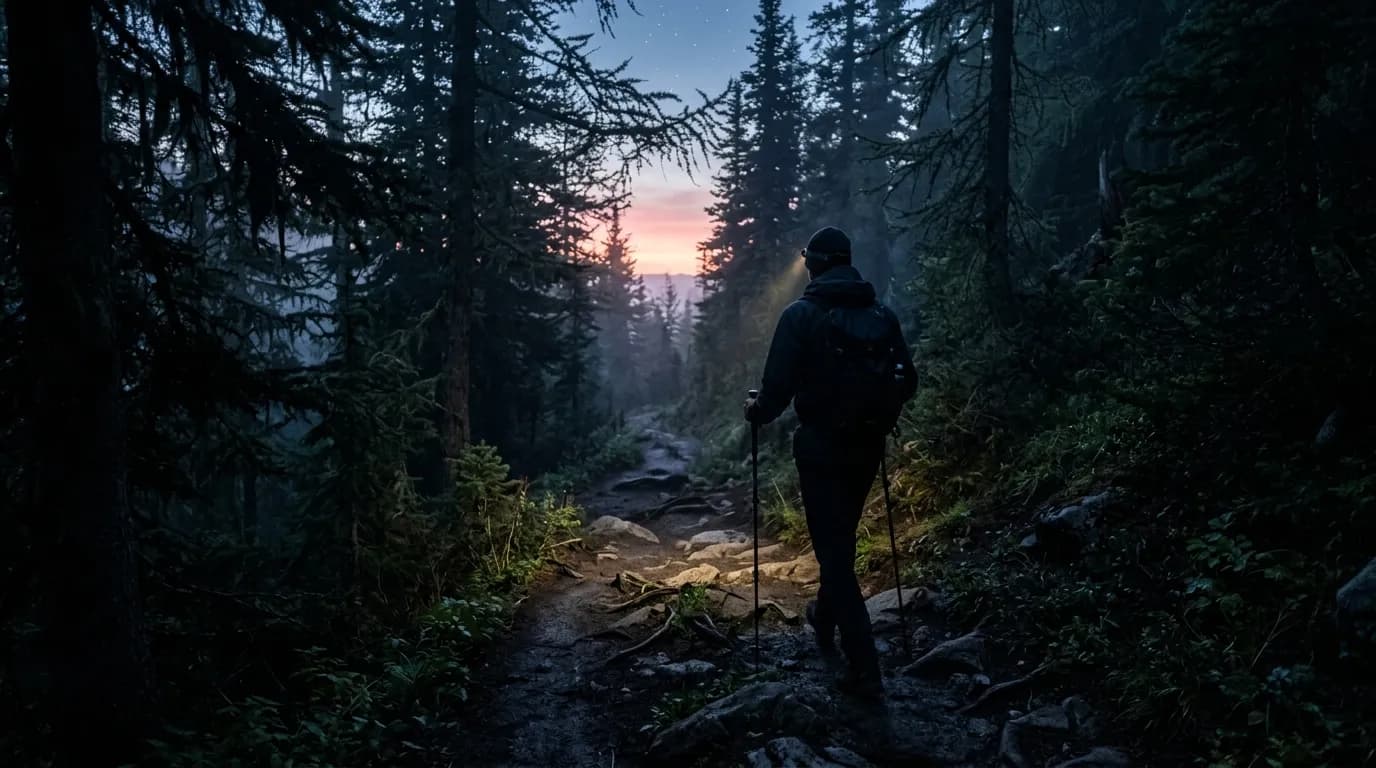
Trailhead: one step cooler than comfortable still. Typical start — base plus thin mid or unzipped shell. Within fifteen minutes, most crews shed one piece before the first major climb.
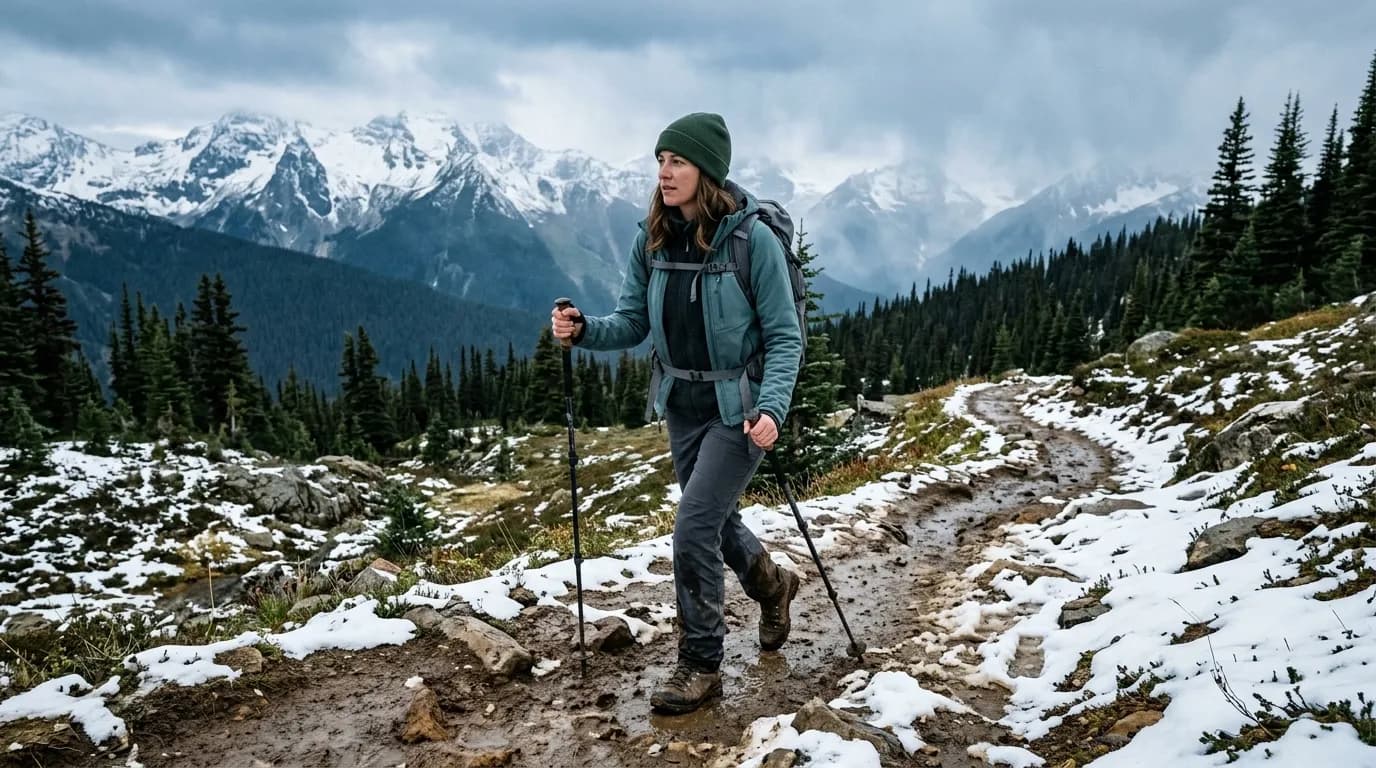
Uphill: base or base plus vented shell. Mid-layer around waist or outer pocket, not snagging brush. Stops over three minutes on exposure: mid-layer on before you shiver.
Descents chill silently — less heat generated, more wind. Zip shell and add mid before long downhills if temps drop toward evening.
Starter Plan: First Shoulder Season Weekend
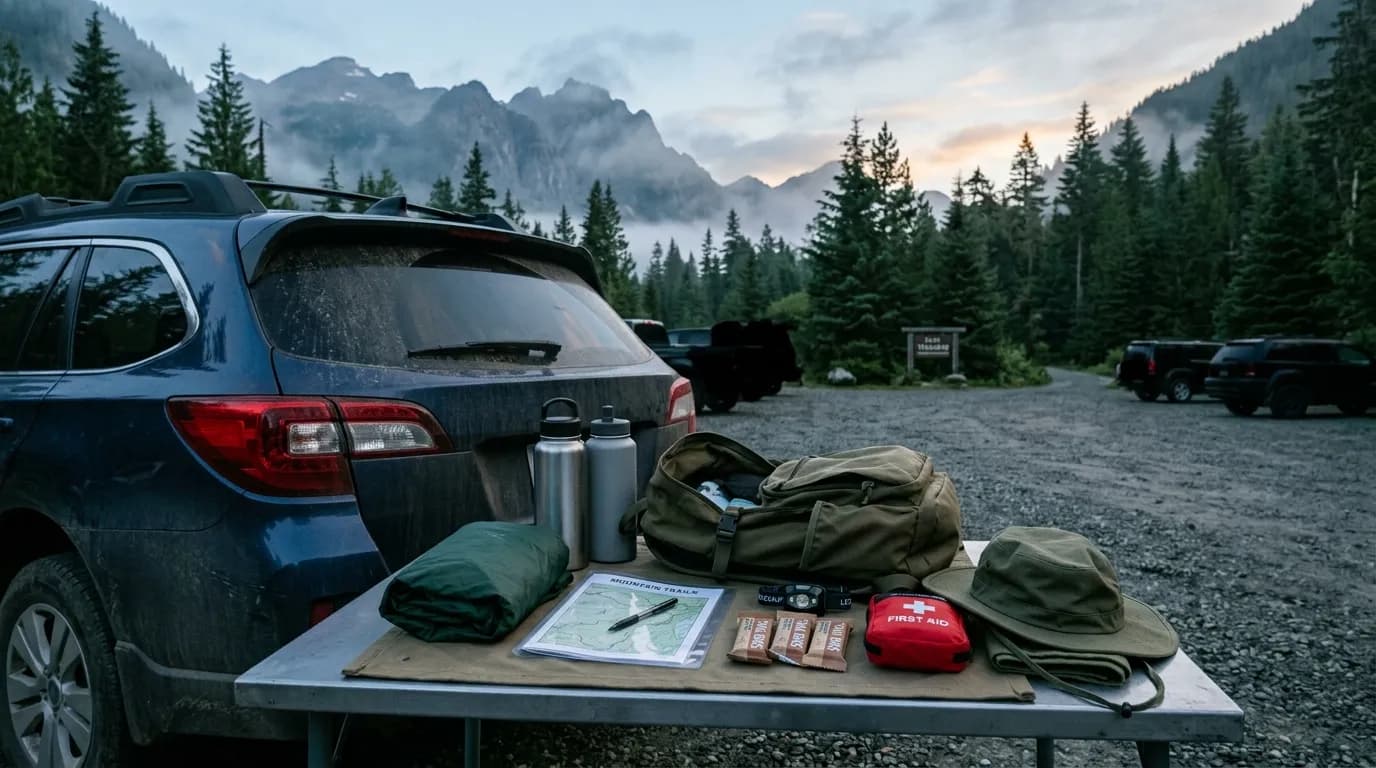
- Lay out base, mid, shell, hat, gloves; pack shell on top.
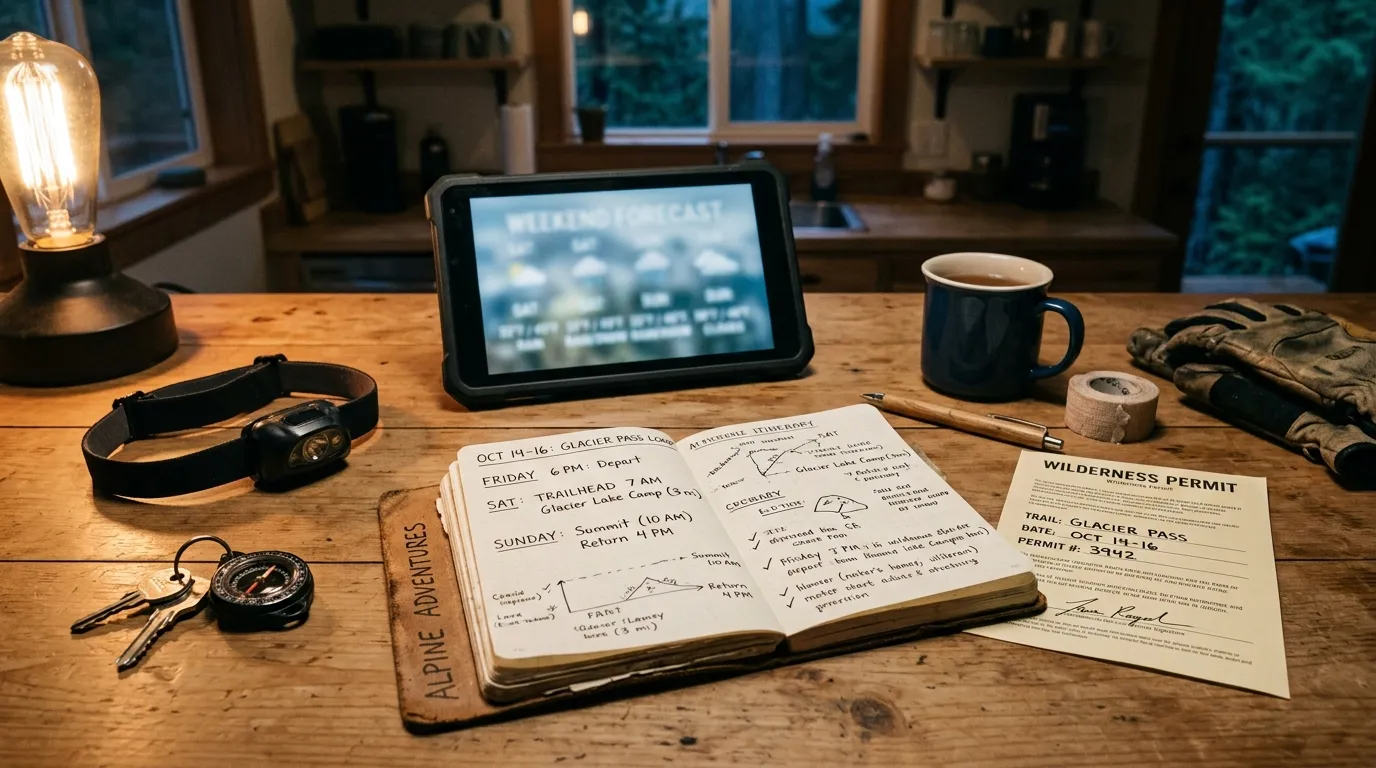
- Compare trailhead and summit forecasts including wind.
- Reassess layers after twenty minutes walking.
- Group rule: insulation on before breaks when windy.
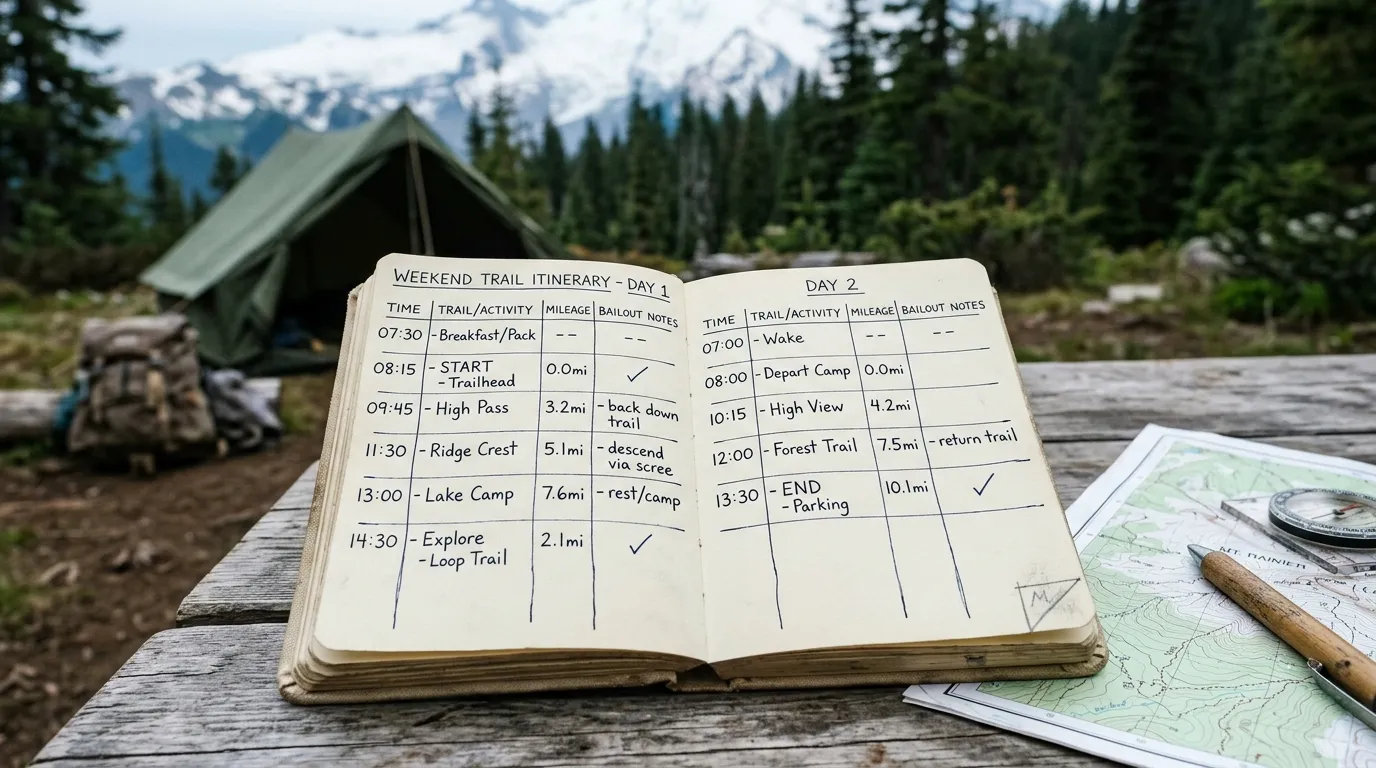
- Log Saturday choices; adjust Sunday before leaving camp.
Common Mistakes
- Dressing cozy at the car — overheating follows.
- Cotton hoodies as mid-layers — they hold moisture.
- Shell buried — squalls reward fast access.
- Same plan Sunday without extra warmth for tired legs.
- Ignoring wet feet — cold toes distort every layer call.
Sample Scenarios
Chilly Morning, Warm Afternoon
Forty-two at trailhead, sixty-eight at summit, clear. Start base plus grid fleece; stow by mile two; shell for return ridge wind. Leaving fleece in the car because it will warm up is the classic error.
Drizzle and Overcast
Shell for wind and spits while moving; vent pit zips. Mid at stops only. Rain pants when brush is wet or hours above treeline. Keep moving — damp base layers dry faster in motion than when stopped cold.
Two-Day with Camp
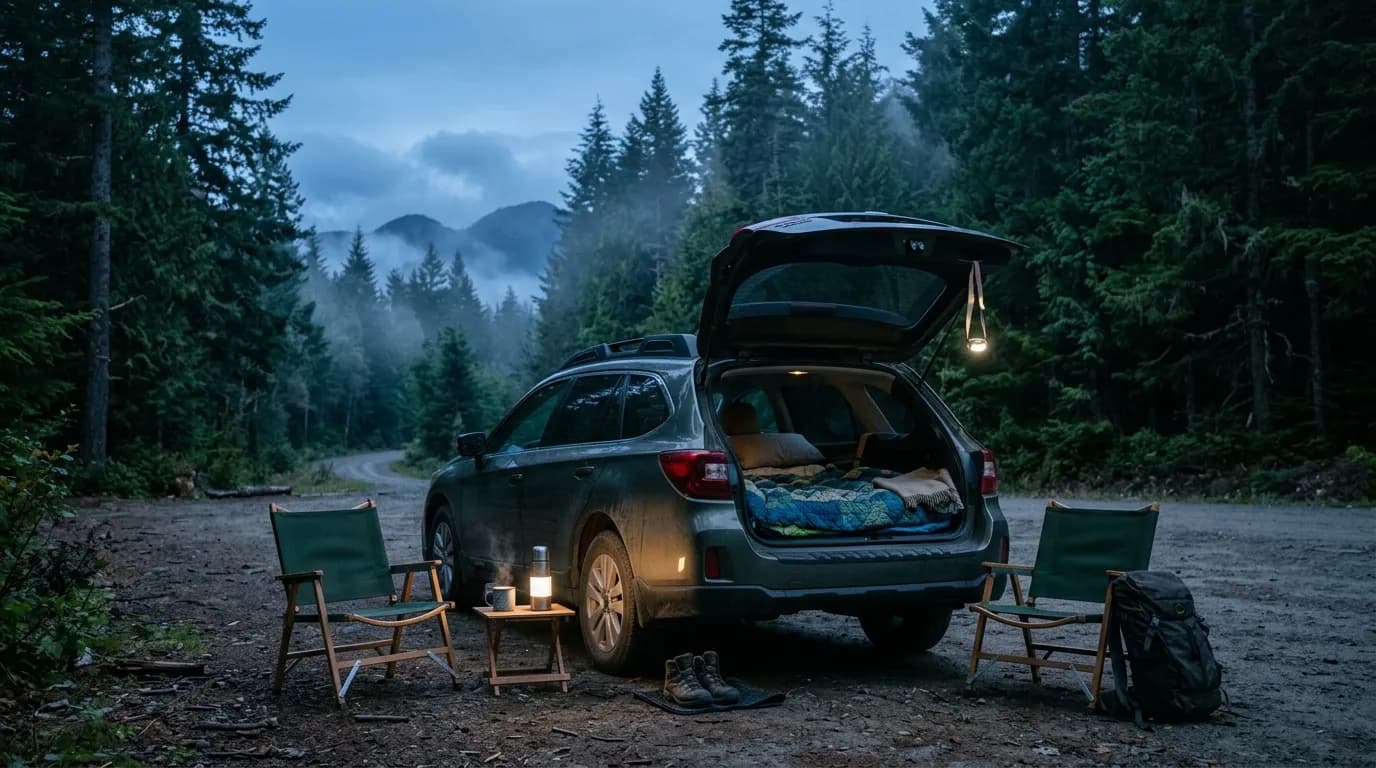
Saturday feels like summer effort; Sunday camp mornings can be mid-thirties. Pack camp insulation separate from moving layers. Dry base at camp beats another blanket over damp shirts.
Frequently Asked Questions
How many layers for shoulder season day hikes?
Base, one mid, shell, hat, gloves works for most.. Add rain pants on long exposed routes.
Softshell or hardshell?
Softshells suit dry wind; shoulder showers favor breathable hardshell you trust in real rain..
Shorts or pants in spring?
Pants win on brush, ticks, and cold cols.. Shorts on low maintained trails above fifty degrees.
Different speeds in one group?
Carry your own layers; communicate stops instead of borrowing pace to decide warmth..
Different layers Sunday?
Often yes — fatigue reduces heat output and camp mornings are colder..
Educational outdoor guidance only — not professional safety or medical advice.
Related Guides
On mixed forest-and-ridge weekends, temperature swings of thirty degrees between shade and sun are normal, not exceptional. Treat every layer as a tool you deploy when conditions change, not as identity. The hiker in a puffy at the trailhead and a tee shirt at mile four is doing it right.
Practice the sixty-second layer drill at home: pack to trailhead setup, mid-hike stop, and sudden rain simulation. Knowing where each piece lives saves more time than any ultralight spreadsheet.
Synthetic mid-layers forgive damp shoulder mornings better than down when you sweat on the first climb. Save down for dry camp evenings when you are not generating heat.
Wind on cols steals heat faster than ambient temperature suggests. If your hands go numb during a five-minute photo stop, your group needs a layer rule before the next exposed section.
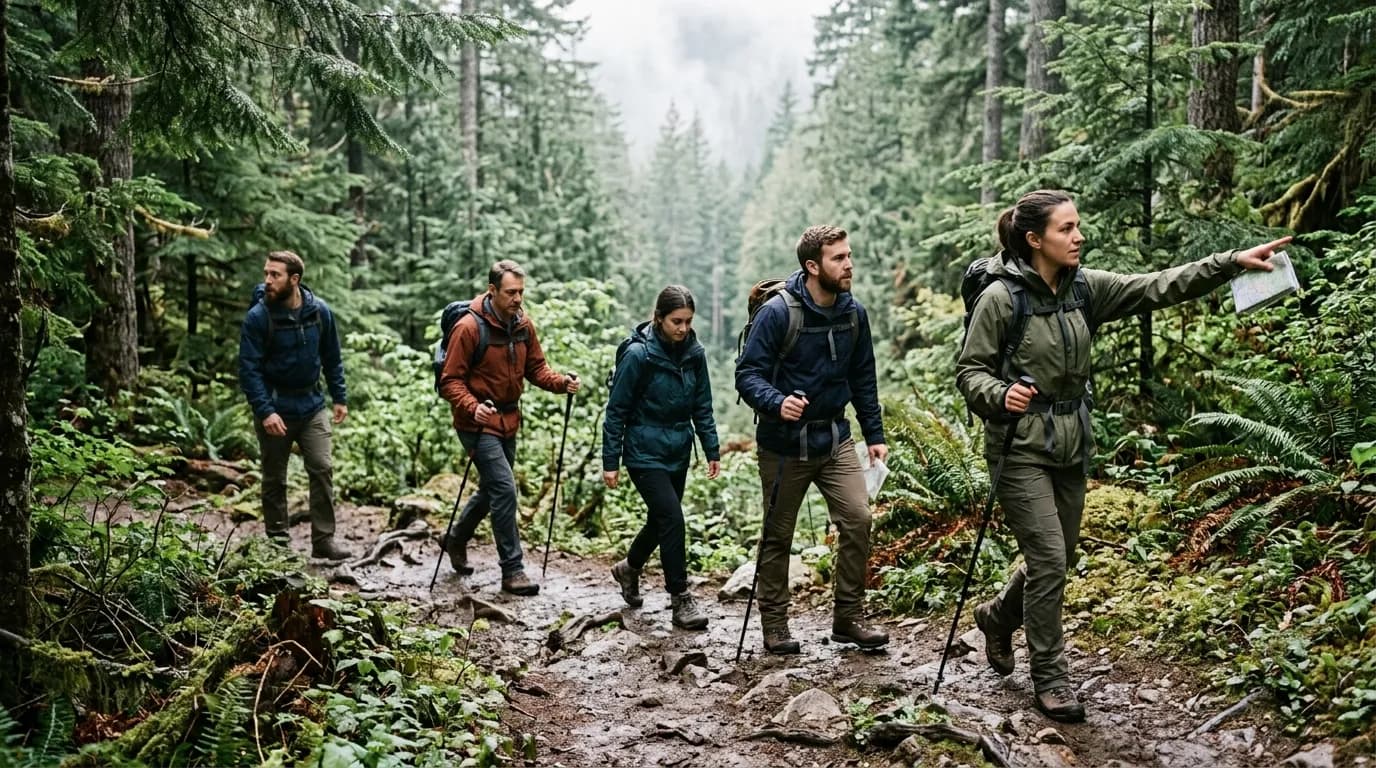
Share layer plans with your weekend crew so nobody waits while one person repacks. Matching expectations prevents the silent resentment that builds when fast hikers feel slowed by clothing stops.
Weekend trail culture runs on small repeatable decisions: what time you leave the trailhead, how you split snacks, whether you name a turnaround before the first viewpoint. Those decisions compound across two days more than any single gear upgrade. Write them down once and your next trip starts calmer.
Trail time differs from clock time in ways maps hide. A flat six miles with social pacing can take as long as a steep four with a fit solo hiker. Build your plan around hours on feet and elevation change, then adjust for group size and photo stops. Distance alone misleads packing and food math.
Communication beats equipment in most weekend friction stories. Saying "I need a layer stop" early prevents the cranky shuffle later. Saying "I think we are behind the itinerary" at lunch prevents the doomed push for a summit at dusk. Polite clarity is a safety skill.
Water planning deserves its own line on every itinerary. Mark last reliable sources on the map. Note whether streams are seasonal. Running dry on mile eight of ten turns a good day into a cautious retreat even when legs feel fine.
Food fatigue is real on long days — the bar you loved at mile two tastes like cardboard at mile seven. Pack variety: something chewy, something salty, something with quick sugar. Eat before you are empty; bonking makes every downhill feel steeper.
Foot care is recovery in disguise. Trim nails before multi-day weekends. Address hot spots when they tingle, not when they blister. Dry socks in the car for day two cost little space and save entire trips.
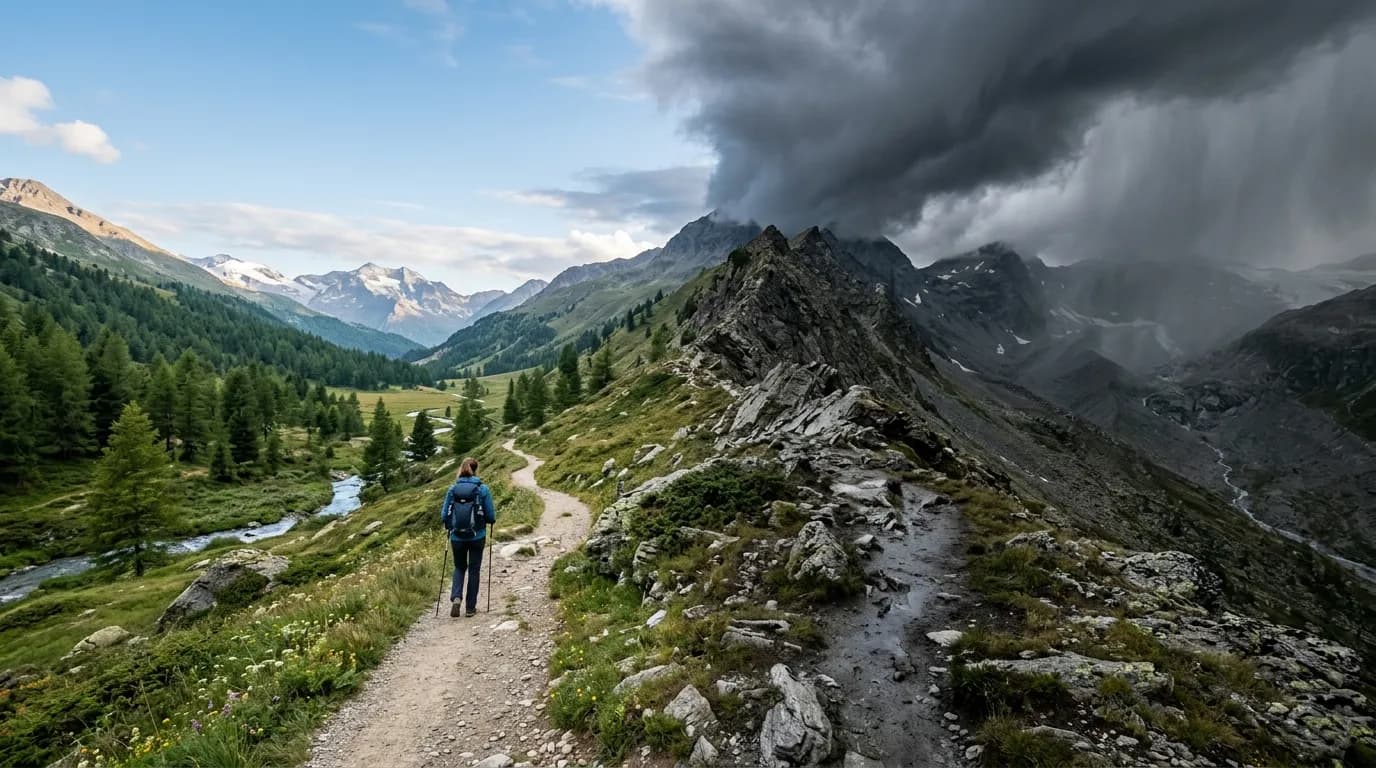
Weather windows on shoulder weekends are narrow. Morning starts are not heroic; they are arithmetic. Afternoon storms on ridges do not negotiate because you slept in. Align leave times with forecast trends, not with brunch preferences.
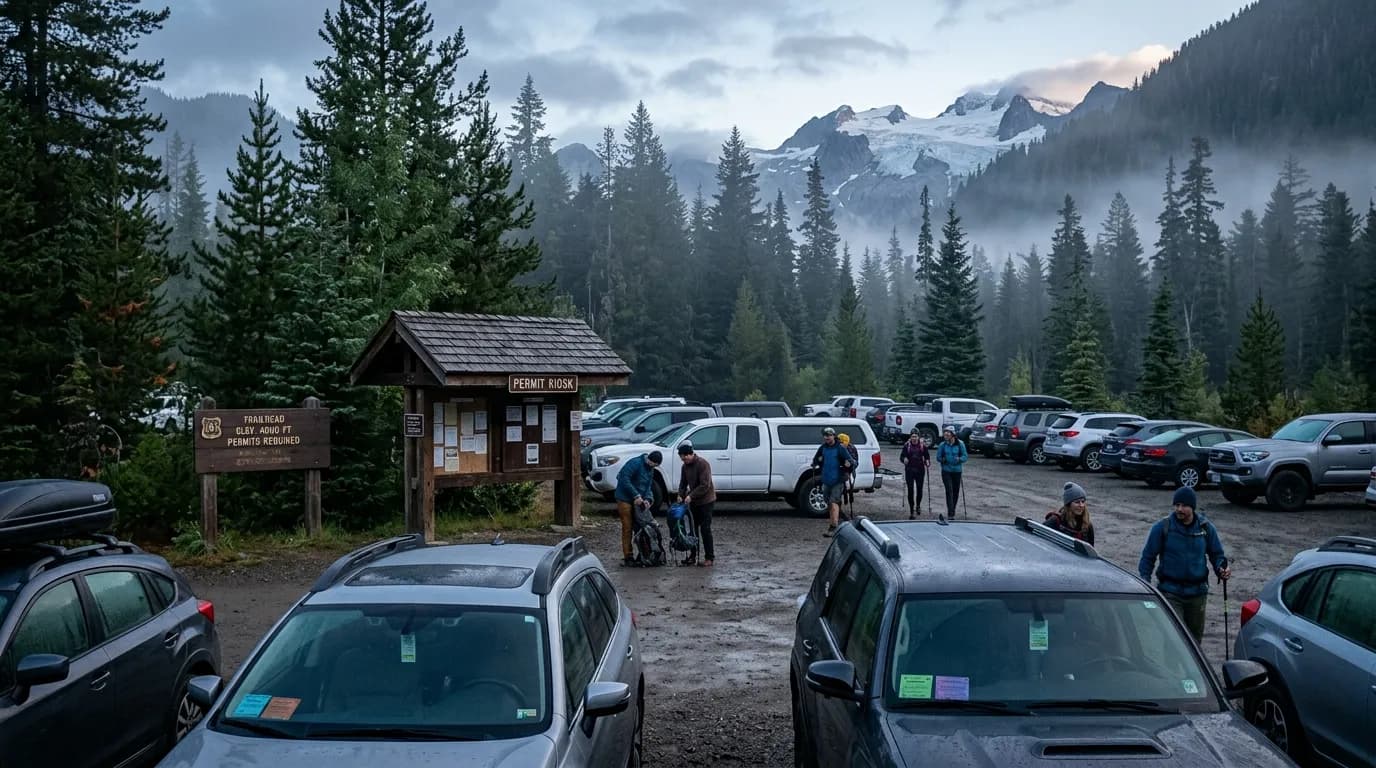
Parking logistics belong in planning. Popular trailheads fill by eight on fair weekends. Backup lots, permit kiosks, and pit toilets affect real departure times. Add those minutes before you promise someone you will be home for dinner.
Leave No Trace applies to group behavior too: yield on narrow trails, keep voices low near camps, pack out orange peels and apple cores. Weekend crowds test trail ethics; your group can either add stress or model calm trail citizenship.
Navigation confidence grows when everyone glances at the map, not only the designated navigator. Rotate who reads the junction sign aloud. Shared awareness prevents one tired person from missing a critical fork at dusk.
Emergency plans need not be dramatic. Know the nearest road crossing, cell pockets if any, and who calls home if you are late. A laminated card in the pack beats a heroic story about improvising under stress.
Fitness varies within friend groups. Weekend trips survive when pace matches sustainable effort for the whole crew, not the person who ran a 5K last month. Pride is heavy; slow is smooth, smooth is fast over ten miles.
Sleep debt from Friday night drives affects Saturday more than people admit. If the group stayed up late, build a later but shorter route instead of pretending everyone is fresh at 5 a.m. Honest starts beat miserable slogs.
Gear familiarity matters: new boots, new pack, new rain jacket — test on shorter outings before a ten-mile weekend centerpiece. Unknown friction points appear around hour four, exactly when you have no spare attention.
Sun exposure accumulates on open ridges even in cool air. Burned necks and squint headaches degrade decisions on descent. Sunscreen, lips, and eyes are not summer affectations; they are ten-mile essentials.
Stream crossings slow groups disproportionately. Plan extra time if the route crosses multiple creeks in spring runoff. Unbuckle hip belts before deep crossings, face upstream, use poles — and count that teaching time in the itinerary.
Dogs, kids, and photographers change pace math. If your group includes any of the three, widen time buffers and shorten distance before you widen ambition. Successful weekends repeat; overreach once and people decline the next invite.
Post-trip review takes ten minutes in the car: what worked, what we carry next time, what we leave home. That review is how casual hikers become reliable partners without formal training.
Altitude affects appetite and hydration even below mountaineering heights. If the weekend includes new elevation for your crew, add snacks and water capacity beyond flatland habits.
Trail maintenance changes routes. Downed trees, washed bridges, and seasonal closures appear on social feeds before official pages update. Check recent trip reports the night before and mark alternatives on the map.
On mixed forest-and-ridge weekends, temperature swings of thirty degrees between shade and sun are normal, not exceptional. Treat every layer as a tool you deploy when conditions change, not as identity. The hiker in a puffy at the trailhead and a tee shirt at mile four is doing it right.
Practice the sixty-second layer drill at home: pack to trailhead setup, mid-hike stop, and sudden rain simulation. Knowing where each piece lives saves more time than any ultralight spreadsheet.
Synthetic mid-layers forgive damp shoulder mornings better than down when you sweat on the first climb. Save down for dry camp evenings when you are not generating heat.
Wind on cols steals heat faster than ambient temperature suggests. If your hands go numb during a five-minute photo stop, your group needs a layer rule before the next exposed section.
Share layer plans with your weekend crew so nobody waits while one person repacks. Matching expectations prevents the silent resentment that builds when fast hikers feel slowed by clothing stops.
Weekend trail culture runs on small repeatable decisions: what time you leave the trailhead, how you split snacks, whether you name a turnaround before the first viewpoint. Those decisions compound across two days more than any single gear upgrade. Write them down once and your next trip starts calmer.
Trail time differs from clock time in ways maps hide. A flat six miles with social pacing can take as long as a steep four with a fit solo hiker. Build your plan around hours on feet and elevation change, then adjust for group size and photo stops. Distance alone misleads packing and food math.
Communication beats equipment in most weekend friction stories. Saying "I need a layer stop" early prevents the cranky shuffle later. Saying "I think we are behind the itinerary" at lunch prevents the doomed push for a summit at dusk. Polite clarity is a safety skill.
Water planning deserves its own line on every itinerary. Mark last reliable sources on the map. Note whether streams are seasonal. Running dry on mile eight of ten turns a good day into a cautious retreat even when legs feel fine.
Food fatigue is real on long days — the bar you loved at mile two tastes like cardboard at mile seven. Pack variety: something chewy, something salty, something with quick sugar. Eat before you are empty; bonking makes every downhill feel steeper.