Layering sounds like a lecture from a mountaineering course. On a day hike it is simpler than that: wear what keeps you moving without soaking in sweat, carry what keeps you alive when the sky changes its mind, and adjust before you are shivering or overheating. You do not need a closet of specialty fabrics. You need a repeatable system that works on forest loops and windy ridges alike.
This guide strips layering down to three roles—base, insulation, shell—and shows how to pick each for same-day trails. We will talk about when to wear versus carry, how to avoid the “cotton trap,” and why the best layer is often the one you put on early instead of the one you heroically refuse until mile eight. For season-by-season outfit choices, pair this with what to wear hiking by season. For the tricky in-between months, see shoulder season layering for weekend trails.
The three-layer idea, translated for day hikes
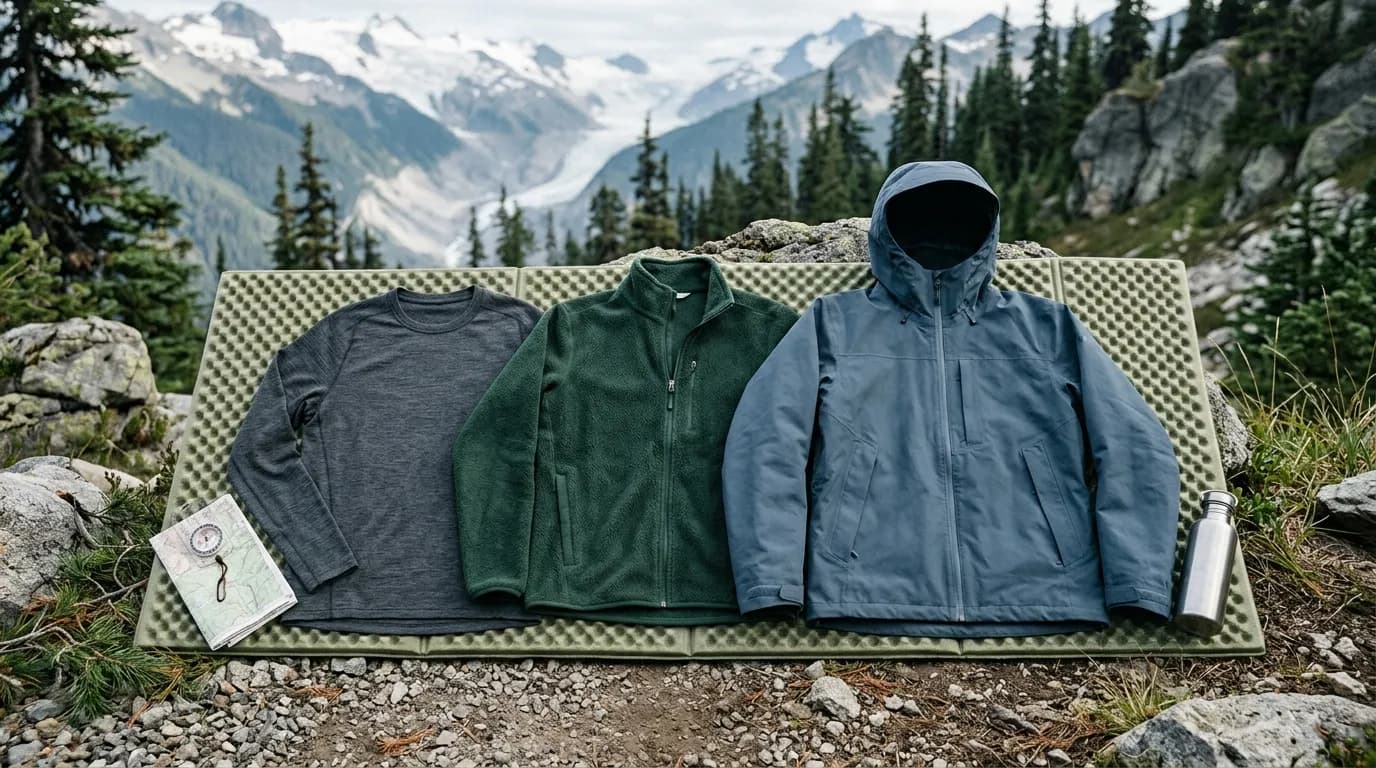
Classic layering uses a base layer to manage moisture against skin, a midlayer for warmth, and an outer shell for wind and rain. On a day hike you might wear two of those and carry the third. That is the whole trick. The system is modular, not mandatory full-time costume.
Think in terms of temperature regulation, not fashion categories. When you climb, you generate heat. When you stop for lunch on an exposed ledge, you lose heat fast. When drizzle arrives, water stops being a comfort issue and becomes a hypothermia accelerant if you are already chilled. Layers are how you ride those swings without stopping every mile to reinvent your outfit.
Day hikers fail layering in predictable ways: starting too warm, carrying a cotton hoodie “because it is soft,” or owning a premium shell they never unzip. Simplifying means fewer pieces that each do one job well, and a habit of adjusting at the first sign of mismatch, not at the crisis point.
Base layer: moisture management, not warmth marketing
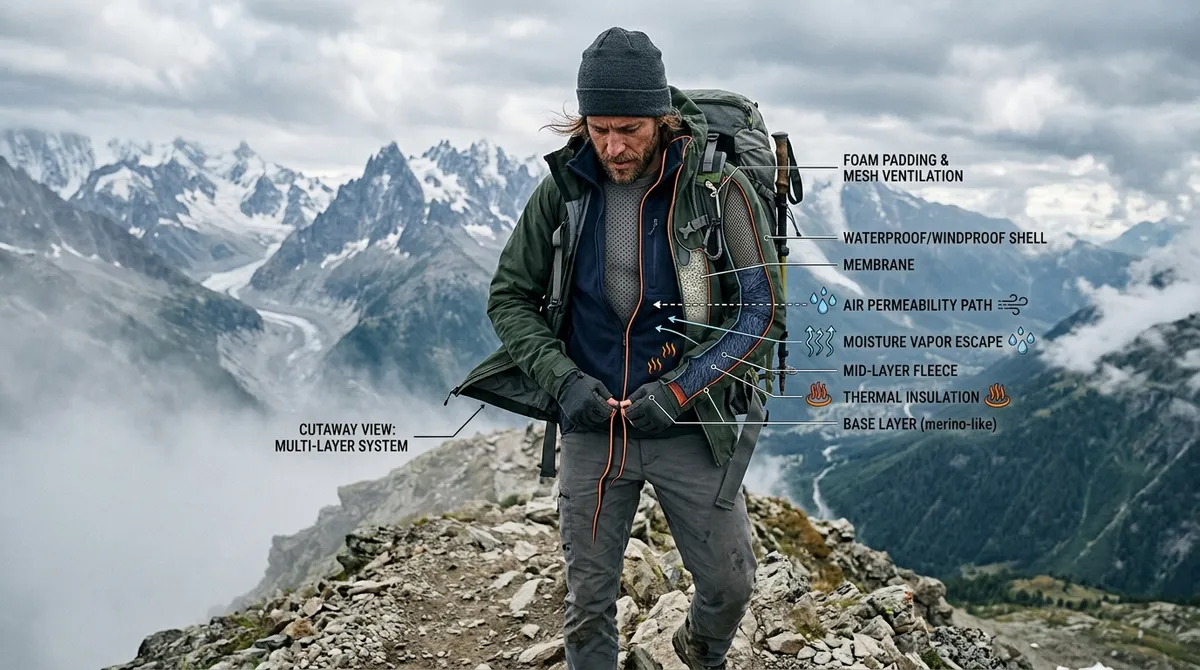
Your base layer is what touches skin: a tee, long-sleeve top, or thin merino or synthetic shirt. Its job is to wick sweat and dry reasonably fast so you are not wearing a damp sponge when the wind picks up. For warm hikes, a breathable synthetic tee or merino tee is enough. For cool starts, a long-sleeve lightweight base adds comfort without bulk.
Avoid cotton for active hiking in variable weather. Cotton holds moisture, dries slowly, and steals warmth when you pause. That old college sweatshirt feels cozy at the trailhead and becomes a liability at the overlook. If you love natural fibers, merino wool offers odor resistance and better wet behavior than cotton, at a higher price.
Fit matters. A base layer should not flap like a sail, but it should not strangle either. You want enough contact for wicking without restricting arm swing on scrambles. On hot days, some hikers skip a formal base and use a quick-dry hiking shirt; that is fine if the fabric behaves like a wick, not a sponge.
Base layer quick picks by day type
- Warm summer loop: lightweight synthetic tee or tank with sun coverage as needed.
- Shoulder season morning: long-sleeve merino or synthetic; roll sleeves as you warm.
- Windy ridge day: fitted long-sleeve base plus shell when moving; add midlayer at stops.
Midlayer: warmth you can hold in your hand
The midlayer traps air and adds insulation: fleece pullover, lightweight puffy, or hybrid piece. On day hikes, this is usually the layer you carry in spring and fall, wear in winter, and sometimes skip entirely in midsummer except at altitude. The best midlayer for you is the one that packs small and warms you within sixty seconds of putting it on.
Fleece is durable, breathes well, and handles light mist under a shell. Synthetic puffy jackets offer warmth-to-weight magic and pack down for a rain pocket. Down is excellent in dry cold but suffers when soaked unless treated; many day hikers in wet climates prefer synthetic fill for simplicity. You do not need both fleece and puffy for a day hike unless you routinely hike in true winter conditions.
Size your midlayer to fit over your base and under your shell without pulling the shell’s zipper into a stress test. If your rain jacket only zips when you are wearing a tee, your shoulder-season system is already broken. Try the full stack at home once before a windy summit day.
Shell layer: wind and rain insurance
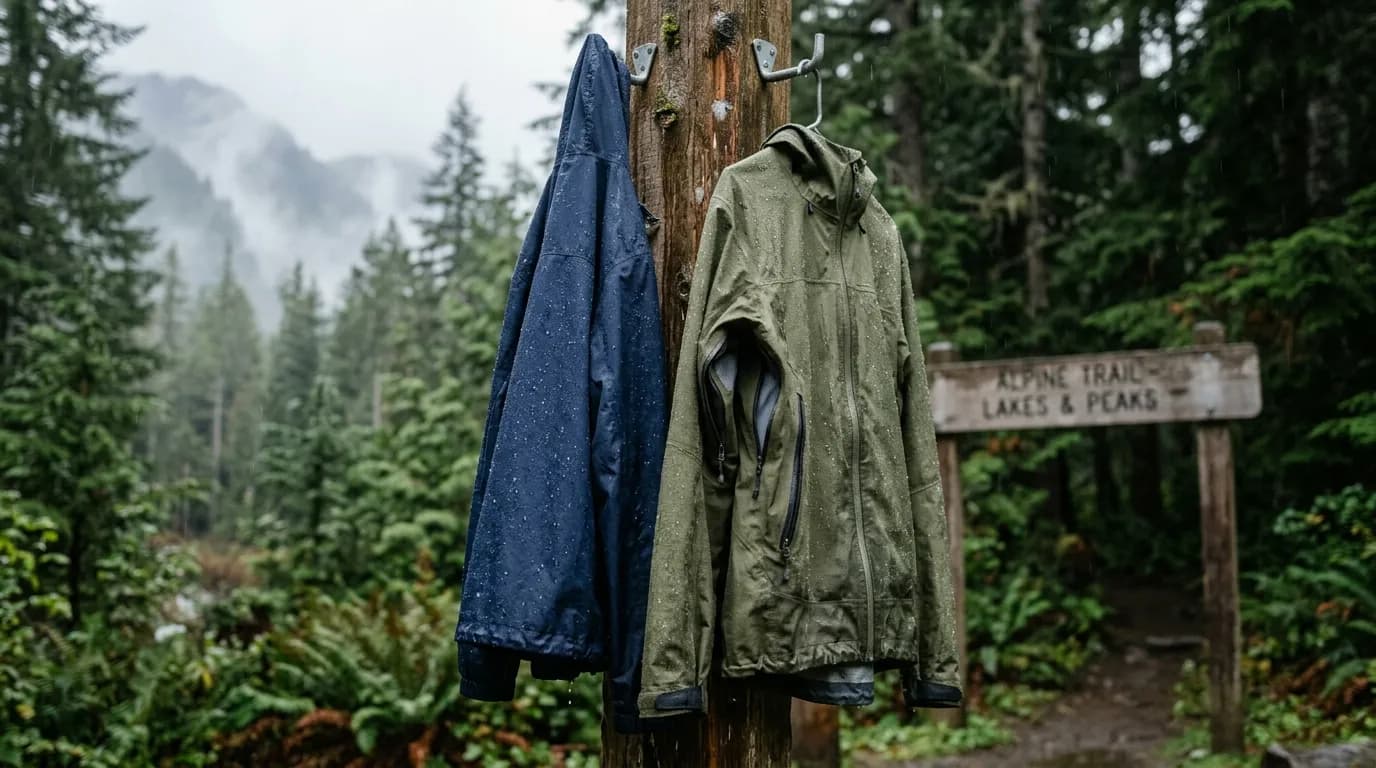
The shell blocks wind and sheds rain. For day hiking, a breathable rain jacket beats a cheap plastic poncho in comfort, though any rain protection beats none. Look for an adjustable hood that turns with your head, pit zips or generous venting if you run hot, and cuffs that seal without cutting circulation. Length should cover your lower back when you bend to adjust boots.
Waterproofness is a spectrum. A fully taped three-layer hardshell is wonderful in sustained rain and overkill for a ten-minute shower on a forest loop. Many day hikers choose a 2.5-layer or quality 2-layer shell with DWR finish and accept re-treatment over time. The shell you actually carry beats the shell that lives in your closet because it crinkles too loudly.
Wind without rain still warrants a shell on exposed ridges. A thin windshirt can live in your pack all summer. When temperatures drop, that same wind barrier keeps your midlayer’s trapped heat from getting stolen by gusts. Put the shell on before you are cold; zipping up while shivering is slower and wastes calories you wanted for the view.
Wear versus carry: the adjustment habit
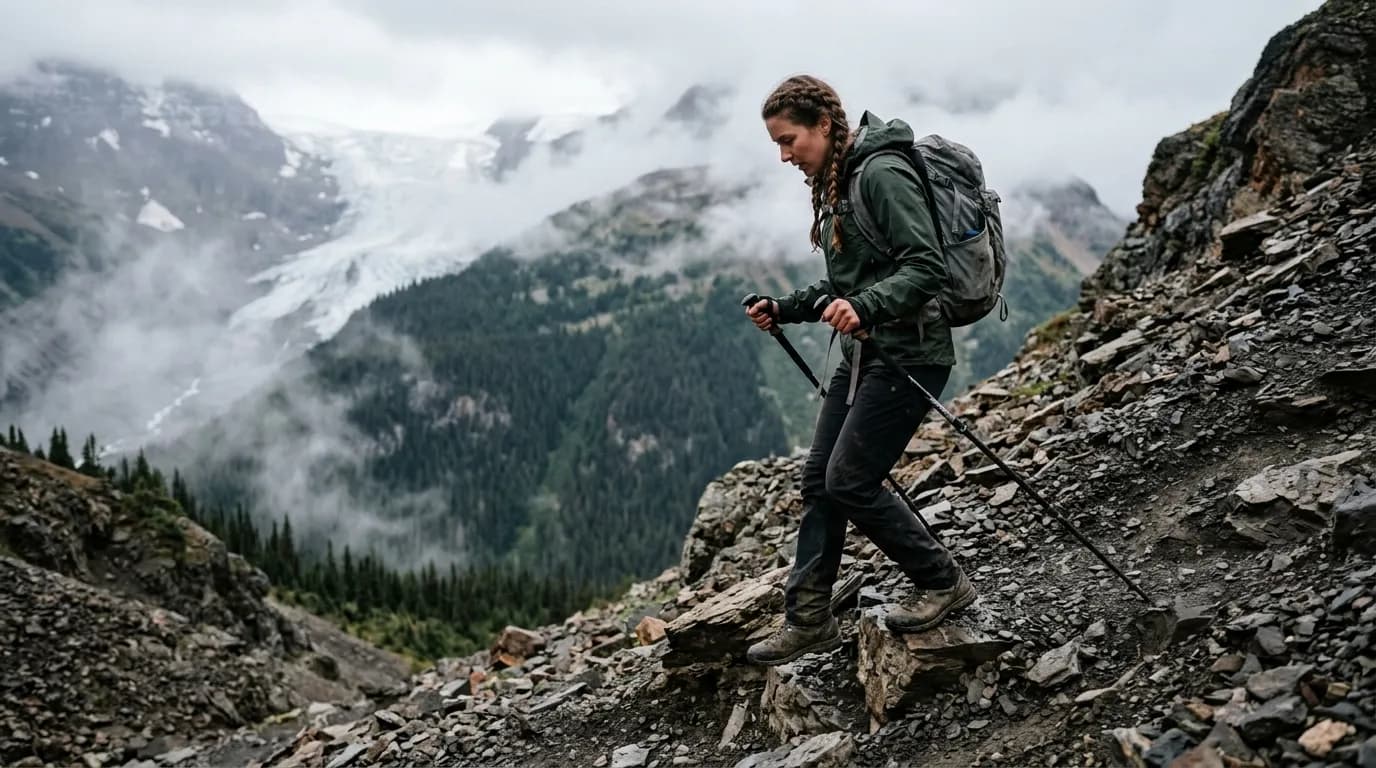
Layering is dynamic. The trailhead outfit should rarely survive unchanged to the summit. Start slightly cool on climbs; you will warm within ten minutes. If you are sweating heavily while ascending, remove a layer or vent your shell before you soak your base. At breaks, add insulation before you feel chilled. Waiting until teeth chatter turns a snack stop into a recovery project.
A simple rule: if you stop for more than three minutes on an exposed spot, put on your midlayer or shell. If you are climbing and your back is wet under the pack, open vents or shed a layer. Partners who hike at different paces should each own their adjustment rhythm instead of copying the fastest person’s wardrobe.
Legs matter too. Lightweight hiking pants or shorts with a spare base layer bottom in the pack cover most day hikes. Rain pants are optional for many summer routes but valuable in cold rain or bushwhacking wet brush. If you carry rain pants, they should go on before your thighs are already soaked and cold.
Seasonal simplification without a gear explosion
Spring and fall reward a base plus midlayer carry plus shell. Summer often reduces to base plus shell in the pack for afternoon storms, especially above treeline. Winter day hikes may have you wearing base plus midlayer plus shell from the start, with spare gloves and hat in a pocket. The system stays the same; the starting point moves.
Altitude changes the calendar. A valley hike in June can feel like October at the summit. Check forecast for the high point, not just the parking lot. Our seasonal guide at what to wear hiking by season maps typical starting outfits. Use it as a template, then adjust for your sweat rate and pace.
Shoulder season is where hikers either look like geniuses or like they brought a bedroom. The middle months need fewer pieces but smarter timing. Read shoulder season layering for weekend trails for weekend-specific examples: early starts, late returns, and parking-lot temperatures that lie about the ridge.
Fabric cheat sheet for real people
Merino wool: excellent odor control, comfortable across a wide temperature range, slower to dry than synthetics but still usable when damp. Good for multi-day smell peace; price and durability vary by blend.
Polyester synthetics: affordable, quick-drying, common in hiking shirts and fleeces. Can retain odor over time; wash regularly. Great workhorse for sweaty climbs.
Fleece: midlayer classic; breathable; not windproof alone. Pair with shell in gusts.
Down fill: unmatched warmth-to-weight when dry; carry with shell in wet regions.
Softshell jackets: comfortable and wind-resistant; not full rain replacement unless specified.
Membrane rain jackets: waterproof-breathable tradeoffs; prioritize fit and venting over marketing numbers you cannot feel on trail.
Accessories that complete the system
Hat: sun cap in summer, warm beanie in cold. Buff or neck gaiter bridges chin and collar gaps without a full wardrobe change. Gloves: lightweight liners in shoulder season, warmer pair for winter day hikes. They weigh little and save morale.
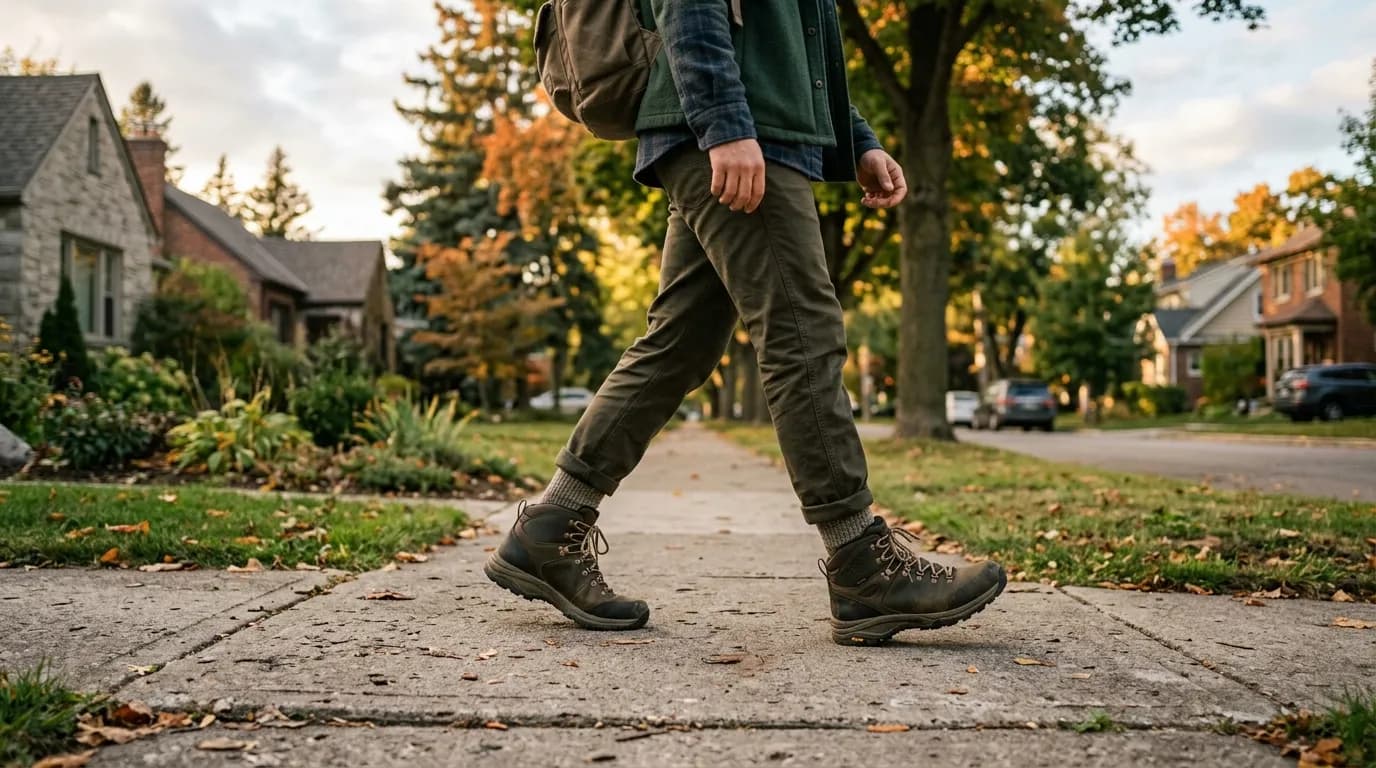
Socks are not layers in the textbook sense, but wet feet change how cold you feel globally. Wool-blend hiking socks paired with breathable footwear beat cotton athletic socks on long days. Spare socks in a zip bag count as comfort insurance, not luxury.
Sunglasses and sunscreen reduce heat stress and glare fatigue, which indirectly keeps your layering decisions clearer. Irritated, squinting hikers make lazy choices about shells and pace.
Building a minimal layer kit
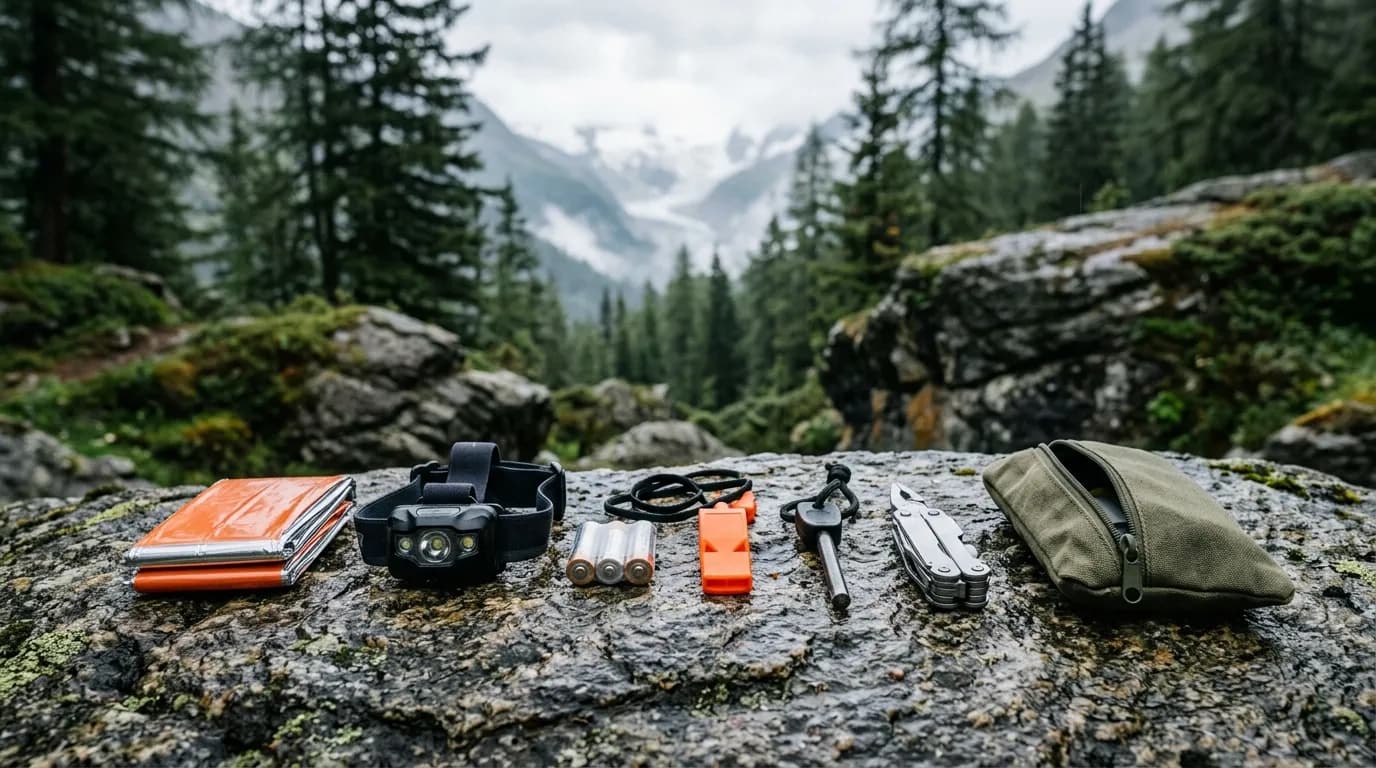
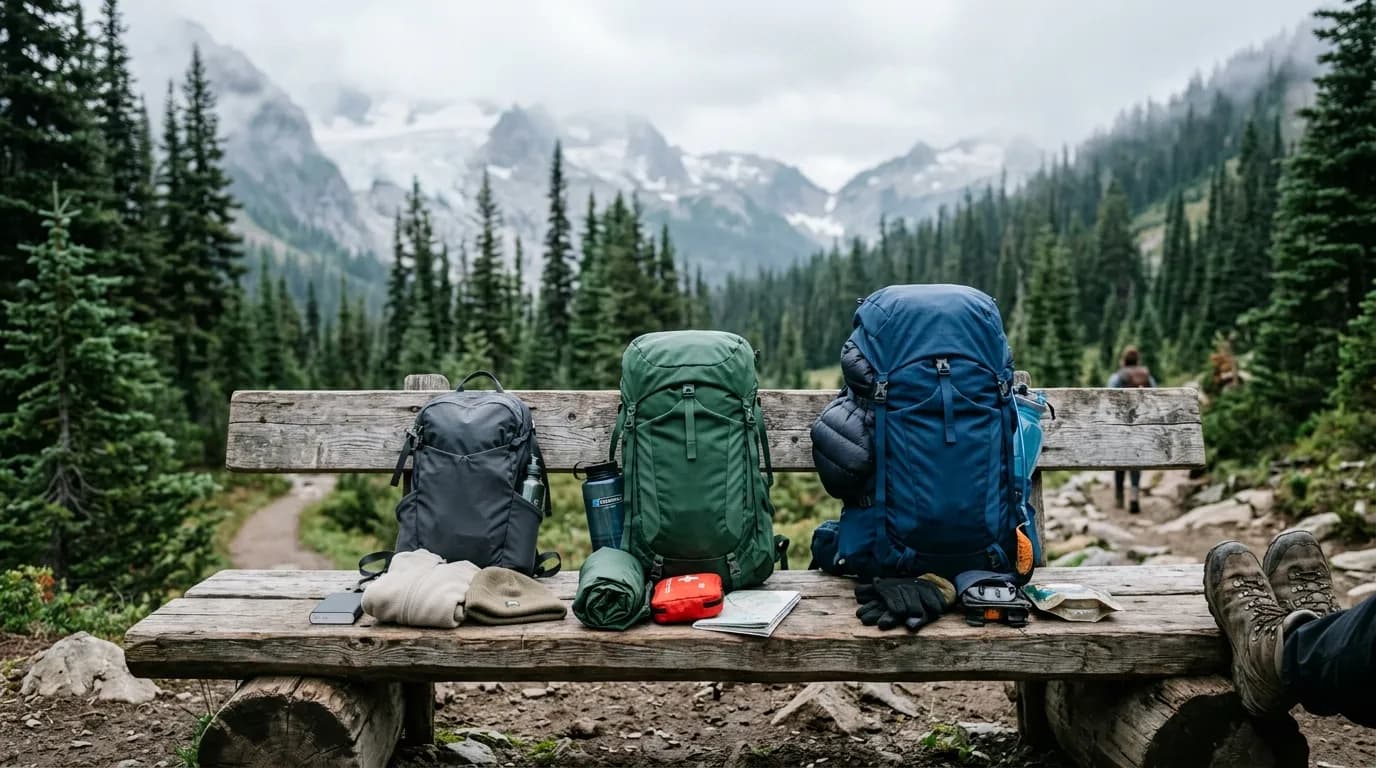
For most day hikers in temperate climates, a strong starter kit looks like this: one quick-dry hiking shirt or merino base, one fleece or synthetic puffy midlayer, one rain shell with hood, one spare base top in a dry bag for emergencies, hat and gloves sized to your coldest likely day, and rain pants only if your trails are wet or windy often.
That kit rotates across seasons by changing what you wear at the start and what stays folded in the pack. Resist buying duplicate midlayers in three colors before you prove one works. Color does not add warmth. Fit and fabric do.
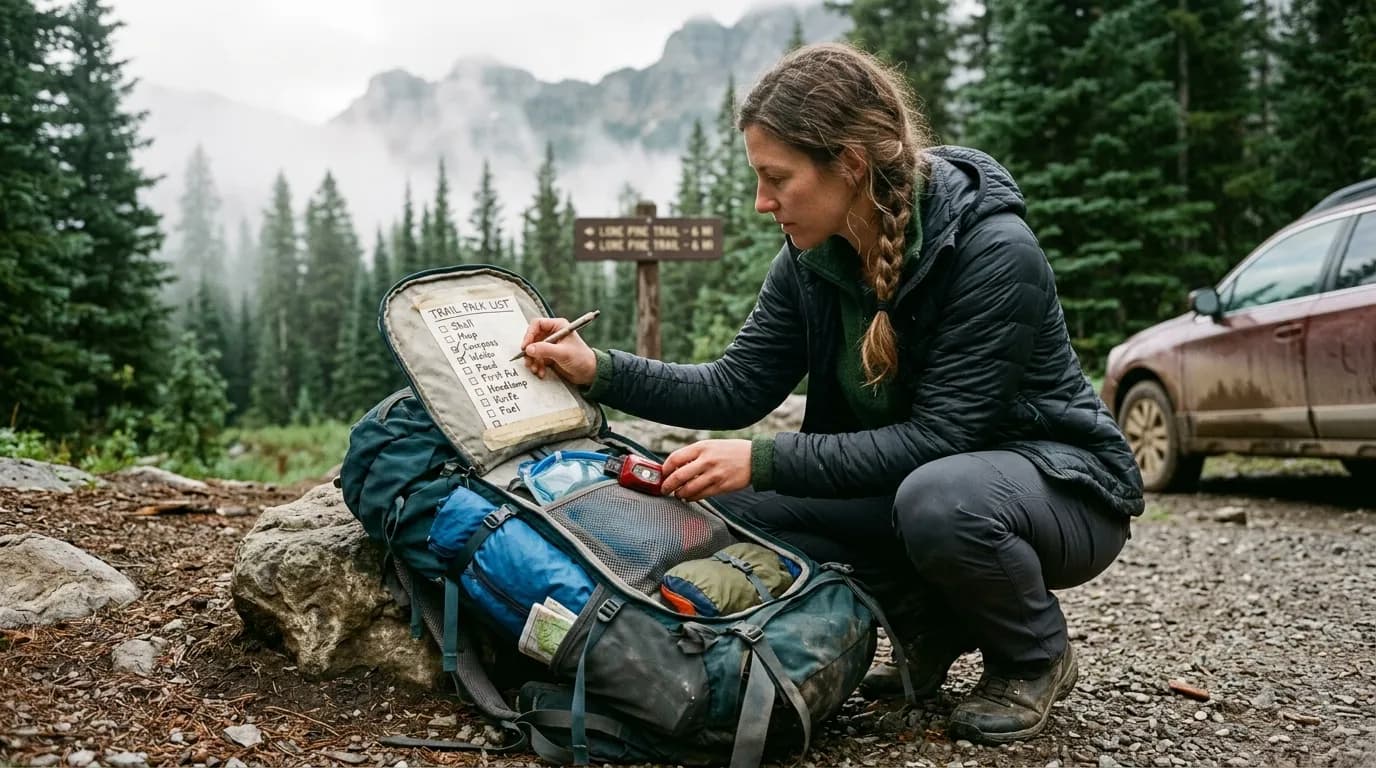
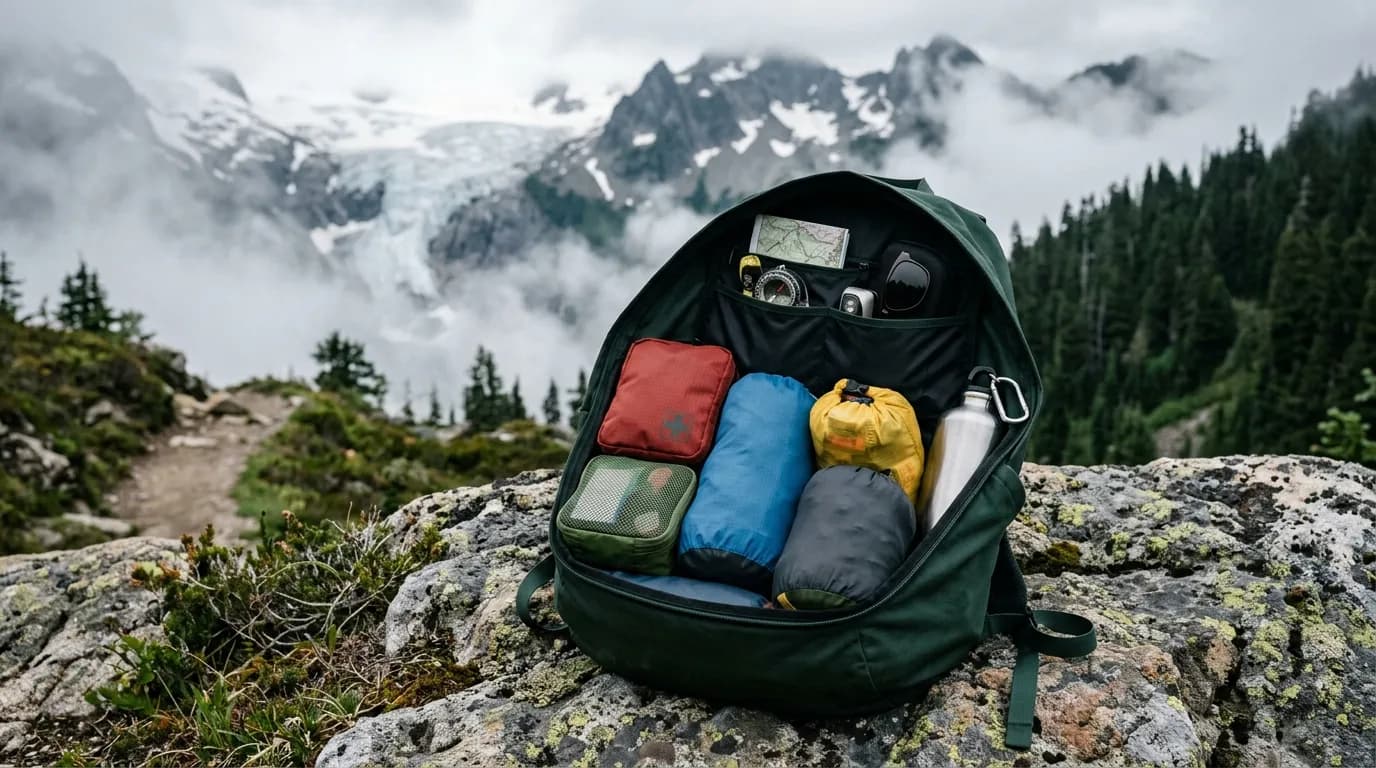
Store layers where you will grab them. Shell in top pocket. Midlayer under lid. Spare base in a waterproof sack at the bottom. Chaos packing turns a good system into “I think the fleece is somewhere.”
Layering for pace and body type
Fast hikers generate more heat; they may run a lighter midlayer or vent aggressively. Slow-and-steady hikers may need insulation earlier at breaks. Larger bodies and smaller bodies both need fit, not generic “unisex” boxes that fit nobody well. Women’s-specific cuts sometimes solve hip-belt and shoulder gap issues; try what matches your frame.
Backpack straps compress layers over the shoulders. A stiff shell under pack straps can feel fine for five minutes and annoying for five hours. Softer shell fabrics or wearing the midlayer under the shell but adjusting strap tension helps. Again, load the pack at home and walk stairs.
If you run cold, bias toward carrying a midlayer you will actually put on. If you run hot, bias toward breathable base and a wind shell instead of a heavy fleece you refuse to wear because you fear overheating.
Common layering mistakes
- Starting with every layer on because the parking lot felt chilly.
- Carrying cotton as the “warm layer.”
- Buying a shell too tight for a midlayer underneath.
- Waiting until hypothermia-adjacent shivering to add insulation at breaks.
- Owning no rain protection because “it might stay dry.”
- Replacing skill with gear: a puffy cannot fix a soaked cotton base.
- Ignoring legs in cold rain; torso warmth only goes so far.
Starter plan: test your stack this week
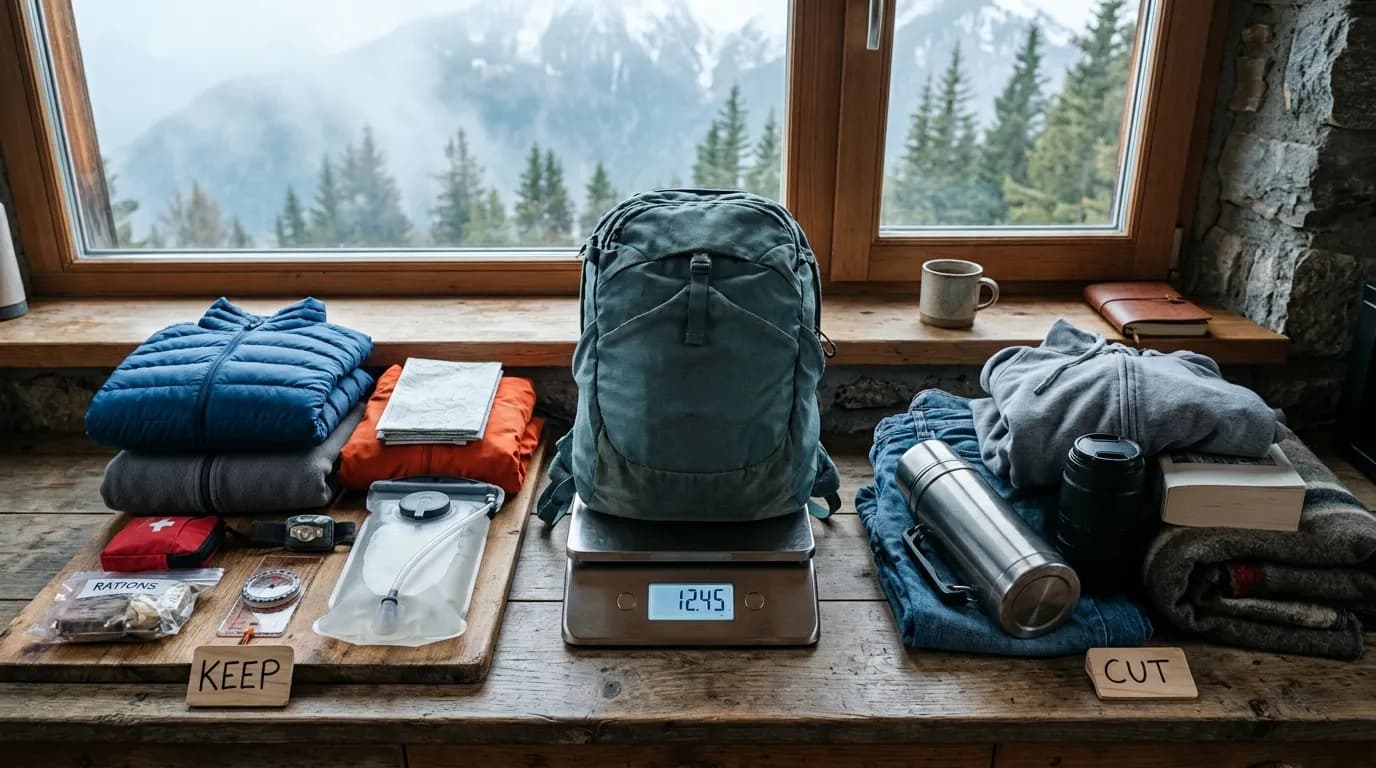
Monday evening, lay out base, mid, shell, hat, gloves. Put them on in order, then add your daypack. Reach for imaginary water, simulate a lunch stop by standing still five minutes. Notice where you overheat or gap.
Wednesday, hike a local trail with the full carry kit even if forecast looks mild. Practice one mid-hike layer change without dropping gear in mud. Friday, remove one item you did not touch and note why. After two weeks, your carry list should shrink to honest essentials.
Repeat the test when seasons shift. Layering is not a one-time purchase; it is a recurring conversation with weather.
FAQ
Do I need merino wool, or is synthetic fine?
Synthetic is fine for most day hikes. Merino helps with odor and comfort across temperature swings. Choose based on budget and how often you hike between laundry days.
Fleece or puffy for a day pack?
For damp climates and variable output, fleece under a shell is reliable. For cold dry days and minimal pack space, synthetic puffy shines. Many hikers pick one midlayer type first, then add the other only if gaps appear.
How do I layer without overheating on climbs?
Start cool, vent early, and choose breathable base fabrics. Remove midlayer before you soak the base. Use pit zips or open the front zipper on shells during exertion.
Are hiking pants a base layer?
Usually they are outerwear. Long underwear or tights can serve as a base under pants in cold conditions. For typical day hikes, one pair of appropriate hiking pants or shorts plus optional rain pants is enough.
Should kids use the same system?
Yes, simplified: quick-dry base, warm midlayer they can put on at stops, waterproof shell, hat and gloves. Kids stop moving and cool fast; add layers at breaks before they complain loudly.
Related reading
Dial outfits by calendar with what to wear hiking by season, and fine-tune spring and fall weekends with shoulder season layering for weekend trails. Layers work when you adjust them early and often.
Educational outdoor guidance only. Weather and exposure vary by route; use local forecasts and your own judgment.