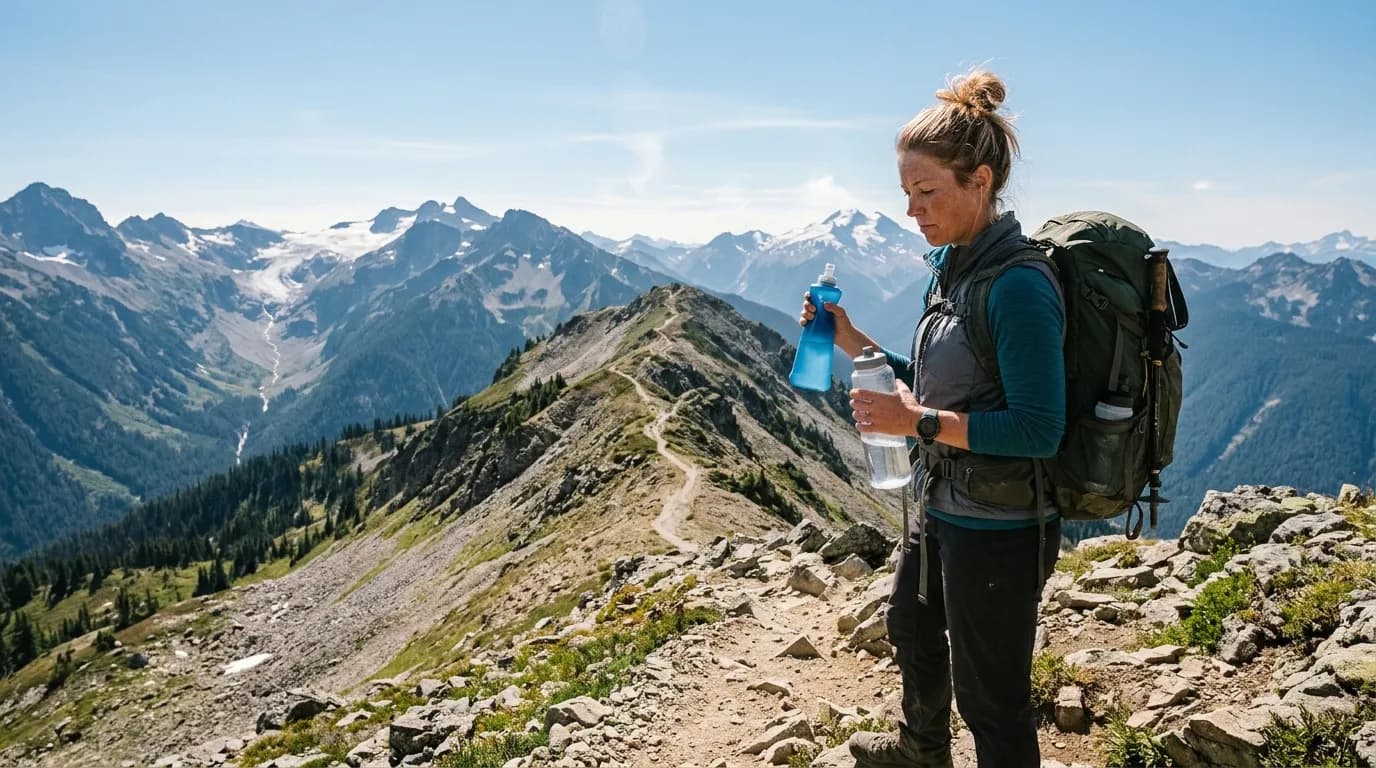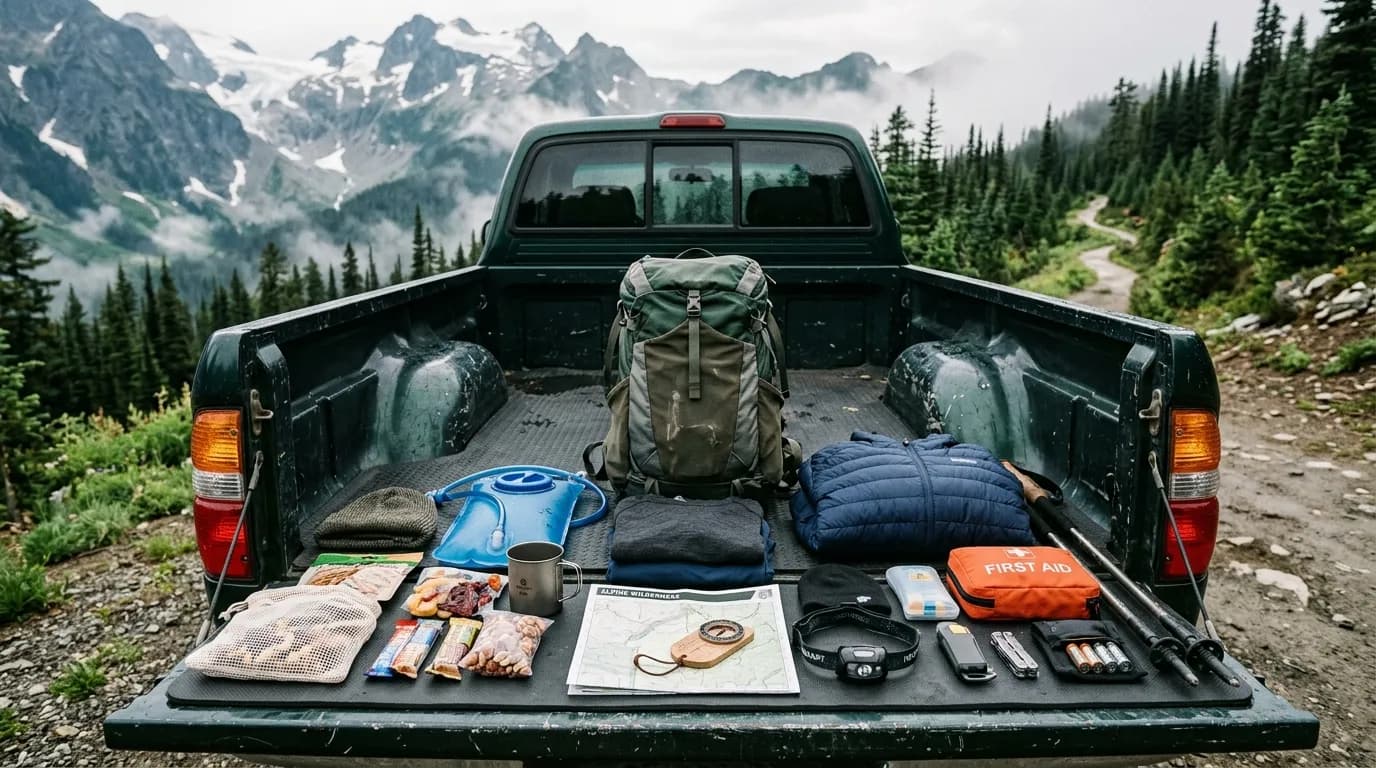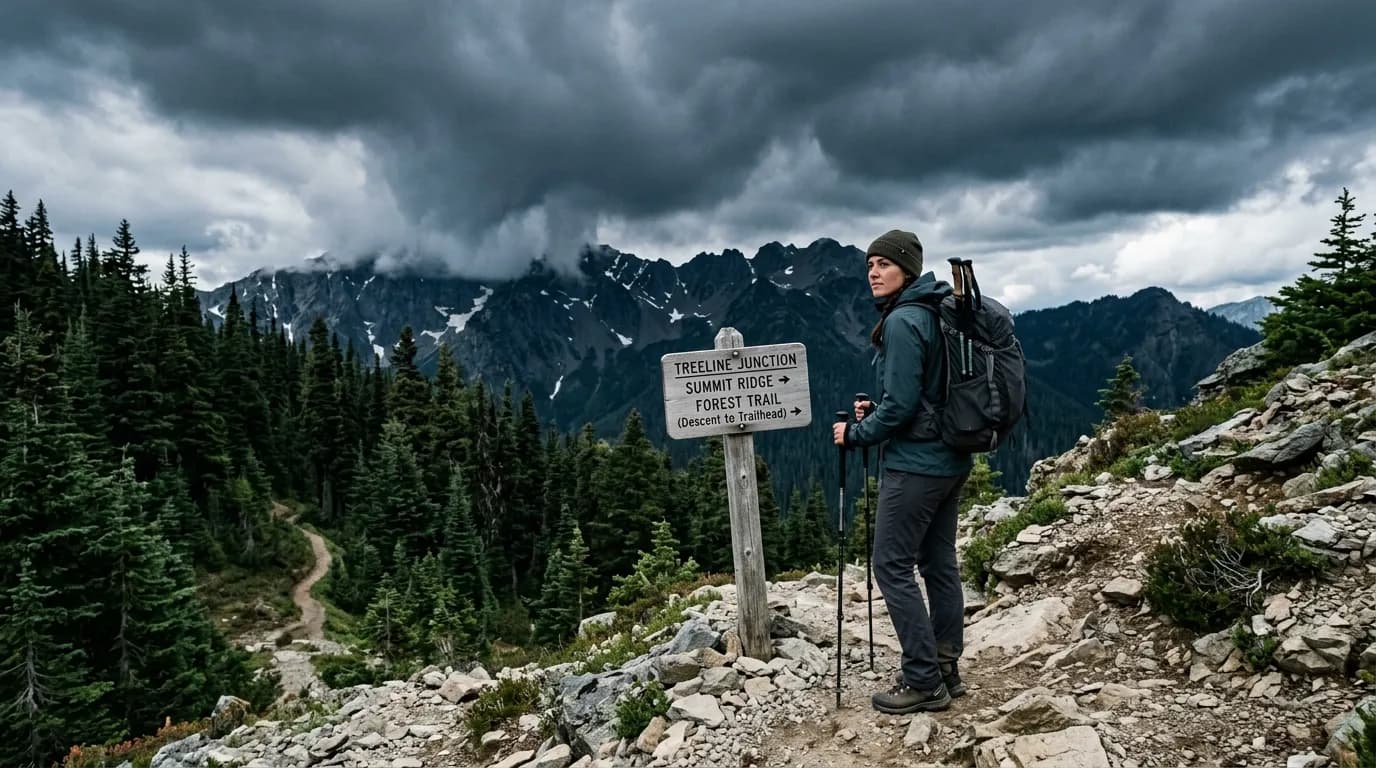
Turning around on a hike is not failure. It is the skill that keeps day hikes same-day, keeps groups friendly, and keeps solo hikers checking in from the car instead of from a search headline. Most bad outcomes on ordinary trails begin as small signals ignored because the summit looked close, the weather might improve, or nobody wanted to be the cautious one.
Daily Peaks go / no-go rules are written before ego shows up on the ridge. This guide explains when to turn around on a hike: weather thresholds, timing and daylight, fatigue and injury, navigation doubt, group dynamics, and the simple phrases that make turning around normal. You will get a pre-hike decision worksheet, on-trail checkpoints, common mistakes, a starter plan, and FAQ answers.
Educational outdoor content only. Local conditions and emergency services outrank any blog list. When in doubt on safety, choose the conservative exit.
Why turnaround rules matter more than summit photos
Day hikes succeed on the return. Summits are optional punctuation. A turnaround rule converts vague anxiety into clear action: “If X happens, we go back.” Without X defined, groups negotiate in fatigue and weather, and negotiation favors optimism bias.
Turning around early still builds fitness, skills, and trust. Turning around late builds stories you may not want to retell.
Write your go / no-go rules at home
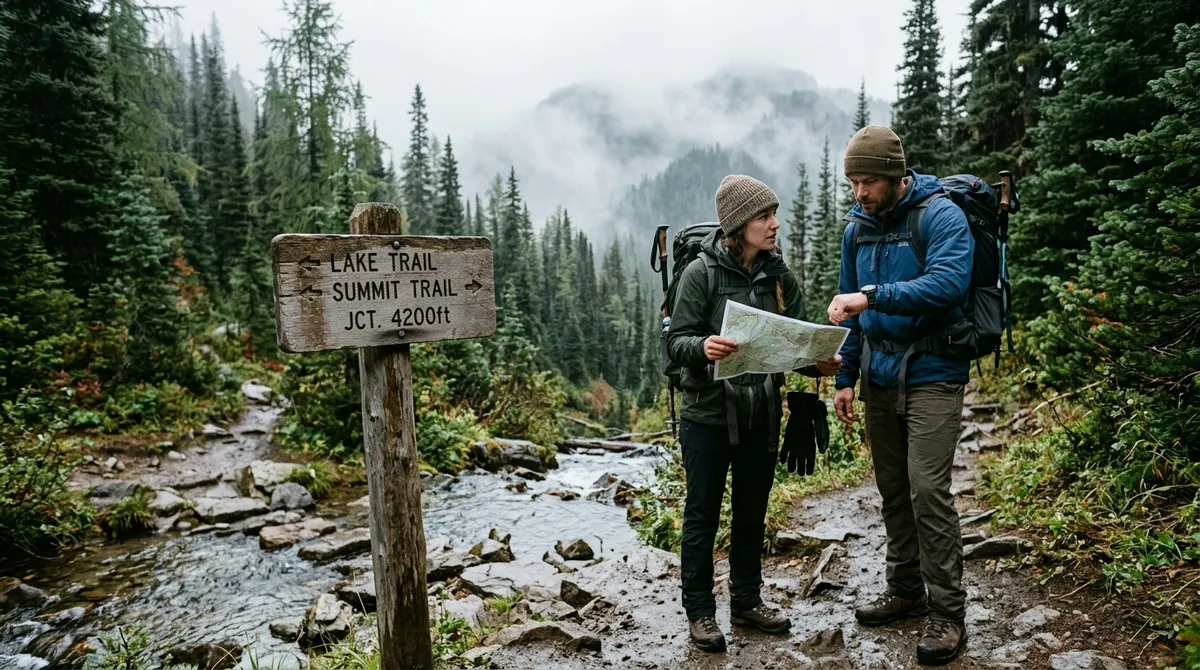
Before the trail, write five to seven triggers on paper or in a notes app. Examples:
- Not at junction B by 11:00 → turnaround at overlook C
- Steady rain begins with no dry layer comfort → descend
- Thunder audible → leave exposed terrain immediately
- Anyone vomiting or dizzy after fluids → shorten day
- Map confusion unresolved after five stopped minutes → backtrack to last confirmed point
- Feet hot spot returns after second taping → head to car
Share rules with hiking partners so one person is not the villain for suggesting descent. Solo hikers text rules to their leave contact as part of a broader plan—see Solo Day Hike Safety Checklist.
Weather go / no-go signals
Weather is the fastest-changing variable on day hikes. Conservative day-hike triggers:
- Thunderstorm forecast on exposed ridges—postpone or pick forested low routes
- Lightning visible or thunder within thirty seconds of flash—descend from high points, avoid isolated trees and wide open summits
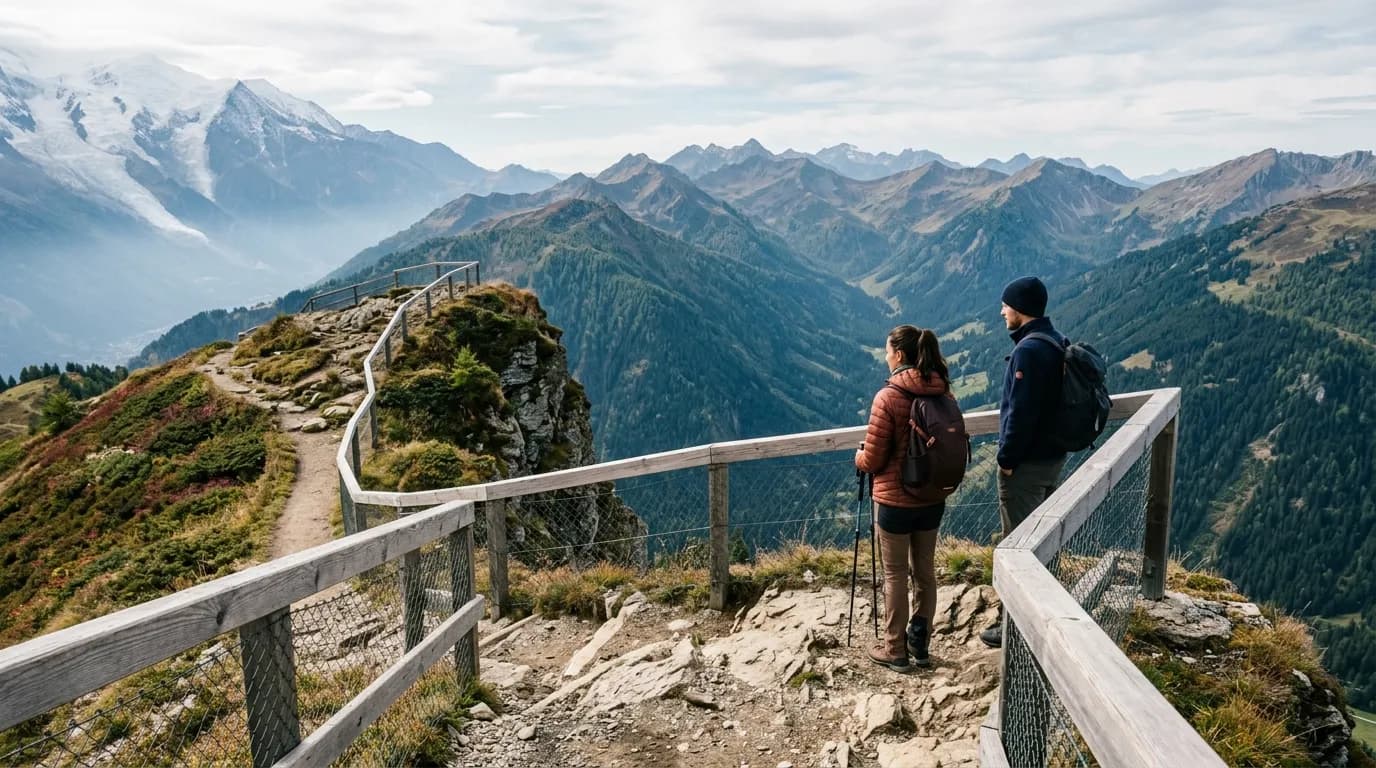
- Wind that makes standing difficult on exposed edges—turn back from knife ridges
- Whiteout or fog that removes navigation cues on unfamiliar terrain
- Temperature drop plus wet clothing—hypothermia risk rises fast when moving stops
- Heat advisory conditions with inadequate water plan—shorten or reschedule
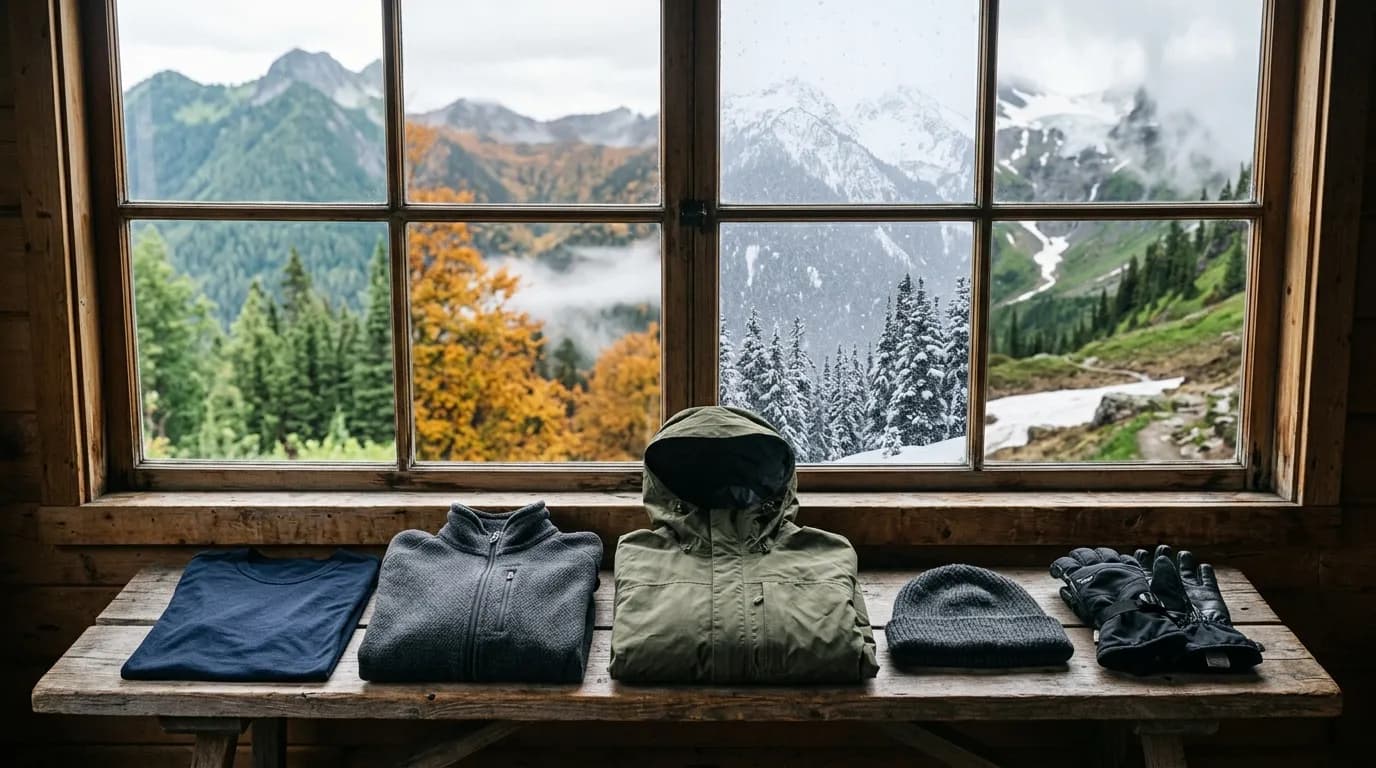
For a fuller weather checklist on weekend trips, read Hiking Weather Go / No-Go Checklist. Pair weather rules with layers from seasonal clothing guides so cold and wet are gear problems you can solve—or bail if you cannot.
Timing and daylight rules
Start with a written turnaround time independent of summit desire. Work backward from:
- Expected hiking hours at conservative pace
- Drive home duration
- Sunset minus ninety-minute buffer minimum on unfamiliar trails
- Season—fall and winter eat daylight quickly
On trail timing triggers:
- Halfway time reached but less than one-third distance covered
- Breaks eliminated to “make up time”—sign you are already behind
- Headlamp would be required for descent—unless you planned a night hike with full kit
Late starts are a planning failure, not a trail personality test. Turn around when the math fails.
Fatigue, injury, and medical red flags
Ordinary tiredness slows pace. Some signals argue for immediate turnaround:
- Sharp pain that changes gait—knee, ankle, hip
- Dizziness, confusion, or nausea not fixed by food, water, and rest
- Repeated cramping with inadequate electrolytes on hot days
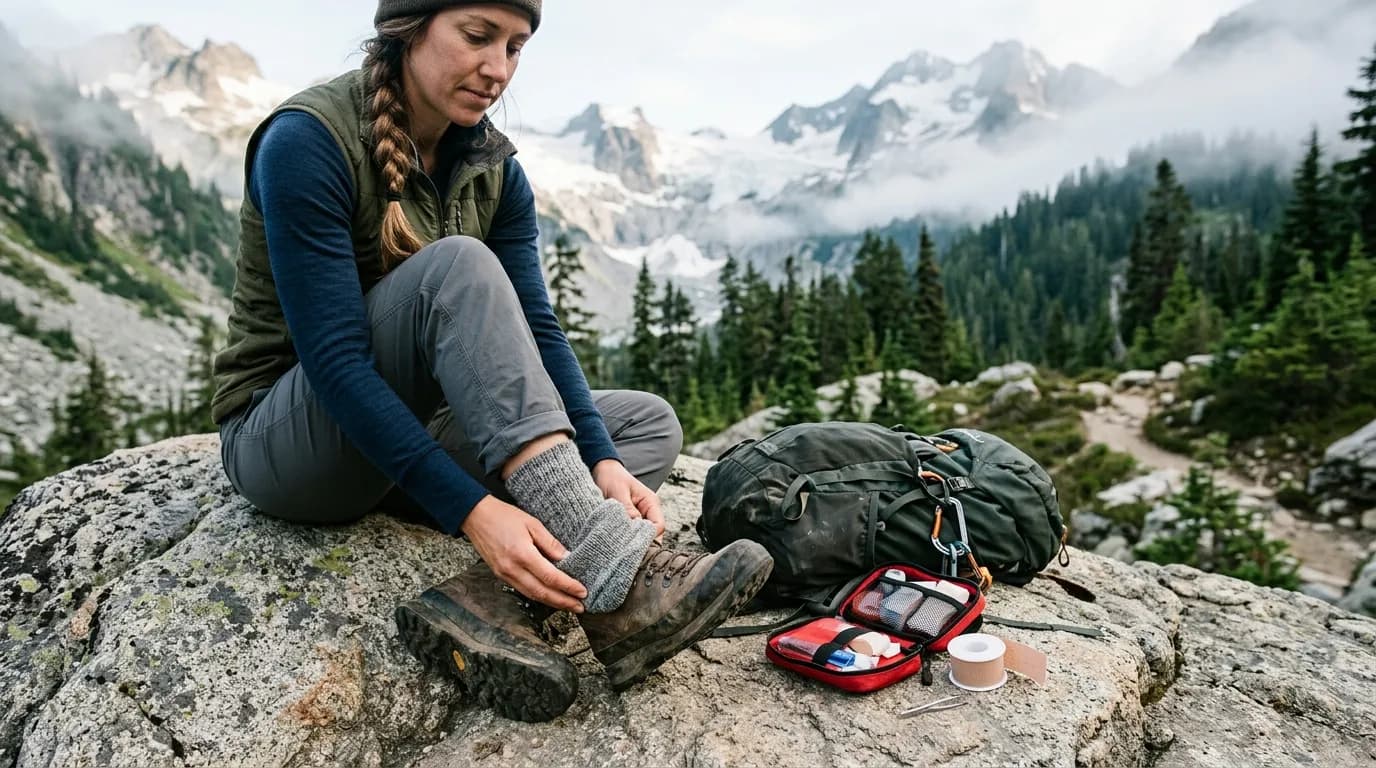
- Blisters or hotspots that alter walking and re-tape fails
- Minor falls with head impact or persistent joint instability
Educational note: this is not medical diagnosis. When symptoms feel beyond ordinary trail tired, descending is the default safe move and professional care may be needed afterward.
Navigation doubt: the five-minute rule
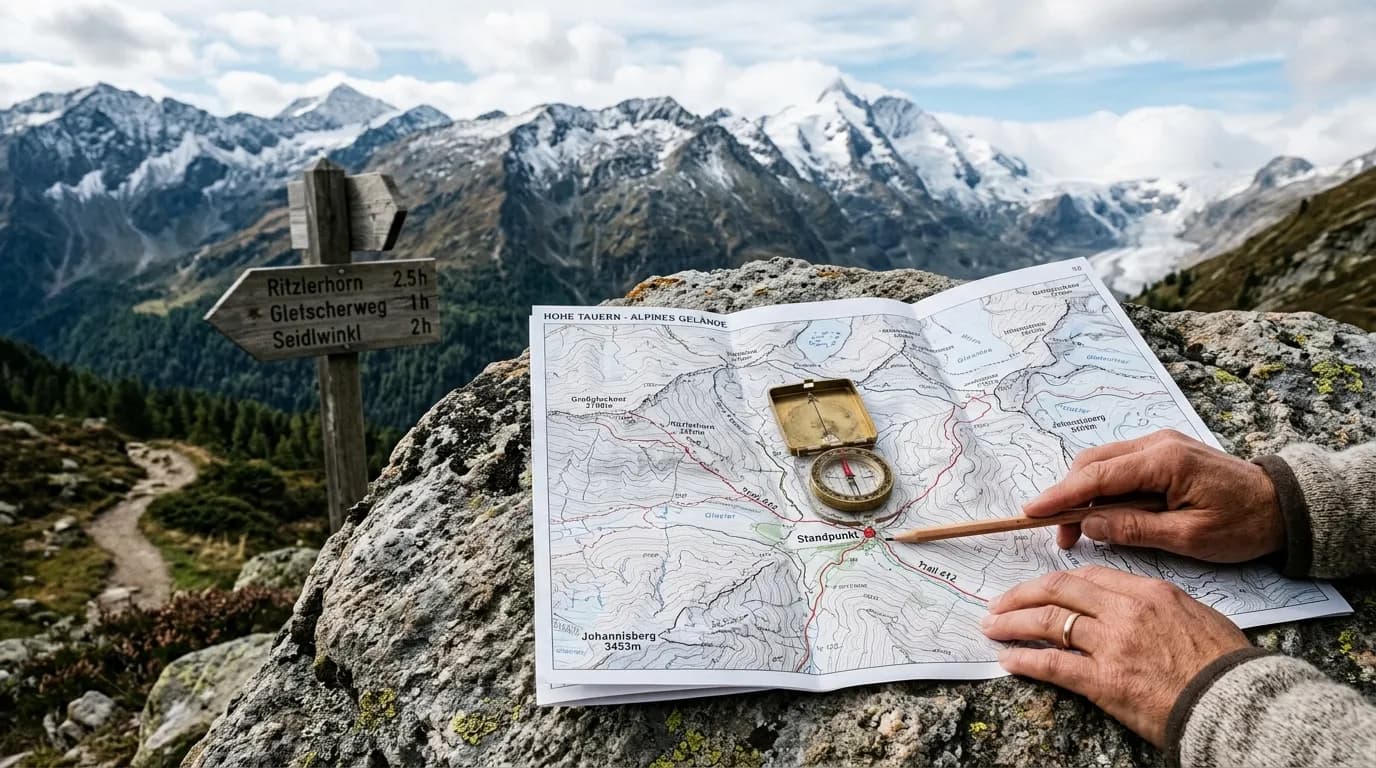
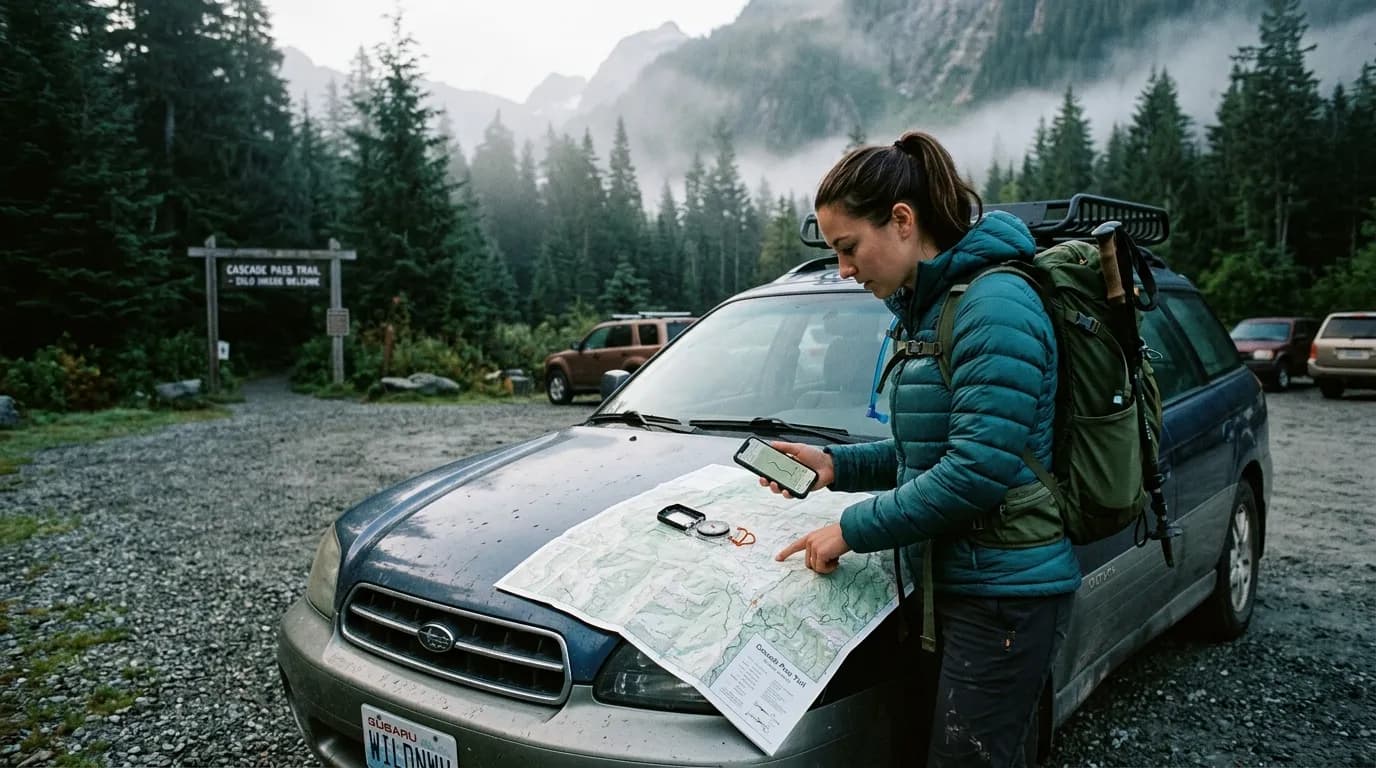
If you are unsure of the route for more than five stopped minutes—map does not match junctions, signs missing, tracks split—backtrack to the last confirmed point. Do not contour across forest hoping the trail reappears.
Navigation errors compound downhill because descents feel faster and junctions still look alike. Turning around early on doubt saves miles.
Improve pre-hike map reading with How to Read a Trail Map Before You Go so doubt happens less often—but rules still matter when it does.
Group dynamics and the turnaround conversation
Groups fail turns when nobody wants to disappoint the fastest hiker or the person who drove far. Fix with pre-agreed rules and phrases:
- “We said junction by eleven. It is eleven-fifteen. We turn.”
- “Weather trigger hit. No debate at exposure.”
- “Injury check: can you walk normally? If not, we shorten.”
Rotate who calls the turn so one cautious person is not always the friction. Celebrate good turns at the car with food, not apologies.
Solo turnaround: ego is the extra partner
Solo hikers lack social pressure both ways—no one pushes turn, no one pushes continue. Pre-written rules and text check-ins replace that balance. If you hear internal bargaining—“just ten more minutes”—treat it as a trigger to stop, drink, and read the written plan.
The “summit is right there” trap
Proximity to a goal is not safety data. Many incidents happen near objectives because:
- Energy is lowest
- Weather stacks on exposure
- Light fades
- Descent still requires hours
Define a “turn even if close” rule: if turnaround time passes, you turn regardless of visible summit. The mountain persists; optional photos do not.
Water and food depletion triggers
Half water with more than half distance remaining—including descent—means reassess. Finish with dry mouth and empty bottles on a hot day is a turnaround or strict ration scenario, not a sprint.
Out of food with hypoglycemia symptoms—shaky, irritable, cloudy thinking—turn toward exit and eat what remains slowly while walking easy grade.
Children, dogs, and slower parties
Turn rules should be stricter with dependents. Kids melt down late; dogs overheat on hot rock. Pre-define turnaround at comfort metrics, not adult summit dreams.
“We turn when kid sits twice in twenty minutes” is clearer than “we’ll see.”
Environmental and trail damage conditions
Sometimes the go / no-go is ethical and practical:
- Trail closed by agency—do not bushwhack around closures
- Deep mud where walking destroys tread—choose another day
- Fire smoke at unhealthy levels
- Post-storm hazard trees on exposed sections
Turning around without stepping on trail preserves access for everyone later.
How to turn around without wasting the day
A good turnaround still includes:
- Lunch at the lower viewpoint you passed
- Side loop on the descent if signed and time allows
- Plant or bird ID practice on the way down
- Honest debrief notes for next attempt
Reframe descent as the second half of the hike, not a consolation prize.
Pre-hike go / no-go worksheet
Copy this block into your plan:
- Objective: trail name and target point
- Turnaround time: absolute clock time
- Weather abort: thunder, lightning, high wind, heat limit
- Pace checkpoint: location + time halfway
- Navigation rule: five-minute doubt backtrack
- Health rule: gait change, dizziness, failed blister care
- Bailout route: named lower exit if loop runs long
- Leave contact: who knows the plan
Two minutes of writing beats forty minutes of arguing on a windy saddle.
On-trail checkpoint rhythm
Every forty-five to sixty minutes, ask:
- Are we on time against checkpoints?
- Is weather matching or beating forecast severity?
- Is anyone hiding pain or dehydration?
- Does navigation still match the map?
- Would we start this hike now if we were at the car?
If the last question is no, begin descent while energy and light are favorable.
Starter plan: practice turning around on purpose
Hike one. Choose a familiar out-and-back. Turn at the halfway time even if feeling great. Goal: normalize turning without disappointment.
Hike two. Set a weather trigger you might realistically hit—wind at a ridge bench. Observe and execute if triggered.
Hike three. Simulate navigation doubt at a junction: stop, map check, verbalize correct turn. Goal: build five-minute rule habit.
Practicing turns on easy days makes hard-day turns automatic.
Common mistakes about turning around
- No written turnaround time
- Treating summits as mandatory
- Ignoring thunder because rain has not started
- Assuming descent is “half time” of ascent—it often is not
- Letting the fastest hiker veto group safety
- Continuing with altered gait after injury
- Believing phones replace daylight planning
- Shame language—“we failed”—instead of “we executed the plan”
- Chasing strangers who seem to know the route
- Waiting until panic to turn
After a turnaround: debrief without drama
At the car, note:
- Which trigger fired—or which should have fired earlier
- What to change in start time, route, or kit
- Whether the objective was too ambitious or the day was still a win
Schedule a retry if desired with one adjusted variable. Mountains are patient; good hikers should be too.
Sample turnaround scripts you can say out loud
Plain language beats vague worry. Try these at the trail:
- “We hit our turnaround time. Summit is optional today.”
- “Thunder trigger— we drop elevation now.”
- “Navigation is not matching the map. We backtrack to the last sign.”
- “Someone’s gait changed. We shorten and reassess at the car.”
- “Water math does not work for the rest of this loop.”
Saying the rule aloud removes ambiguity. Groups align faster when the sentence is boring and specific.
Turnaround rules for different trail types
Forest loop: Focus on time, pace checkpoints, and fading light. Weather may matter less unless windthrow blocks the path.
Open ridge: Prioritize lightning, wind, cold rain, and fog. Turn triggers should be stricter than valley days.
Desert day hike: Heat and water depletion dominate. Start early; turn when shade and water cannot support the return comfortably.
Winter-adjacent path: Ice, short daylight, and wet cold clothing stack quickly. Turn at first sign you cannot stay warm while moving.
Match rule strictness to exposure and bailout difficulty, not to how easy the Instagram photo looked.
Turnaround mistakes that look like “pushing through”
Experienced hikers sometimes confuse discomfort with danger. Ordinary muscle burn on a climb is not a turn signal. Sharp joint pain, worsening nausea, or lightning risk is. Learn the difference by checking vitals at rest stops: breathing should settle within a few minutes; pain that spikes on each step is different from heavy legs. When in doubt on medical symptoms, descending is the conservative default—this guide is educational, not a substitute for professional assessment.
Logging turns in your trail daybook
Write one line per hike about whether you turned and why. Over a season, patterns appear: always late starts on eastern ridges, always tight on water on loop hikes, always pushing past turnaround time when friends visit from out of town. Logs turn vague guilt into fixable planning. Daily Peaks daybook thinking applies as much to turns as to summits.
Building a turnaround culture in your hiking group
Groups that turn well celebrate the decision at the car with food and honest laughs, not apologies. Rotate who writes the rules each month. Share debrief notes in a group chat so the next planner benefits. Over time, turning around feels like competence shared, not courage lacking.
FAQ
Is turning around always the right call when tired?Ordinary tiredness may slow pace but not require abort if time, weather, and navigation remain solid. Turn when fatigue pairs with bad timing, symptoms, injury, or rising weather risk.
How do I convince friends to turn around?Use pre-written group rules agreed at the trailhead. Frame turns as executing the plan, not quitting. Offer a lower bailout that still feels like a hike worth doing.
What if we are already at the summit?Half the day may remain in descent. Assess weather, light, and energy before celebrating long. Many incidents happen after the photo.
Should I turn around if rain starts lightly?Depends on gear, exposure, and temperature. Light rain with good shell on forest trails may continue. Cold rain on exposed ridges often triggers turn rules immediately.
How strict should solo rules be?Slightly stricter than group rules because margin is thinner alone. Pre-share triggers with your leave contact and honor clock times without debate.
Is it embarrassing to turn around often?Experienced hikers turn often. They collect returns, not rescues. Embarrassment is cheaper than injury but still optional—practice makes turns feel professional.
Where do weather rules overlap with other guides?Use this article for on-trail decision framing and Hiking Weather Go / No-Go Checklist for forecast reading before you leave.
Related reading
Build forecast habits with Hiking Weather Go / No-Go Checklist. Solo hikers should pair turnaround rules with Solo Day Hike Safety Checklist.
Knowing when to turn around on a hike is a mark of experience, not caution theater. Write triggers at home, check them hourly on trail, and descend while the day still belongs to you. Summits wait. Safety does not.