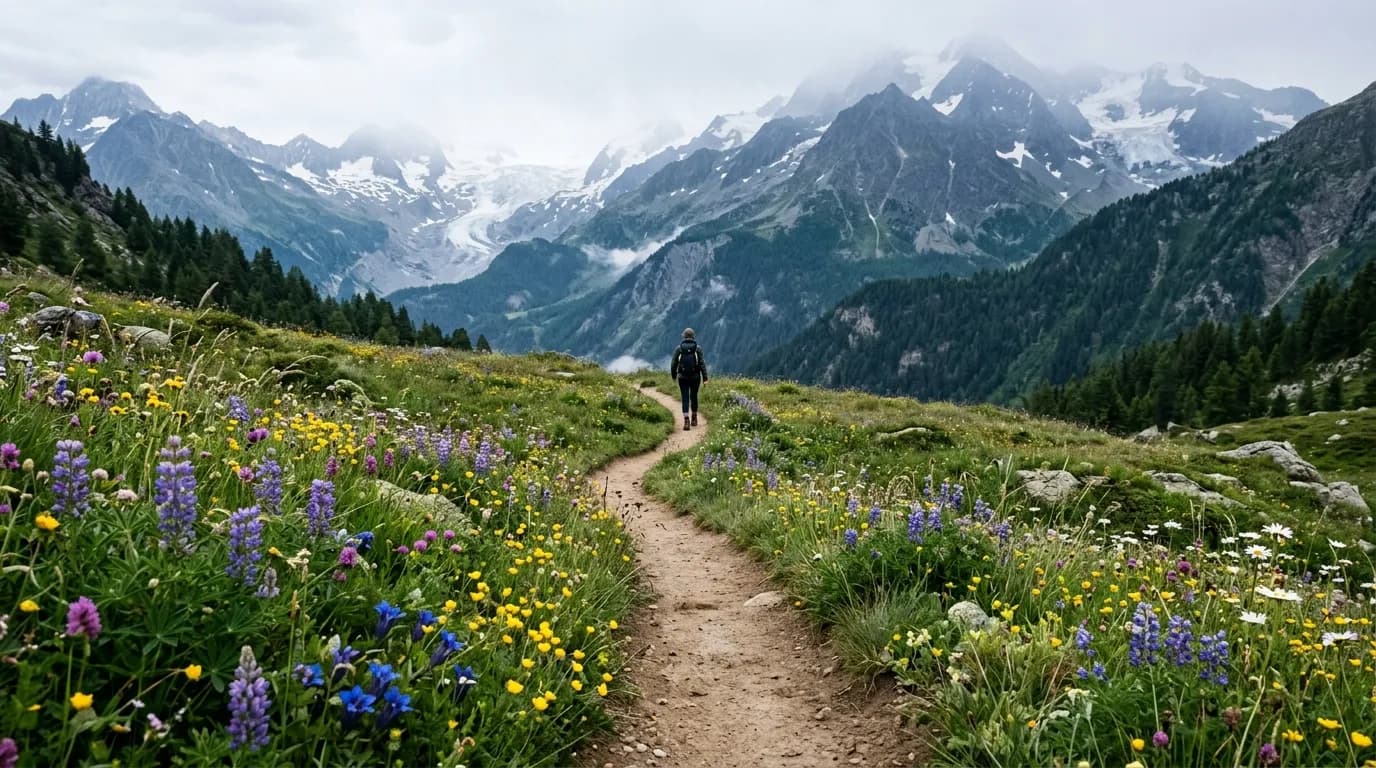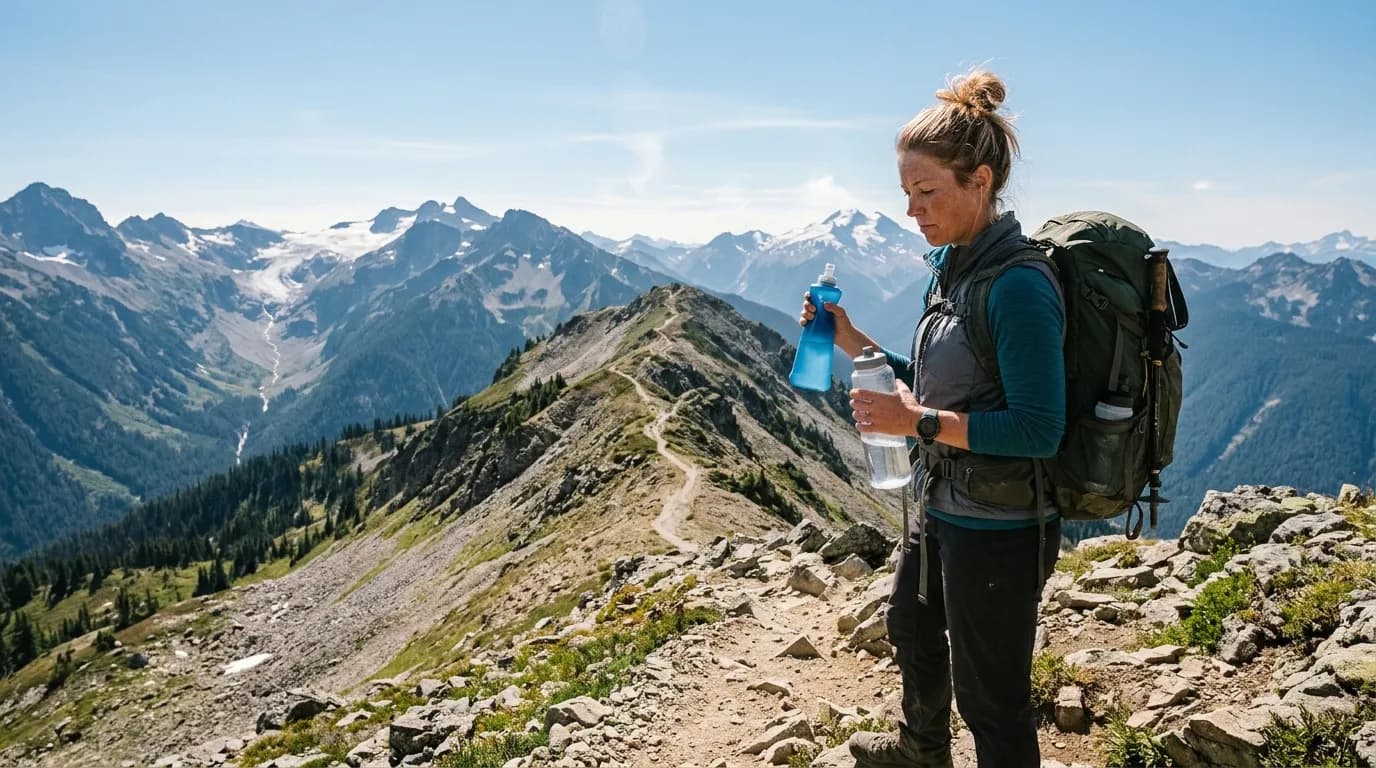
Solo day hiking is not a dare. It is a quiet agreement with yourself that you will finish the same day you started, keep a margin for weather and fatigue, and leave enough breadcrumbs that someone else can help if a plan slips. Plenty of people hike alone for peace, schedule flexibility, or simply because friends are busy. The goal of this checklist is not to scare you off the trail. It is to make solo days feel ordinary and repeatable.
Daily Peaks treats solo hiking like a daybook skill: write the plan, pack the same core kit, choose a route you can reverse, and decide in advance what would make you turn around. This guide is educational outdoor content, not professional rescue, medical, or wilderness safety certification. Local rules, fitness, terrain, and weather always outrank a blog checklist. Use judgment and local resources.
What follows is a complete solo day hike safety checklist you can reuse: before you leave home, at the trailhead, on the move, and after you are back. You will also get a starter plan for your first three solo days, common mistakes that create unnecessary risk, and a short FAQ.
Why a solo checklist matters more than a group hike
In a group, someone usually notices when the pace drops, when a jacket is missing, or when the turnaround time has passed. Alone, you are the entire crew. That is freeing, and it is also why small habits matter. A leave note, a charged phone, an offline map screenshot, and a hard turnaround time prevent most “how did this become a problem” stories on ordinary day trails.
Solo does not mean remote expedition. Many solo day hikers stick to popular loops, ridge viewpoints, and well-signed forest paths within a few hours of home. The checklist still applies. Parking lots empty earlier than you expect. Weather changes faster on a ridge than in a valley. Blisters and low water feel louder when there is no friend to share snacks or patience.
Think of the checklist as a trail pin you drop before you start walking. Once it is in place, you can enjoy the quiet without scanning your memory for the one thing you forgot.
The leave plan: tell someone the simple version
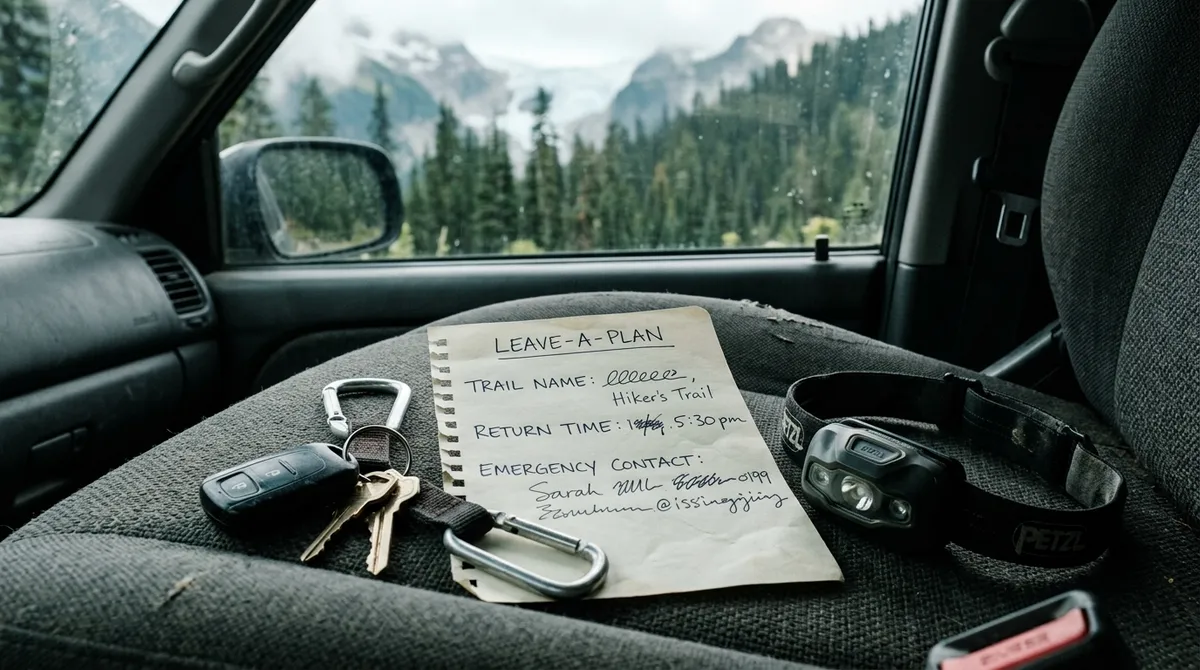
Before you drive, send a short message to a reliable person. Keep it boring and specific:
- Trail name and trailhead as listed on the map or park page
- Planned route in one line, including the turnaround or loop finish
- Start time and expected return time with a buffer
- Vehicle description and where you parked if that helps
- Check-in rule such as “I will text when I am back at the car by 5:30”
If you miss the check-in, your person should know what to do next. That might be calling you, then calling the local non-emergency park number, then emergency services if you remain unreachable past an agreed late window. Write that late window into the message so nobody is guessing.
Solo hikers sometimes skip the leave plan because the hike feels short. Short hikes still strand people when phones die, ankles twist, or cars will not start. The leave plan is cheap insurance.
Choose a solo-friendly route
Your first solo days should favor clarity over prestige. Prefer trails with:
- Clear signage and a popular enough tread that you are not inventing the path
- A distance and elevation gain you have already done with company, or slightly easier
- An obvious out-and-back or simple loop that does not rely on faint junctions
- Cell coverage for at least part of the route if you are new to solo hiking
- A turnaround landmark you can name without poetry: “second lake,” “ridge bench,” “mile marker three”
Avoid stacking novelty on novelty. New boots plus new peak plus new weather plus first solo day is four experiments at once. Pick one variable to learn.
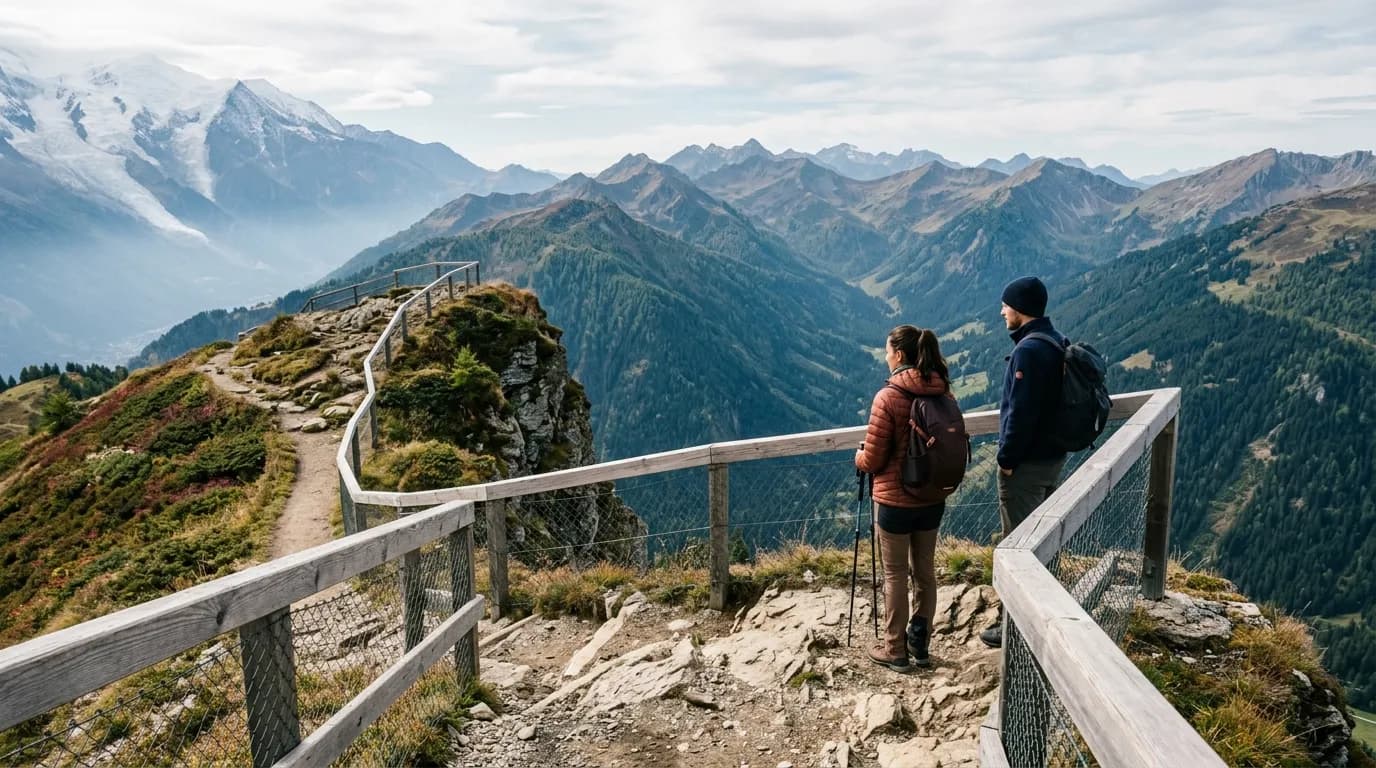
If you want a viewpoint or small peak, read How to Choose Your First Peak or Viewpoint Hike and keep the same conservative bias: finishable, reversible, and timed.
Solo day hike safety checklist: the night before
Do the thinking when you are not already late.
- Confirm park hours, seasonal closures, and any permit or parking rules
- Check the forecast for the trail elevation, not only for your house
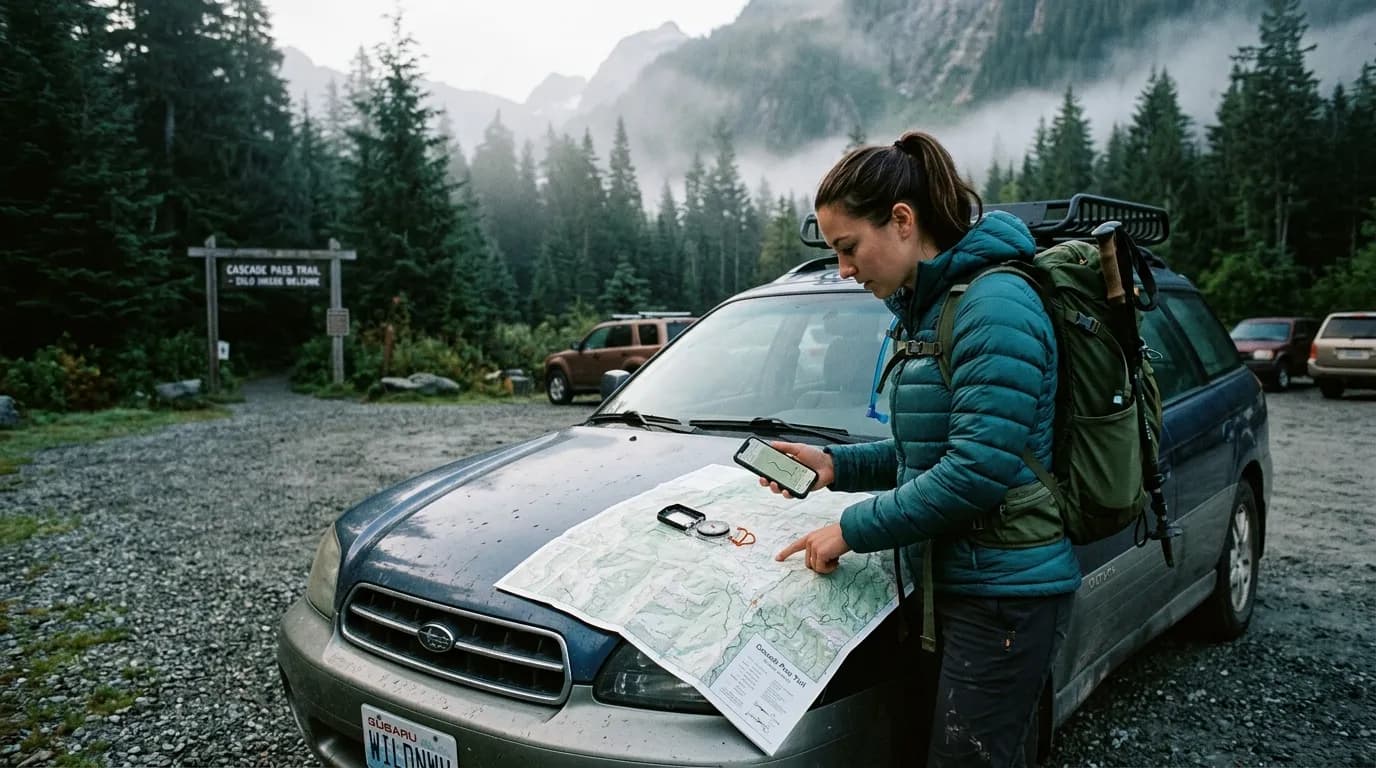
- Screenshot or download the map; do not rely on a single app with no offline copy
- Charge phone and power bank; test the headlamp even for a daytime plan
- Lay out footwear, socks, layers, rain shell, water, food, and the leave-note text
- Set a hard turnaround time based on daylight and drive home
Write the turnaround time on a note in your pack lid or phone lock screen. Solo hikers negotiate with themselves. A written time reduces that negotiation.
Pack kit that covers the ordinary failures
You do not need an alpine rack for a valley loop. You do need redundancy for the failures that show up on day trails: cold wind after a sweaty climb, a wrong junction, a slow return, a blister, a dead phone.
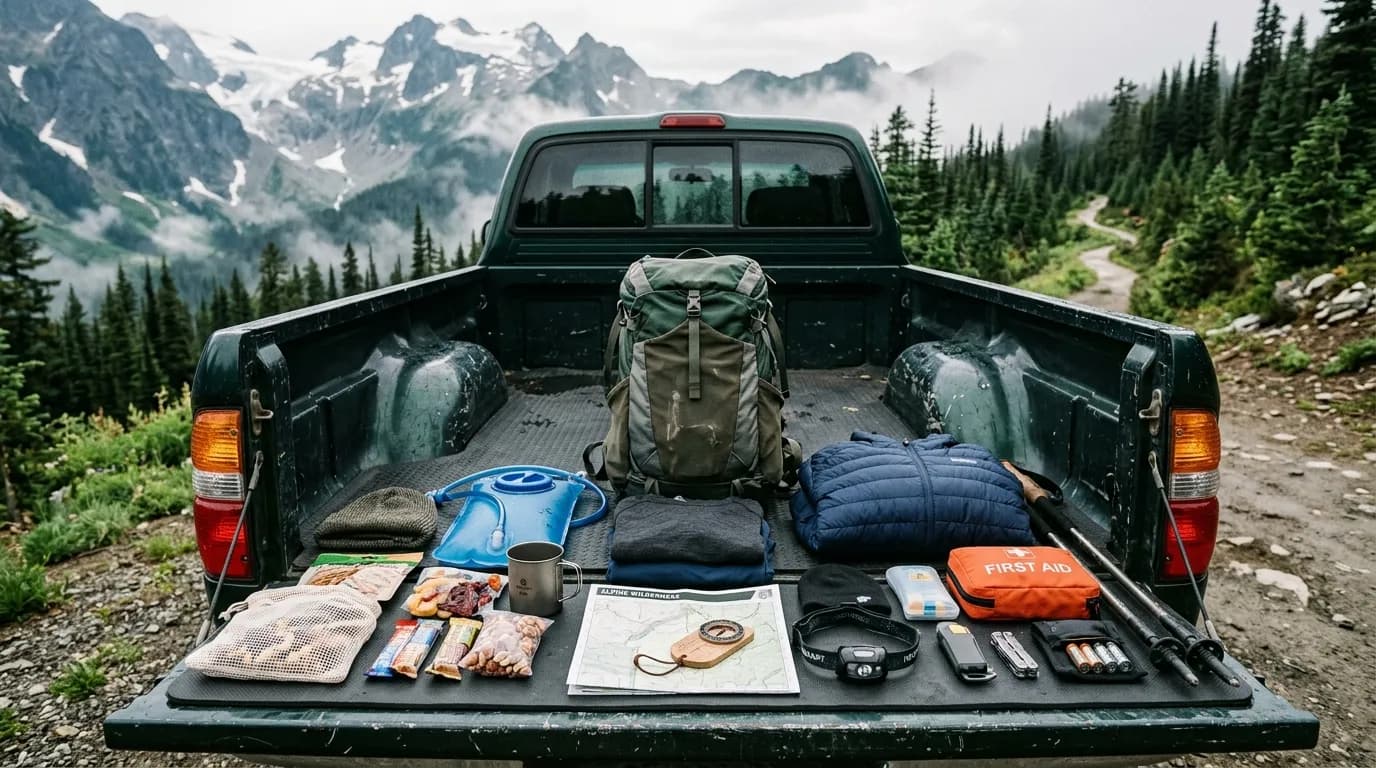
Core solo day kit:
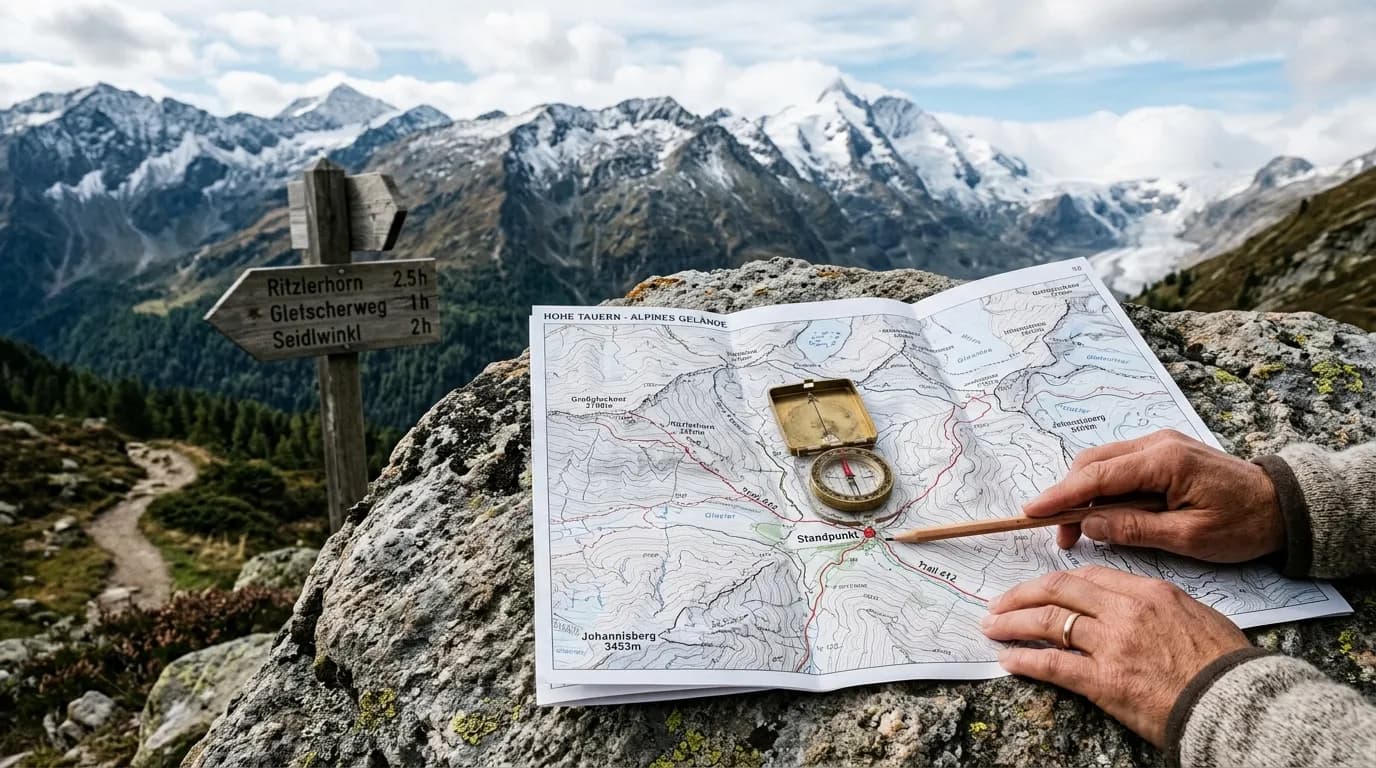
- Navigation: offline map, simple paper map or printed screenshot, and the ability to read both
- Light: headlamp with fresh batteries even if you plan to finish early
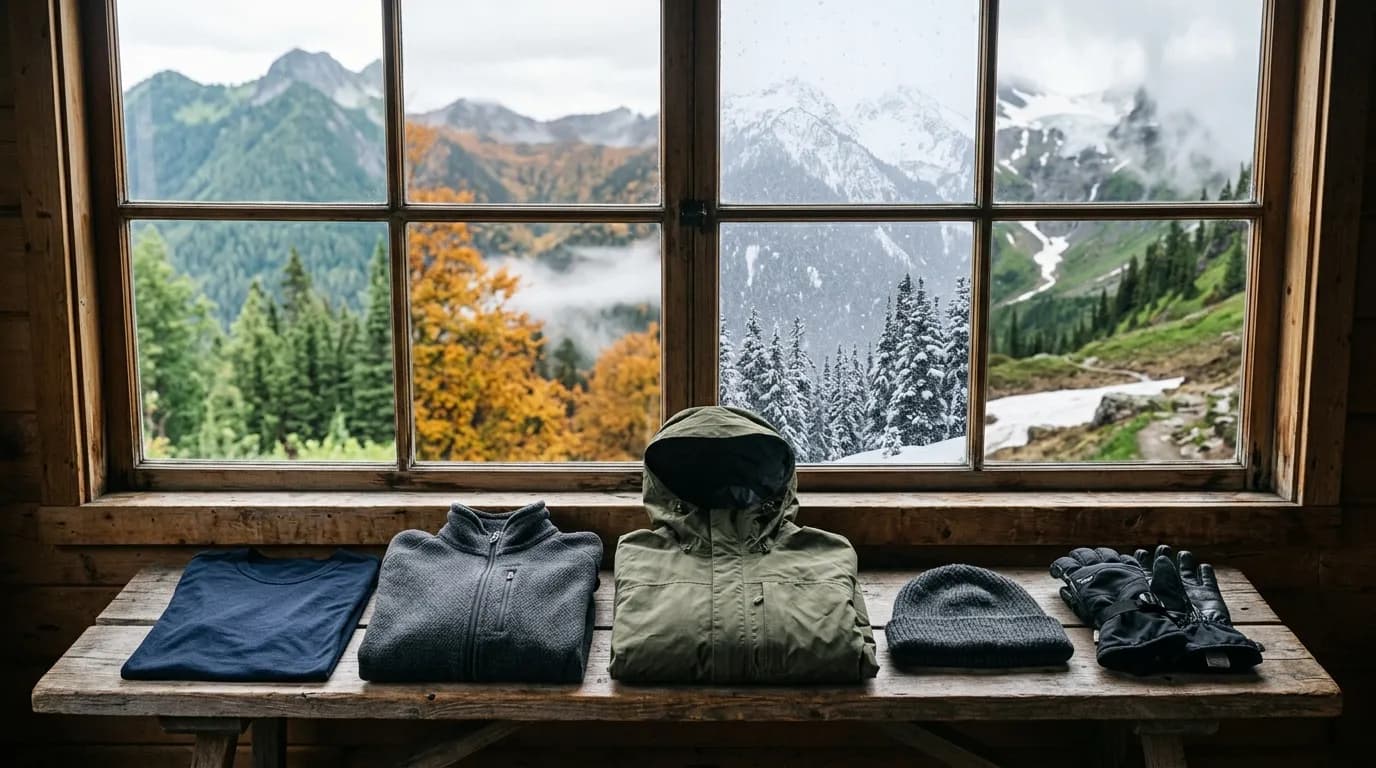
- Insulation: one warm layer beyond what you start in
- Rain shell: packed even when the sky looks polite
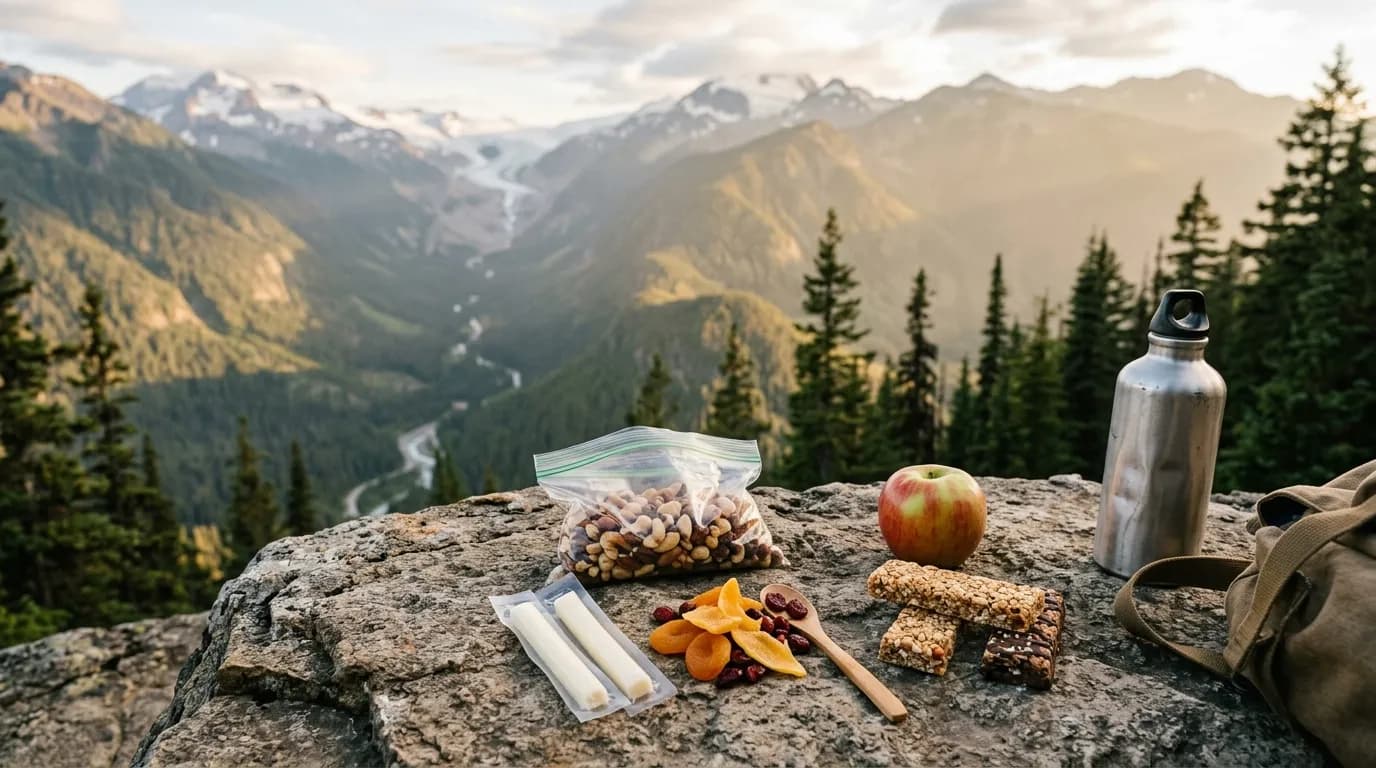
- Water and food: enough for the day plus a margin; electrolytes if you sweat heavily
- Sun and bug protection: as the season demands
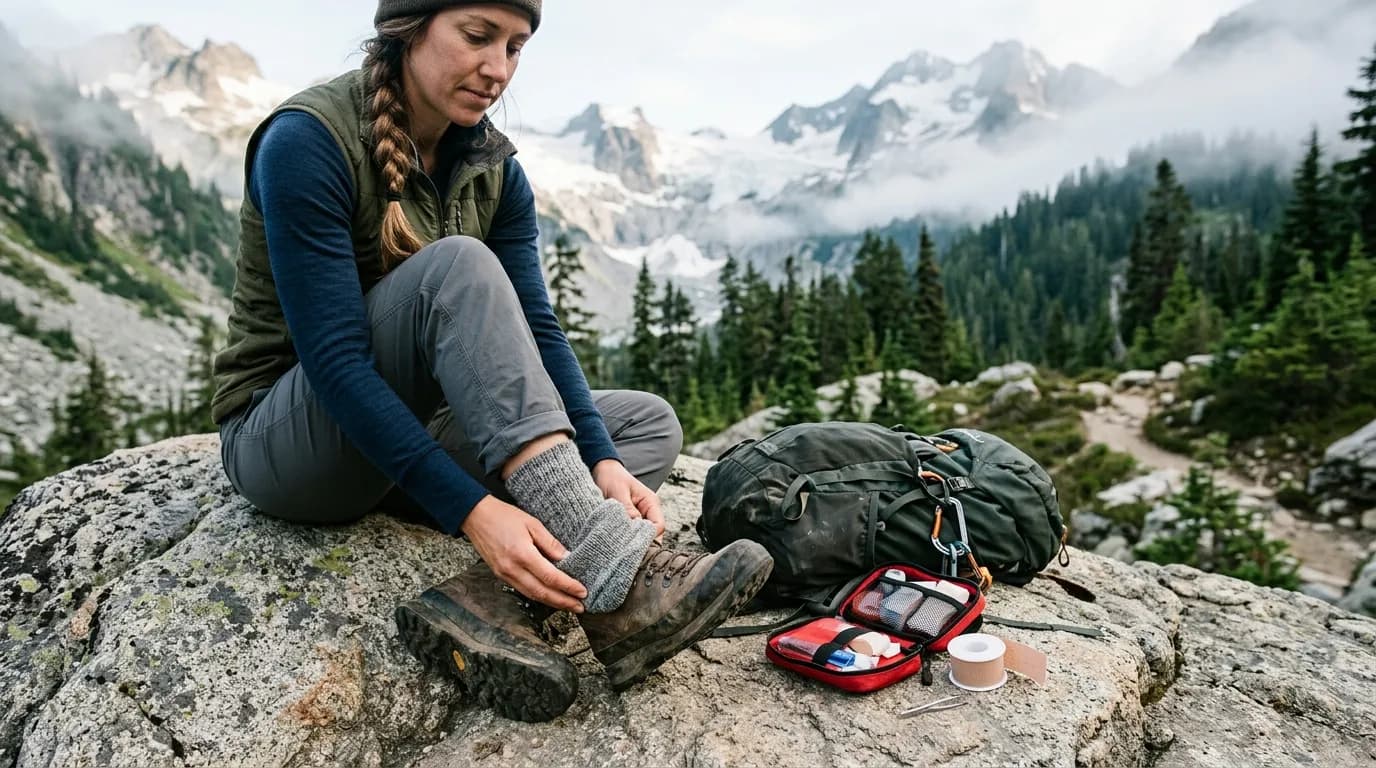
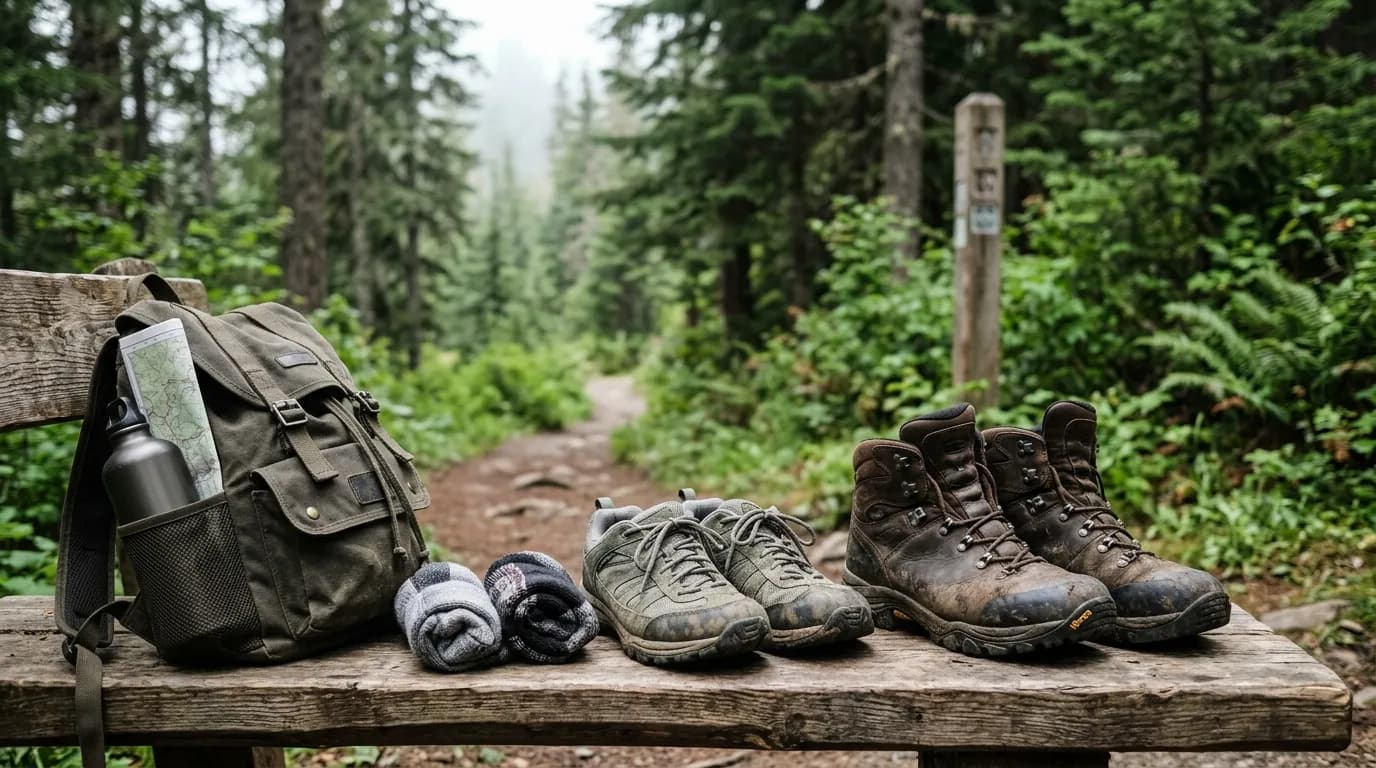
- Blister care: tape, a few dressings, and socks that already fit
- Communication: charged phone, power bank, and knowledge of coverage gaps
- Whistle and small first-aid basics: enough for scrapes, not a clinic
If map reading still feels foggy, pair this checklist with How to Read a Trail Map Before You Go so navigation is a skill, not a hope.
Trailhead routine that takes four minutes
At the car, slow down. Solo mistakes often happen in the parking-lot hurry.
- Send or confirm the leave message with any last route tweak
- Note the trailhead name on a photo of the sign if signs are confusing
- Fill water if there is a reliable tap; do not assume every fountain works
- Check that keys are secured and that you know where they live in the pack
- Start your walking clock and glance at the turnaround time one more time
If the lot is nearly empty late in the day, ask whether your plan still fits daylight. Solo hikers sometimes arrive “just for a quick viewpoint” with two hours of light and three hours of climbing. Adjust before you lock the car.
On-trail habits that keep the day calm
Walk with a light audit rhythm. Every thirty to sixty minutes, check:
- Am I still on the intended trail?
- How is my water?
- Are feet hot, wet, or rubbing?
- Is weather matching the forecast I trusted?
- Am I still ahead of turnaround time with margin?
Stop for map checks at junctions, not while moving and guessing. If you feel unsure for more than a minute, stop, drink, and re-orient. Solo navigation errors grow when pride keeps walking.
Talk to yourself in plain sentences. “If cloud drops another band, I turn at the saddle.” “If the blister sting continues after tape, I shorten the day.” Pre-deciding removes the summit-or-bust argument that only appears when you are tired and close.
For turnaround judgment in more detail, use When to Turn Around on a Hike (Go / No-Go Rules). Solo days reward early, boring decisions.
Pacing, food, and the quiet fatigue trap
Without companions, it is easy to power-hike the first hour and pay later. Start at a pace where you can speak a full sentence. Eat early and small. Drink before you feel dramatic thirst. Solo hikers sometimes “save” snacks for the top and then arrive with shaky hands and poor judgment.
Build a simple cadence: snack every forty-five to sixty minutes on longer days, water at every short break, and a layer change before you chill on windy overlooks. The goal is steady competence, not a heroic split time.
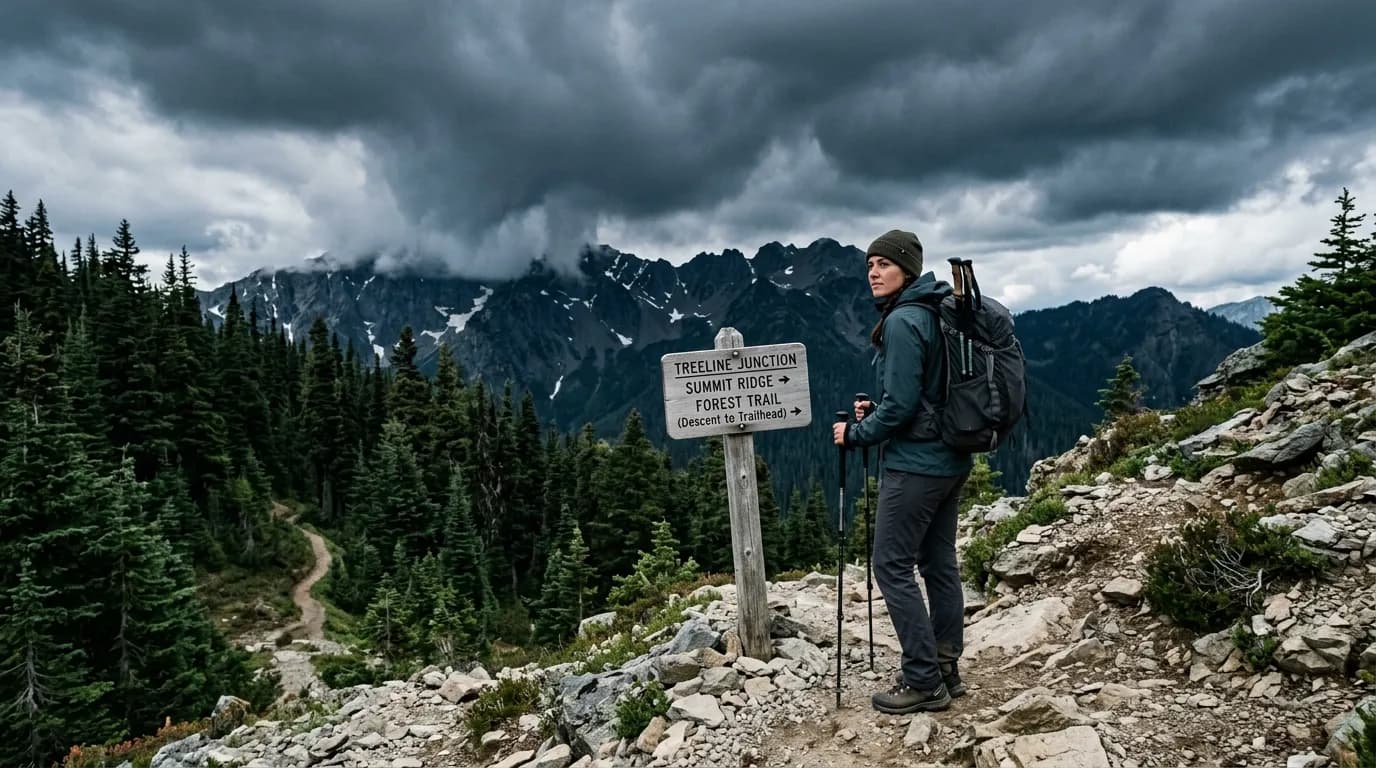
Weather and daylight as hard constraints
Solo hiking multiplies weather cost because you cannot share shelter decisions or split attention. Treat these as go / no-go inputs before and during the day:
- Thunderstorm risk on exposed ridges or open summits
- Wind chill after a sweaty climb
- Rain that turns rock slick and maps harder to handle
- Heat that drains water faster than your plan
- Short daylight in shoulder seasons and winter-adjacent months
If the forecast was wrong in a worse direction, update the plan. A shortened loop still counts as a successful solo day. A stubborn summit photo does not.
People, wildlife, and trail culture alone
Most day-trail encounters are friendly. Still, keep ordinary awareness. Yield courteously. Step aside for faster parties. Do not assume every quiet path is empty. Store food in a way that does not advertise a buffet if you pause.
If you prefer fewer encounters, start earlier rather than choosing obscure unmarked routes on day one. Early popular trails often feel solo enough without adding navigation stress.
Trust your discomfort. If a situation feels off, create distance, stay on the main tread, and head toward people or the trailhead. You do not owe strangers your itinerary details.
What to do if something goes sideways
Stop. Sit if needed. Drink. Then invent the smallest next safe action.
- Wrong turn: backtrack to the last confirmed junction rather than contouring hope
- Injury that slows you: shorten the day immediately; do not “try the summit then decide”
- Phone dying: switch to battery saver, text your leave person if you have signal, and prioritize navigation light
- Weather drop: layer up, descend from exposure, abandon the vanity objective
- Feeling overwhelmed: treat it as data; turn around while you still have margin
Self-rescue on day trails is mostly early decisions and slow walking, not dramatic improvisation. If you need help, call emergency services when you have a true emergency, and be ready to describe trail name, last clear landmark, and direction of travel.
After the hike: close the loop
Text your leave person as soon as you are safely at the car. Then do a two-minute debrief in your notes:
- What worked in the kit?
- Where did timing feel tight?
- Any hot spots on feet?
- Would you repeat this route solo, or only with company?
That daybook habit turns one safe hike into a reusable system. Solo confidence is built from closed loops, not from collecting risk.
Starter plan: first three solo day hikes
Solo day one. Choose a familiar local trail under your usual comfortable distance. Practice the full leave plan, trailhead routine, and check-in. Goal: finish calm with kit unused for drama.
Solo day two. Same distance class, new trail with clear signing. Practice offline map checks at every major junction. Goal: navigate without guessing.
Solo day three. Slightly longer or a modest viewpoint, still with an early turnaround time. Practice a deliberate mid-hike go / no-go weather and fatigue check. Goal: turn around early once on purpose even if you feel fine, to prove the rule works when ego is quiet.
After three clean solos, you can expand distance, elevation, or solitude one variable at a time.
Common mistakes on solo day hikes
- Skipping the leave note because the hike “is only two hours”
- Choosing a first solo route that is also a personal hardest peak
- Trusting one online map with no offline copy
- Starting late and treating sunset as a soft suggestion
- Ignoring early blister heat because stopping alone feels awkward
- Negotiating away the turnaround time when the summit looks close
- Carrying a phone with 18% battery and no power bank
- Packing fashion layers instead of a real warm layer and shell
- Assuming cell coverage equals safety planning
- Posting live locations publicly while the hike is still in progress if that makes you uncomfortable
Most of these are habit problems, not courage problems. Fix the habit once and the day stays quiet.
A one-page solo checklist you can copy
Home: forecast at elevation, route chosen, leave message sent, turnaround time written, kit laid out, phone and bank charged, offline map ready.
Car: confirm message, photo of trailhead sign if useful, water topped, keys secured, clock started.
Trail: junction pauses, water and foot checks, weather watch, ego parked at turnaround time.
Return: check in, debrief two notes, hang damp layers, prep the kit the same way for next time.
How solo hiking fits the Daily Peaks approach
We care about finishable days. Solo hiking fits that ethos when it is planned like a craft, not performed like a test. The best solo days look almost dull in the retelling: left on time, walked steadily, ate, turned when the rule said turn, texted from the car, slept well.
If you want more structure around judgment calls, keep When to Turn Around on a Hike next to this checklist. If navigation is the wobble point, keep How to Read a Trail Map Before You Go in the same reading stack. Skills stack better than adrenaline.
FAQ
Is solo day hiking safe for beginners?It can be, on familiar, well-signed trails with conservative distance, a leave plan, and daylight margin. Beginners should not stack hard peaks, poor weather, and first-time solo logistics together. Build from easy known routes.
Do I need a satellite messenger for every solo day hike?Not necessarily for popular day trails with coverage and short bailouts. Many hikers add a messenger as routes get longer, more remote, or outside reliable cell service. Match tools to terrain and your experience, not to internet trends.
What is the most important item on a solo checklist?The leave plan plus a hard turnaround time are the highest leverage habits. Kit matters, but telling someone your plan and keeping daylight discipline prevent many ordinary problems from becoming searches.
How early should I start a solo hike?Early enough that your planned finish still has daylight buffer after delays. For shoulder seasons and longer climbs, that often means morning starts, not “after errands.” Solo hikers pay more for late starts because nobody shares the pace decision.
What if I feel lonely or uneasy on trail?Treat uneasy as information. Stay on main trails, shorten the day, and head toward people or the car. Solo peace should feel spacious, not unsafe. You can build comfort gradually on busier paths before seeking quiet spurs.
Can I listen to music or podcasts solo?If you do, keep volume low and one ear aware, especially near bikes, horses, or wildlife habitat. Many solo hikers prefer quiet for navigation and presence. Awareness beats entertainment when the trail is shared.
Is this professional safety advice?No. Daily Peaks guides are educational. Conditions, fitness, regulations, and personal risk tolerance vary. Use local park information, weather services, and your own judgment. For emergencies, contact local emergency services.
Related reading
Pair this checklist with When to Turn Around on a Hike (Go / No-Go Rules) so timing and weather decisions are written before ego argues. Strengthen navigation before you rely on memory alone with How to Read a Trail Map Before You Go.
Solo day hike safety is a repeatable ritual: leave plan, conservative route, charged communication, offline map, layers, water, and a turnaround time you honor. Keep the day dull on paper and rich underfoot. That is the Daily Peaks way to hike alone and still finish the daybook with a clean check-in from the car.