The most expensive gear in hiking is the item you left at home. Not because the item costs much, but because the mistake tax shows up as cold rain with no shell, fading light with no headlamp, or a blister without tape. Day hikers rarely forget gear because they are careless. They forget because every pack job becomes a unique creative project at 6 a.m.
A gear checklist habit fixes that. Not a laminated poster you ignore, but a repeatable sequence that makes packing boring. Boring is good. Boring means your brain saves attention for trail hazards, weather shifts, and whether your knee feels right on the first climb.
This guide shows how to build a checklist habit for day hikes: what to list, how to store it, how to adapt by season without reinventing the wheel, and how to keep weight honest over time. Start from our day hike packing list for beginners if you need baseline items, then layer the audit mindset from packing weight audit: cut grams without cutting safety. List plus habit plus audit is the full system.
Why consistency beats improvisation
Improvisation feels flexible until you forget gloves on the one October day that snows at the pass. Consistency does not mean carrying the same items in every season. It means running the same process: check categories, confirm exceptions, pack zones in the same order, weigh optionally, walk.
Muscle memory extends to partners and kids. When everyone uses a similar script—“water, shell, snacks, light”—group pack jobs finish faster with fewer arguments. Solo hikers benefit even more. There is no second person to notice you skipped the first-aid pouch.
Consistency also reveals drift. If your pack gains a pound every month without you noticing, a fixed checklist with weight notes exposes the creep. Maybe duplicate chargers appeared. Maybe you never removed winter extras. The habit is a mirror.
The three-layer checklist model
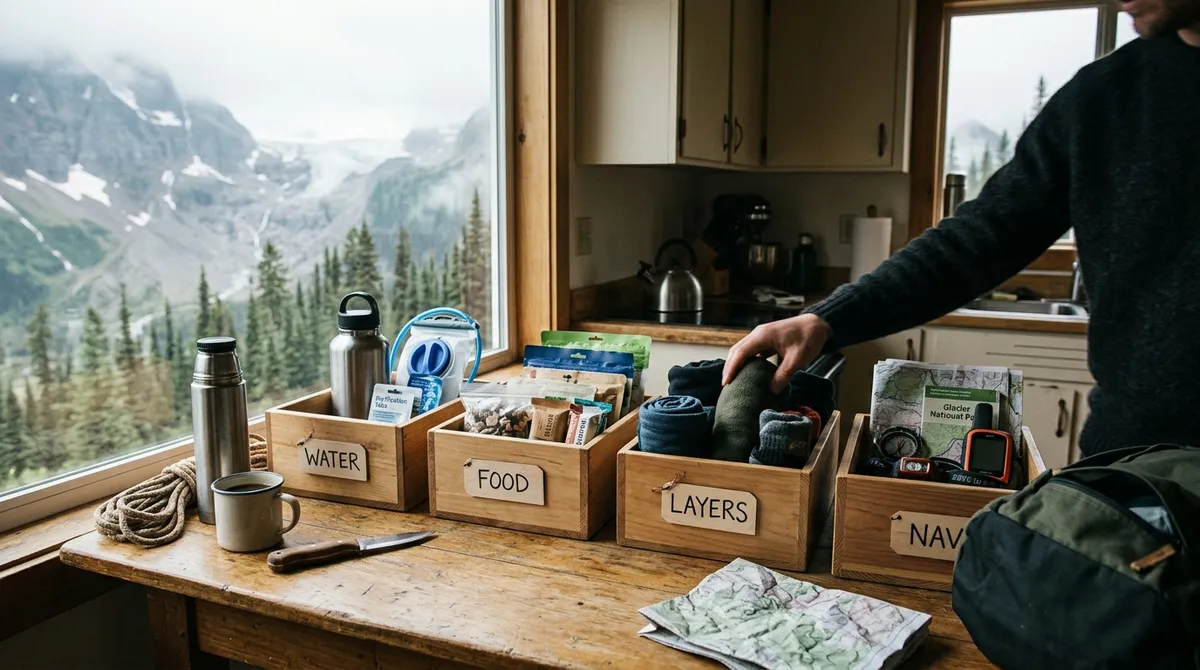
Split your system into three layers so it stays usable.
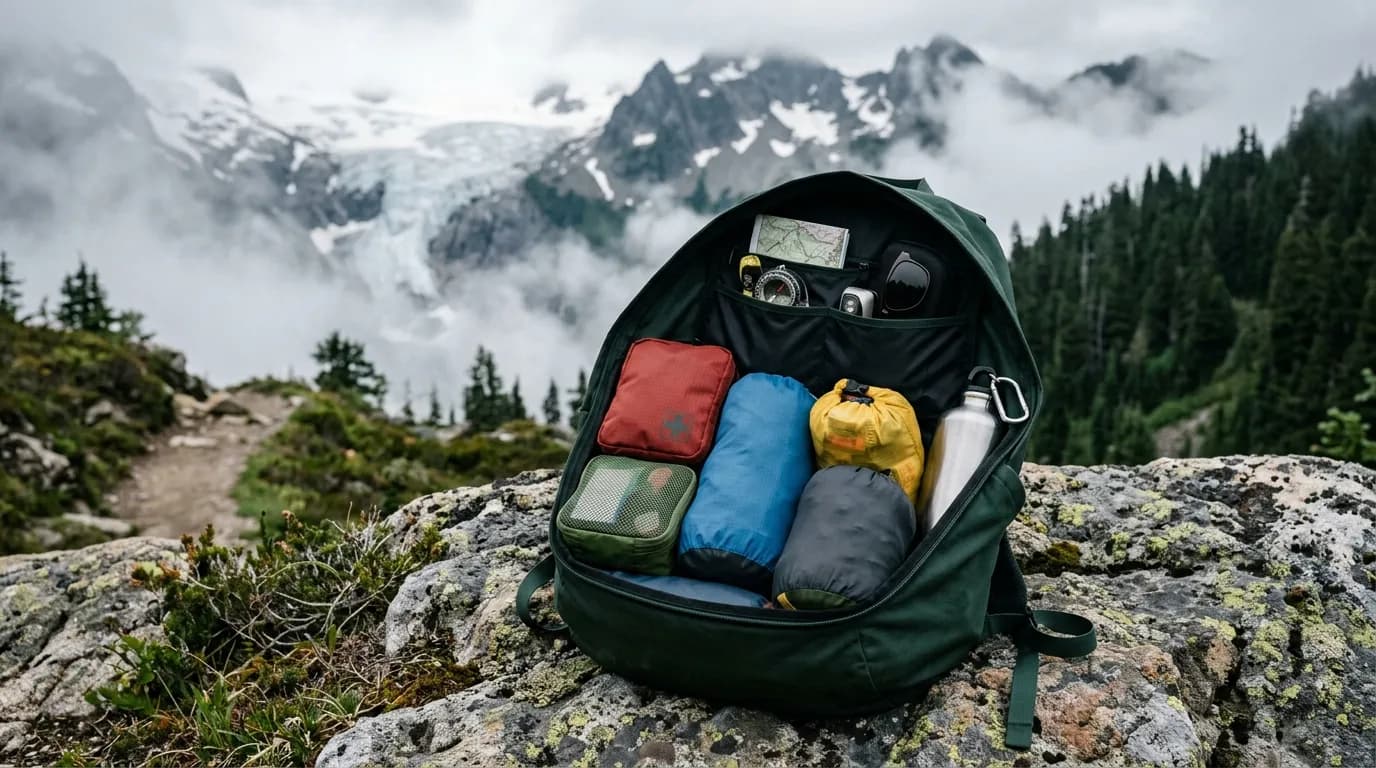
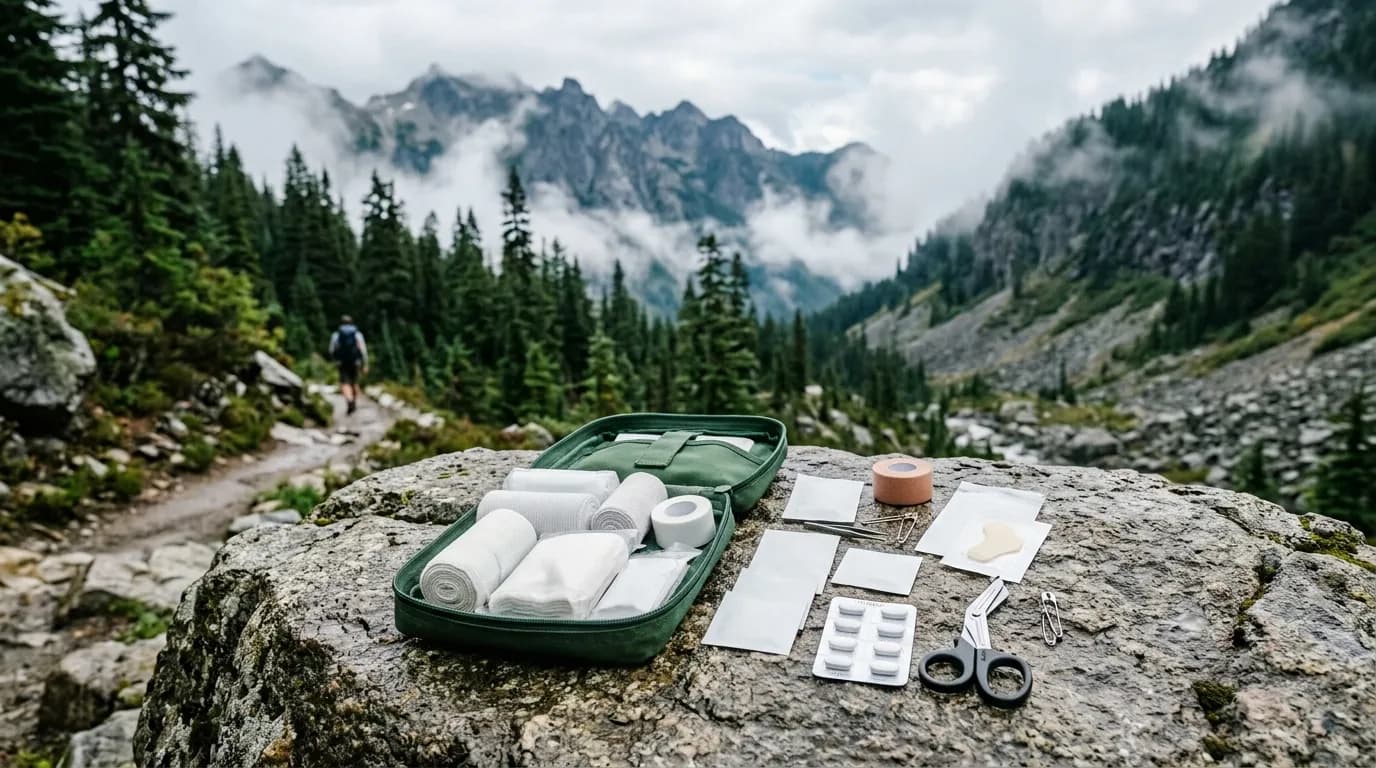
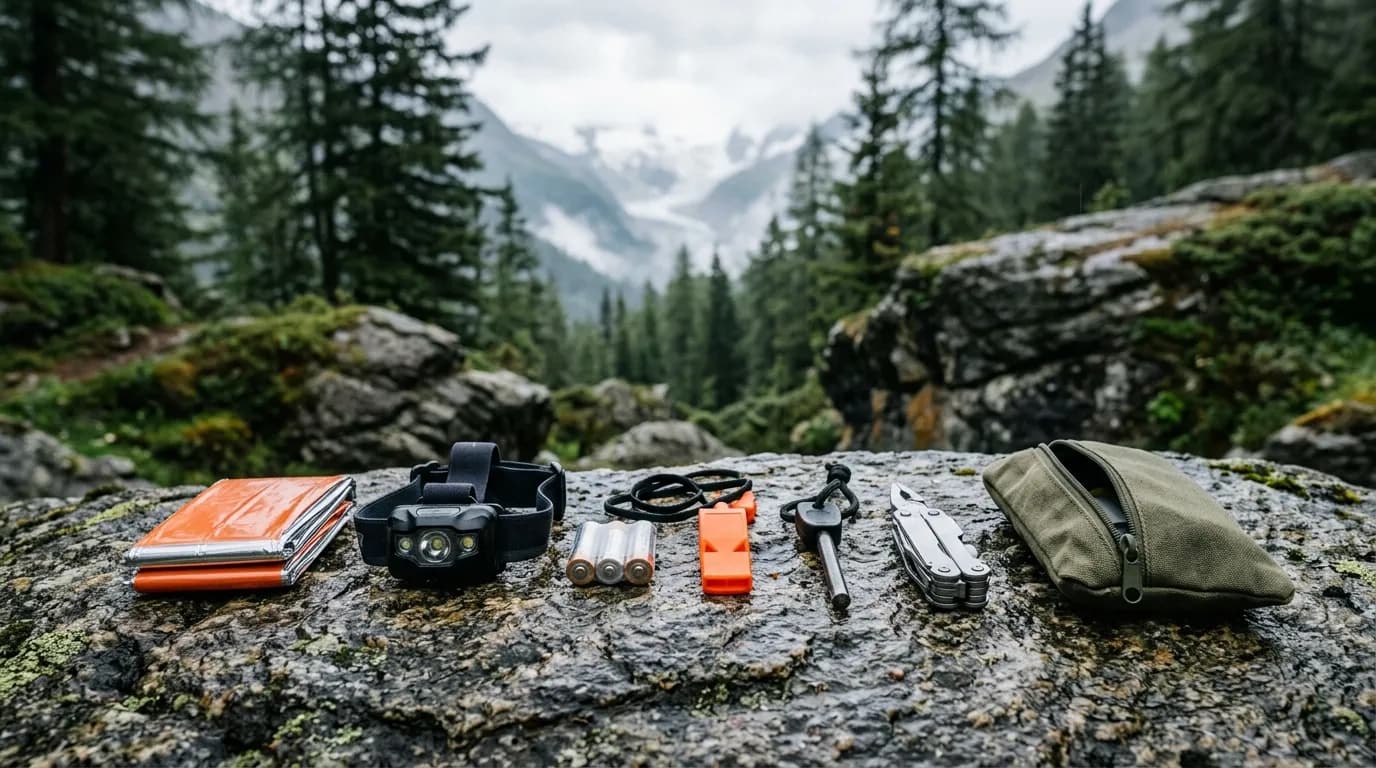
- Layer 1 — Non-negotiables: Items that never leave the pack between trips except to wash or recharge: first aid, emergency whistle, small knife or tool if you carry one, pack liner if you use it.
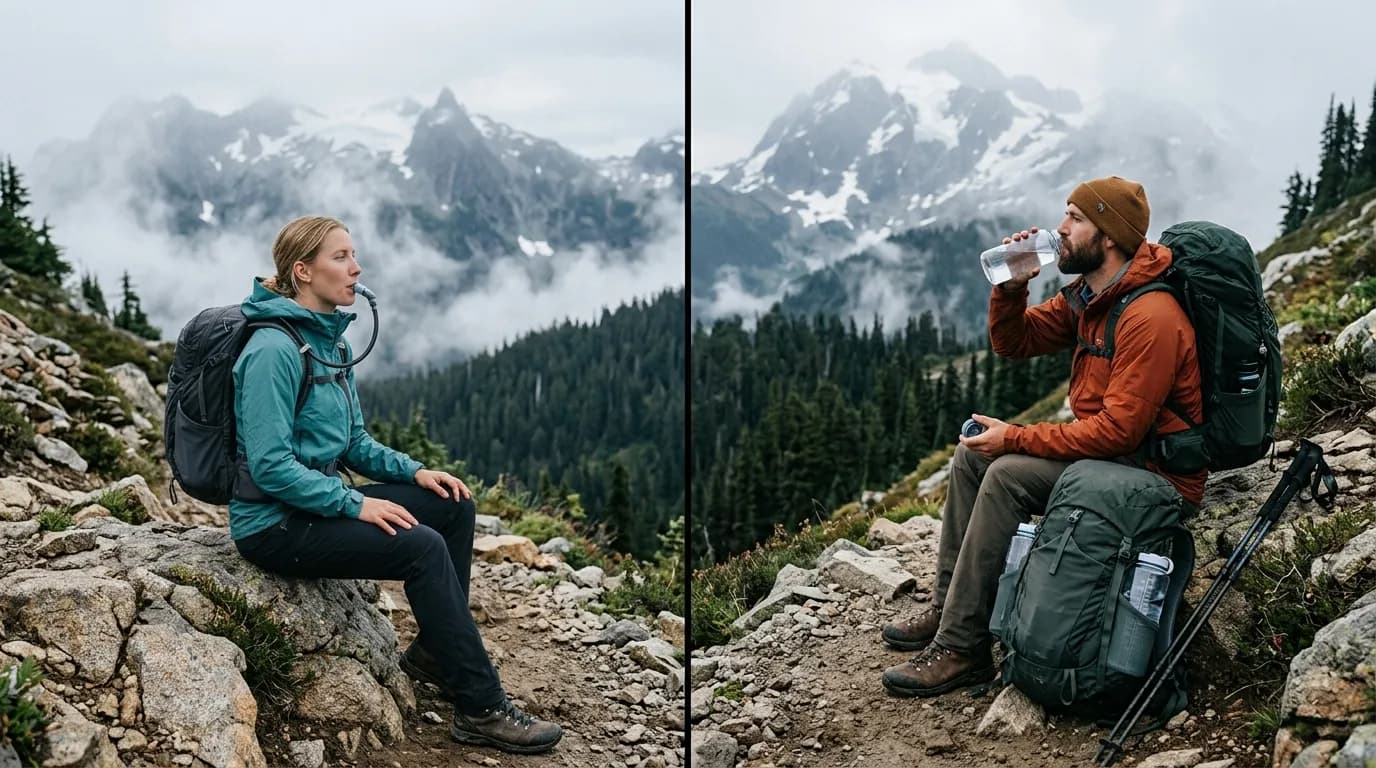
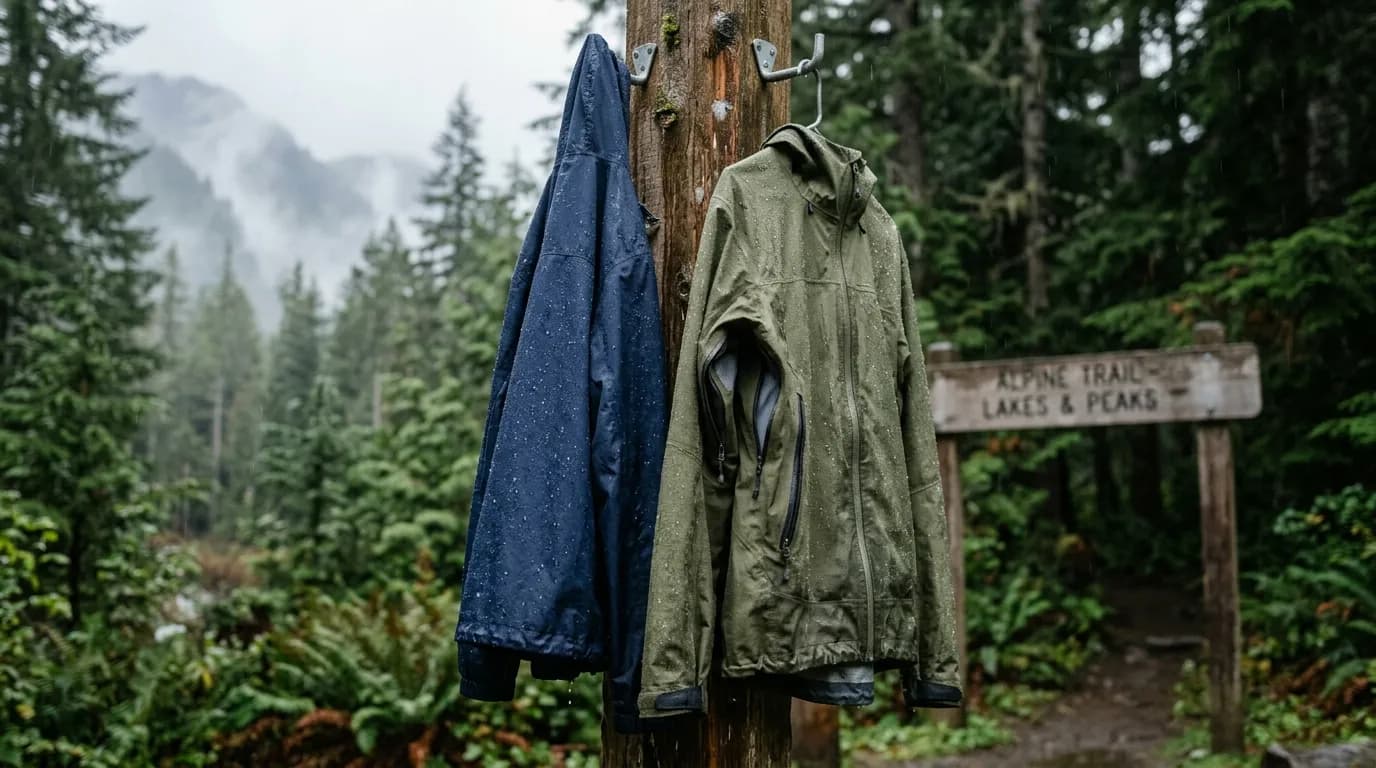
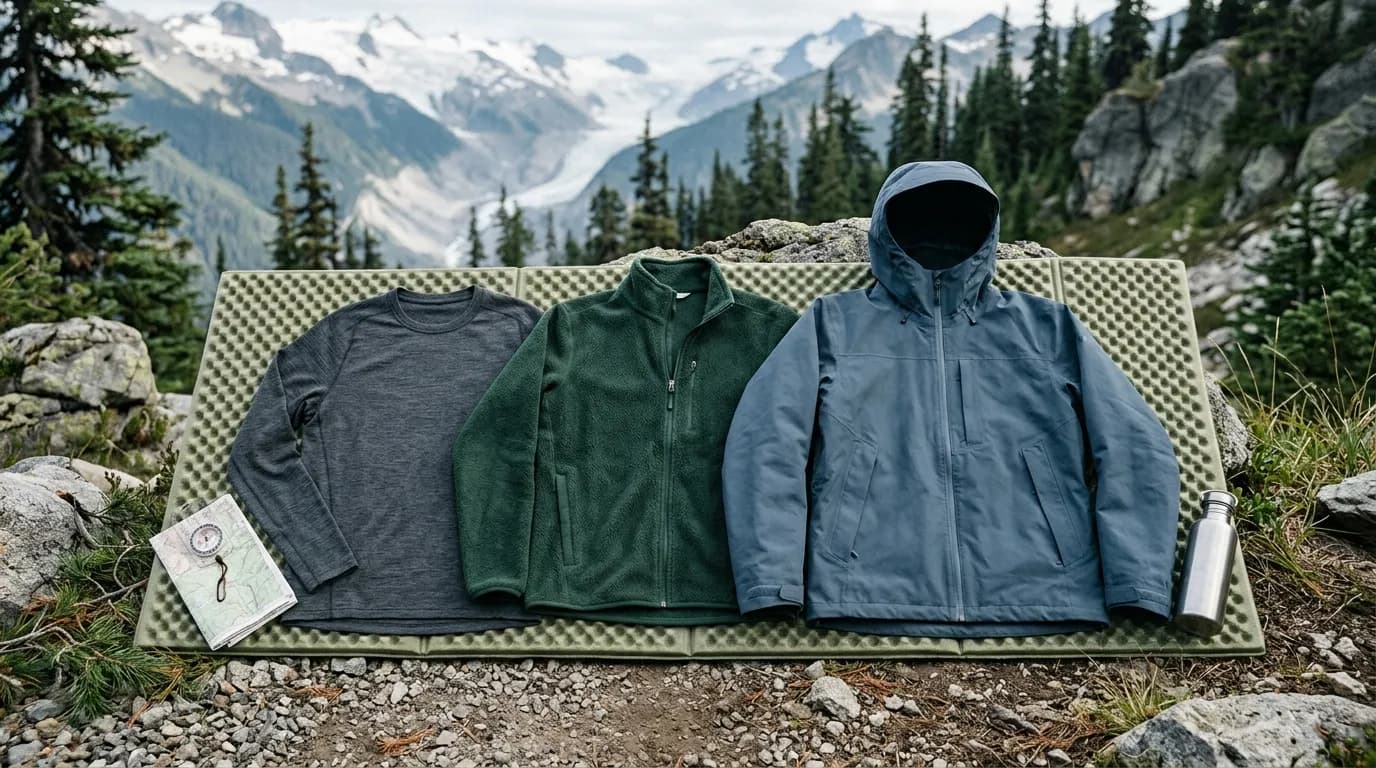
- Layer 2 — Trip core: Items almost always added: water, food, sun protection, appropriate layers, navigation, phone, headlamp on any hike that could run past dusk.
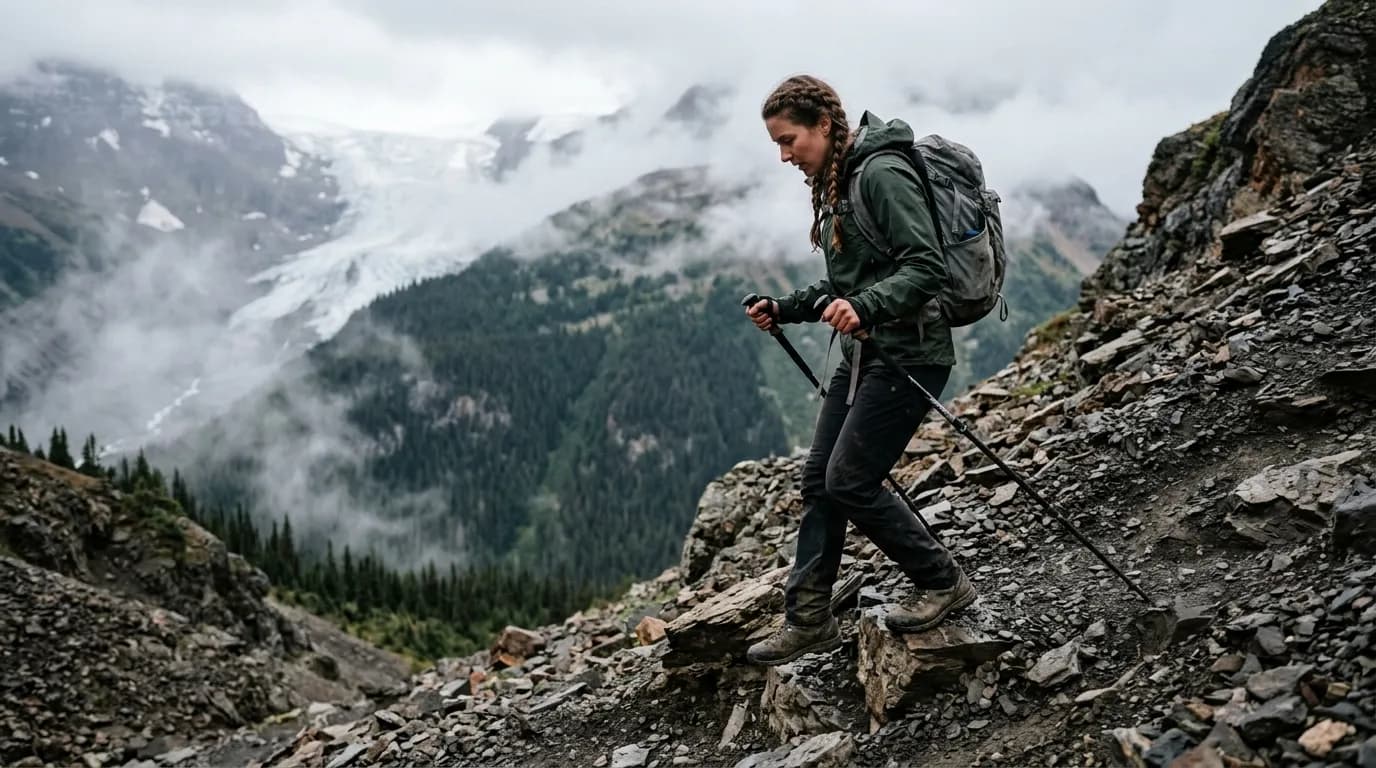
- Layer 3 — Trip modifiers: Weather, terrain, and company adjustments: microspikes, extra water, kid snacks, bug net, trekking poles.
Pack in that order every time. Non-negotiables confirm the pack’s permanent spine. Trip core fills the expected day. Modifiers answer the specific forecast and route. When you rush, you still know which layer you skipped if you follow the sequence.
Write it where you will see it
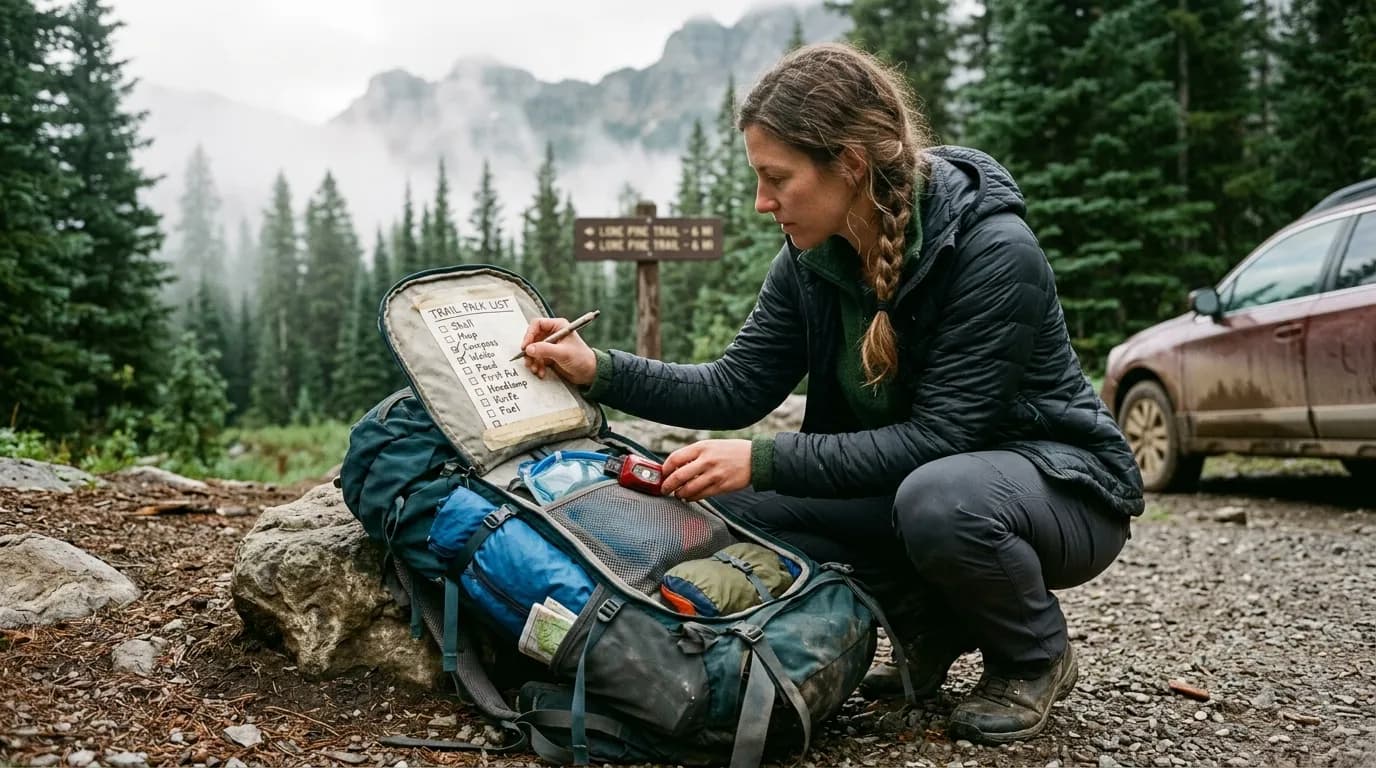
Store the checklist on your phone notes, taped inside the pack lid, or on a card in the gear bin. One source of truth. Multiple half-copied lists diverge and defeat the purpose. Update that single list when you add or drop gear.
Include checkboxes or a spoken script. Some hikers read aloud: “Water, food, shell, warm, light, nav, sun, first aid.” Thirty seconds of speech beats a silent skip.
Building your first checklist from scratch
Begin with a real hike you took recently, not a fantasy alpine day. List what you actually used, what you wished you had, and what you carried untouched. That trip is data.
Group items by function, not by brand. Hydration, insulation, weather protection, nutrition, navigation, illumination, first aid, tools, personal needs. Function groups survive when you replace a bottle with a bladder or swap jackets.
Mark each item with season tags: S for summer-weight, W for winter, A for all-season. When spring arrives, you filter the list instead of rewriting it. Tags keep the habit stable while contents rotate.
Physical staging beats packing from memory
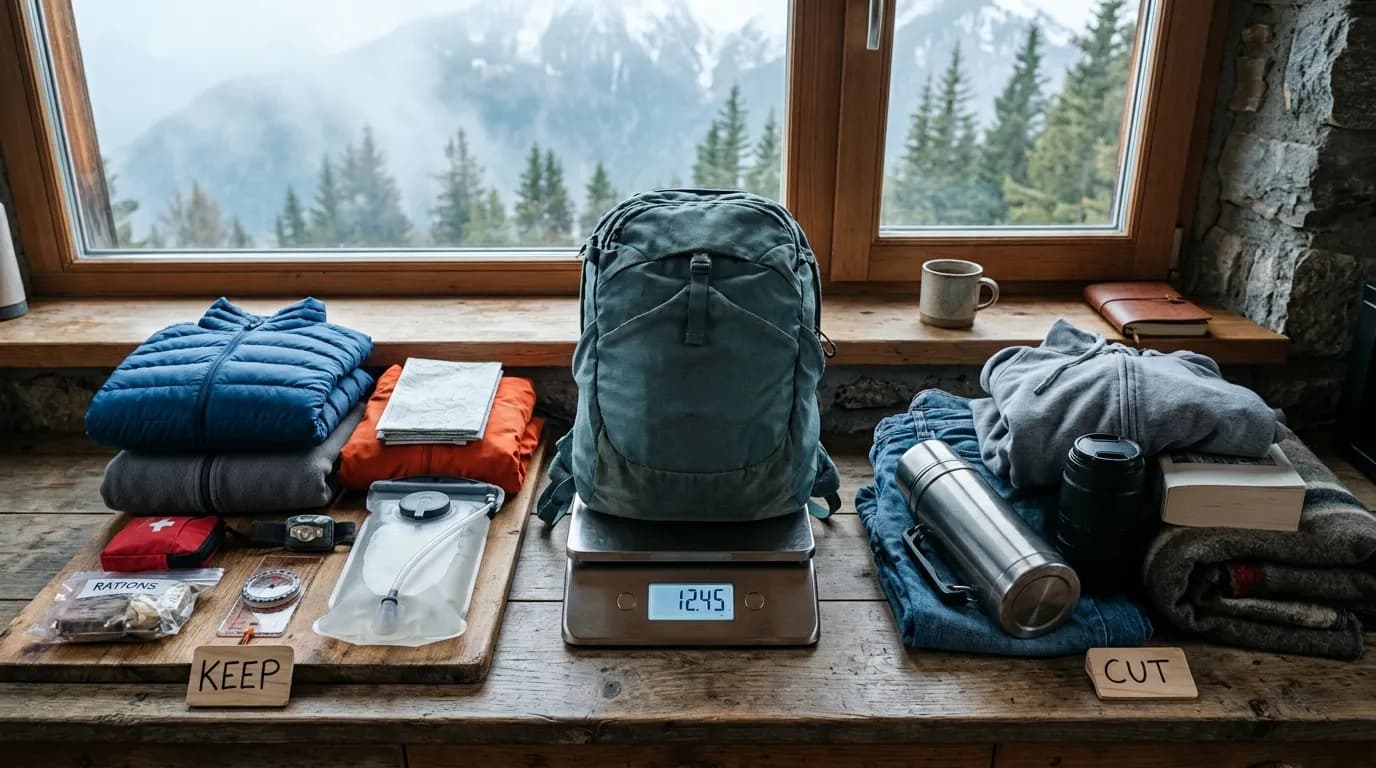
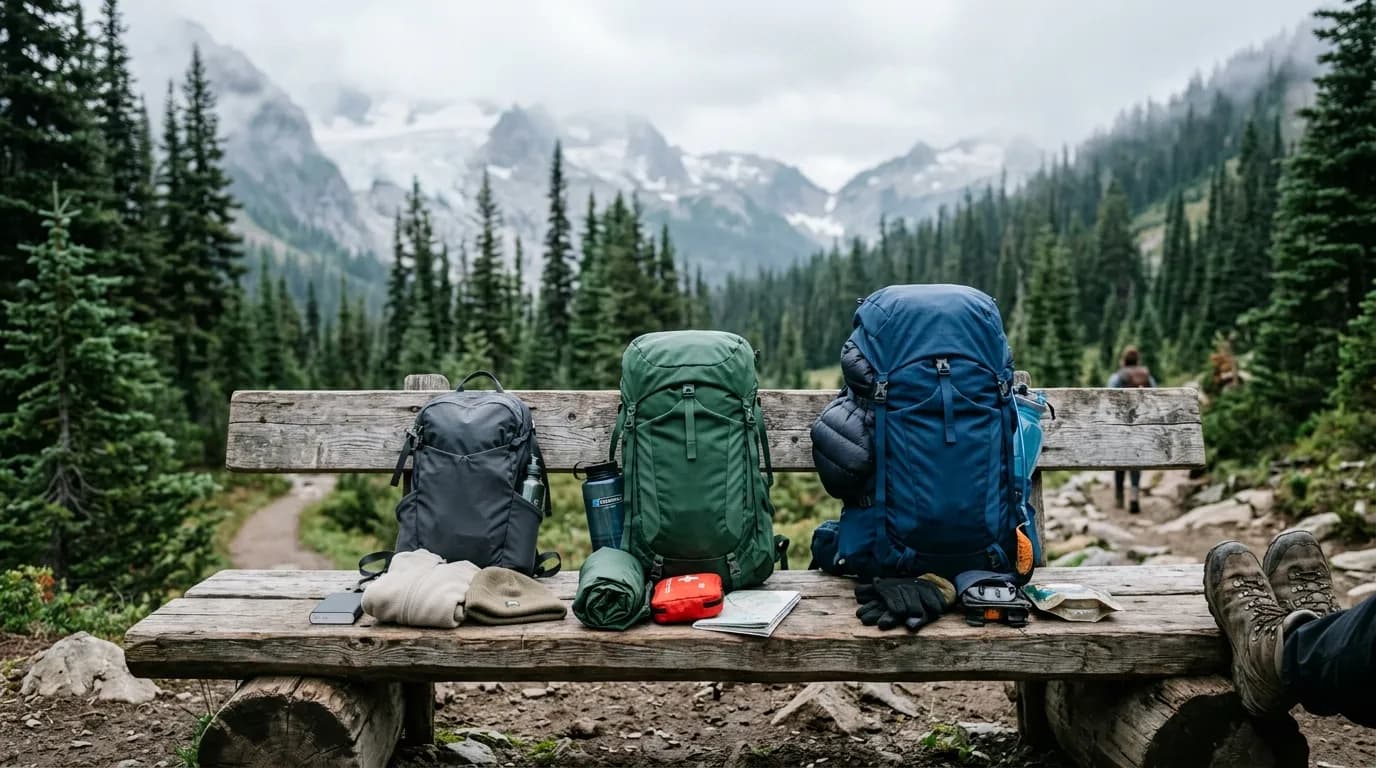
Create a staging zone—a bin, a shelf, or two clear patches on the floor. Lay gear out before it enters the pack. Visual confirmation catches absences. A headlamp on the shelf cannot lie the way a mental check can.
Stage in checklist order. When an item is missing from the stage, the hole is obvious. Photograph your staged layout once when dialed; frantic mornings love reference photos.
Return gear to the same homes after every hike. Dirty socks to laundry, restock first aid, recharge headlamp, repack snack bag. The habit loop closes at home, not only at the trailhead.
Day-before vs morning-of
Split tasks to reduce 5 a.m. decisions. The evening before: confirm weather, choose layers, charge electronics, fill water if practical, stage food. Morning of: final weather glance, add perishables, run the spoken script, weigh if you track weight.
Evening prep is especially valuable for parents and shift workers. Mornings are already compressed. The checklist habit should not depend on perfect mornings.
Seasonal swap without checklist chaos
Twice a year, run a swap session: summer bin vs shoulder-season bin. Move modifiers between them deliberately. Update weight notes if jacket weight changes. Do not maintain separate complete checklists unless you hike in radically different climates; one list with tags is easier.
After swap, do one short local hike as a shakedown. Confirm you did not leave winter gloves in the bin while the list still says “hand protection.”
Weight honesty as part of the habit
Once a month, weigh the packed daypack on a bathroom scale. Write the number on your checklist card. Sudden jumps trigger an audit: open the pack, find duplicates, remove dead weight. This pairs directly with a formal weight audit when you want deeper cuts.
Weight checks are not about chasing ultralight numbers for everyone. They are about noticing when convenience items multiplied. Three snack bars became six. Two hats appeared. The scale tells the truth gently.
Digital vs paper checklists
Digital lists excel at editing and sharing with hiking partners. Paper lists excel when phones are low on battery or when you pack in a dead zone garage. Many hikers keep digital as master and paper as trailhead copy.
Whatever medium you choose, disable infinite duplication. One master. Archive old versions if needed, but pack from one live document.
Group hikes and delegated packing
When hiking with others, clarify who carries shared items—first aid, map, group shelter if required—versus personal items. Write names next to shared gear on the checklist so nothing assumes someone else packed it.
Kids can own a short sub-checklist: water, snack, rain layer, whistle. Ownership teaches habit early. Keep adult eyes on the final scan anyway.
Starter plan: two weeks to a locked habit
- Days 1–3: Draft checklist from last hike. Tag items S/W/A. Identify staging zone.
- Days 4–7: Pack for two short walks using staging and spoken script. Note misses.
- Days 8–10: Add weight note after one packed hike. Remove one duplicate if found.
- Days 11–14: Run evening-before prep once, then morning script only. Adjust list wording until script takes under 45 seconds.
After two weeks, the habit should feel automatic for your usual local day hikes. Harder trips add Layer 3 modifiers, not a new process.
Common mistakes
- Checklist too long to read: If you will not read it, shorten to categories plus modifiers.
- No post-hike reset: Packing habit dies when gear stays scattered in the car trunk.
- Copying expert lists verbatim: Your list should match your climate and routes.
- Never updating after gear changes: New jacket, old list, wrong assumptions.
- Skipping the script on “easy” hikes: Easy hikes are where forgotten shells hurt anyway.
- Two masters: Phone list and paper list diverge. Pick one source.
- Treating checklist as shame tool: Misses happen; fix the system, not your worth.
Perfectionism kills habits. Aim for reliable, not flawless. A checklist you use at 90% beats an ideal list you abandon.
Advanced: trip templates
Once the base habit holds, create templates: “Local 3-hour forest,” “Ridge 8-hour exposed,” “Winter waterfall.” Each template is Layer 2 plus preset Layer 3 modifiers. Templates speed planning without bypassing the script—you still confirm weather morning-of.
Templates also help partners align expectations before meeting at the trailhead. Less surprise when someone packed for a different story.
Checklist triggers: when to run the full script
Not every dog walk needs a twenty-item ceremony. Save the full checklist for days where consequences of forgetting rise: new trail, new season, first hike after gear changes, solo remote routes, or group trips where you carry shared safety items. For a familiar local loop on a stable forecast, a abbreviated script—water, shell, snacks, phone, light—may suffice if your pack never fully unpacks between those outings.
Define triggers in writing on your master list so you do not negotiate at 6 a.m. Examples: “Full script if drive over one hour,” “Full script if elevation gain over 2,000 feet,” “Full script if chance of rain above 30 percent.” Triggers turn vague anxiety into clear rules. They also explain to partners why some mornings you lay everything on the floor and other mornings you zip and go.
Exceptions should be rare and deliberate. If you skip an item, note why in your phone: “Left heavy puffy—forecast high 72, carrying wind shell only.” Review those notes monthly. Patterns of justified exceptions become template tweaks; patterns of lazy exceptions become near misses waiting to happen.
Unpack ritual: closing the loop at home
Packing habit fails when gear lives in the pack indefinitely, batteries die quietly, and food crumbs attract mice. Within a few hours of returning, pull consumables and trash, hang damp layers, recharge electronics, and restock anything opened from the first-aid pouch. Reset non-negotiables to their zones even if you hike again tomorrow. The next pack job starts from a clean baseline, not from archaeological layers.
Unpack ritual takes five minutes once practiced. Set a timer if you procrastinate. Involve kids by assigning them one category—snack trash, water bottle rinse, boot brush. Shared reset prevents one person from becoming the household gear oracle who alone knows where the headlamp lives.
FAQ
Should I laminate my checklist?
Only if you will actually read it. Lamination helps in rain at the trailhead, but a short spoken script often matters more. Combine both if you like rituals.
How detailed should items get?
Detailed enough that nothing critical hides inside vague lines. “First aid” should mean your pouch is present, not “maybe bandages exist somewhere.”
Do I need a checklist if I use the same pack every time?
Yes. Familiar packs hide absences. You stop noticing missing items because the pack feels normal empty-ish.
What about ultralight hikers who know their kit by heart?
Even minimalists benefit from a quick script before remote days. Memory slips on four hours of sleep.
How do I teach the habit to a new hiking partner?
Hike together twice with shared staging. Third hike, they run the script aloud while you watch. Habits transfer through repetition, not lectures.
Can an app replace the habit?
Apps help reminders, but the habit is physical staging plus consistent order. Apps supplement; they rarely replace laying gear out where your eyes confirm it.
Related reading
Ground the checklist in a solid baseline list: day hike packing list for beginners. When weight creeps, run packing weight audit: cut grams without cutting safety. Checklist tells you what to pack; audit tells you what to question.
The gear checklist habit is unglamorous trail craft. It will never get as many likes as a summit selfie. It will get you home dry, fed, and ready to hike again next weekend without buying replacements for things you forgot in the kitchen.
Build one list, one staging zone, one script. Repeat until boring. Then enjoy the freedom boring buys: more attention for the trail itself, less for the zipper you swear was closed.
Daily Peaks believes good days start before the dirt. Pack the same way every time, edit the list when reality teaches you, and let the habit carry the mental load so your legs carry you uphill.
When the script finishes and the pack zips shut, pause once. Breathe. That pause is the habit’s handshake with the day ahead. Then walk out the door knowing the counter holds nothing you will miss at mile four.
Consistency is a form of lightness. Not fewer grams necessarily—fewer decisions. Fewer decisions mean calmer starts. Calmer starts mean better judgment when the cloud line drops and you still have to choose whether to push or turn.
Start tonight. Write the list. Stage the gear. Tomorrow’s you will not need luck.
Pack steady.
— Daily Peaks
Keep the master list short enough to read in one breath for daily hikes. Save long templates for the rare big days. Short lists get used; long lists become wallpaper.
Reset the pack within two hours of getting home when you can. Delayed reset is how headlamps live in backpacks with dead batteries for weeks. The checklist habit includes unpack, not only pack.
If you miss an item once, add a check word to the script, not guilt. Systems improve by one word at a time. “Shell” becomes “shell on hook” if that is where yours lives.
Share the checklist with anyone who might repack your bag for a group trip. Surprise packing is how favorites get left behind.
Keep a tiny printed copy in the car glove box as backup when you swap packs last minute; the habit survives pack swaps when the script travels with you, not only with one bag.
Review the checklist after any near miss. Near misses are free lessons cheaper than emergency gear purchases. That is the whole practice: see, say, stage, zip, go.