Most daypacks get heavy the same way closets get crowded: one reasonable item at a time. A spare battery here, a second snack bag there, a “just in case” fleece that never leaves the bottom pocket. By the time you are on a ten-mile weekend trail, your shoulders are arguing with decisions you made in a warm kitchen. A packing weight audit is how you interrupt that creep without turning into a gram-weaning extremist who leaves the rain shell at home.
Daily Peaks treats weight as a comfort and judgment tool, not a personality contest. Lighter packs make turnaround decisions clearer, descents kinder on knees, and long days more enjoyable—especially when you still carry water, navigation, and a real weather layer. This guide shows you how to audit a day-hike kit: what to weigh, how to categorize items, where beginners usually overpack, what never to cut, and how to re-check after seasons change. Start from a solid baseline with our day hike packing list for beginners, keep the habit honest with a gear checklist habit, and use this audit whenever the pack starts feeling like a suitcase.
What a packing weight audit is (and is not)
An audit is a structured review of everything that enters the pack for a typical day hike, plus worn clothing if you want full truth. You list items, weigh them, assign each to a category—safety, comfort, convenience, nostalgia—and decide keep, replace lighter, share with the group, or leave home. You finish with a target kit for a defined outing type: local half-day, full-day mountain trail, or shoulder-season long day.
An audit is not a race to the lightest possible bag. Cutting a first-aid pouch to save eighty grams while keeping three camera lenses is not wisdom. Cutting water in heat to look fast is dangerous. The goal is maximum function per gram for the routes you actually hike. Safety systems stay. Redundant comfort clones leave. Heavy versions of rarely used tools get replaced or rented for the rare day they matter.
Think in systems, the same way packing lists work: hydration, navigation, weather, foot care, and small emergencies. Audit inside each system so you do not accidentally delete the only map while celebrating a lighter snack bag.
Tools you need for a useful audit
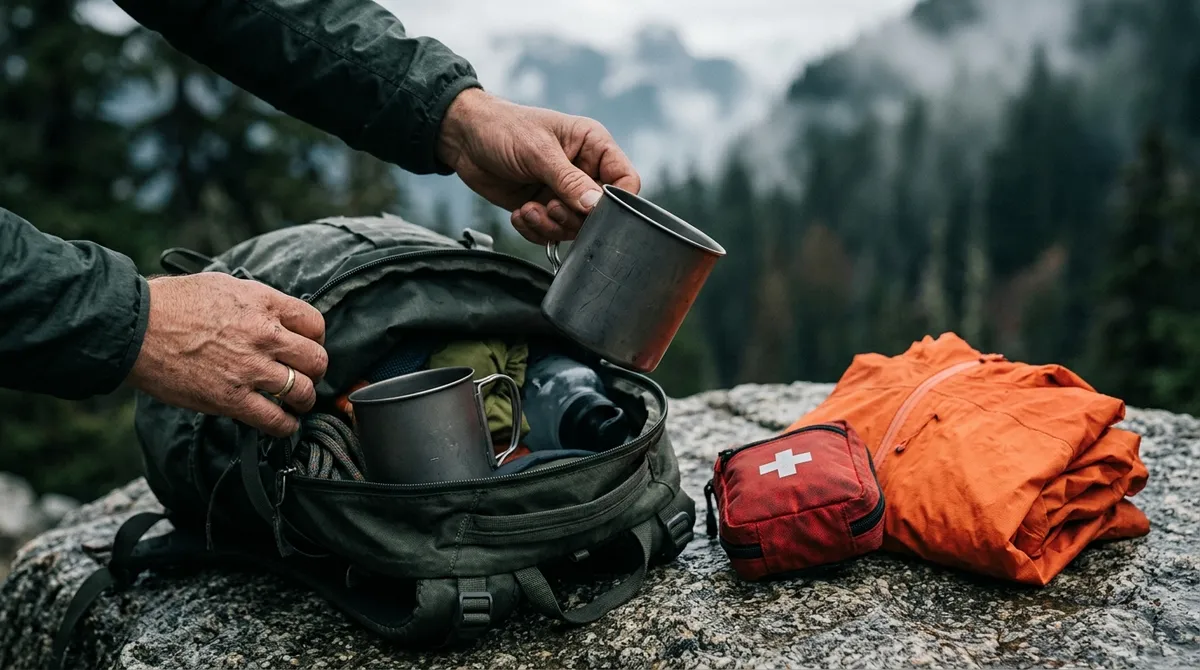
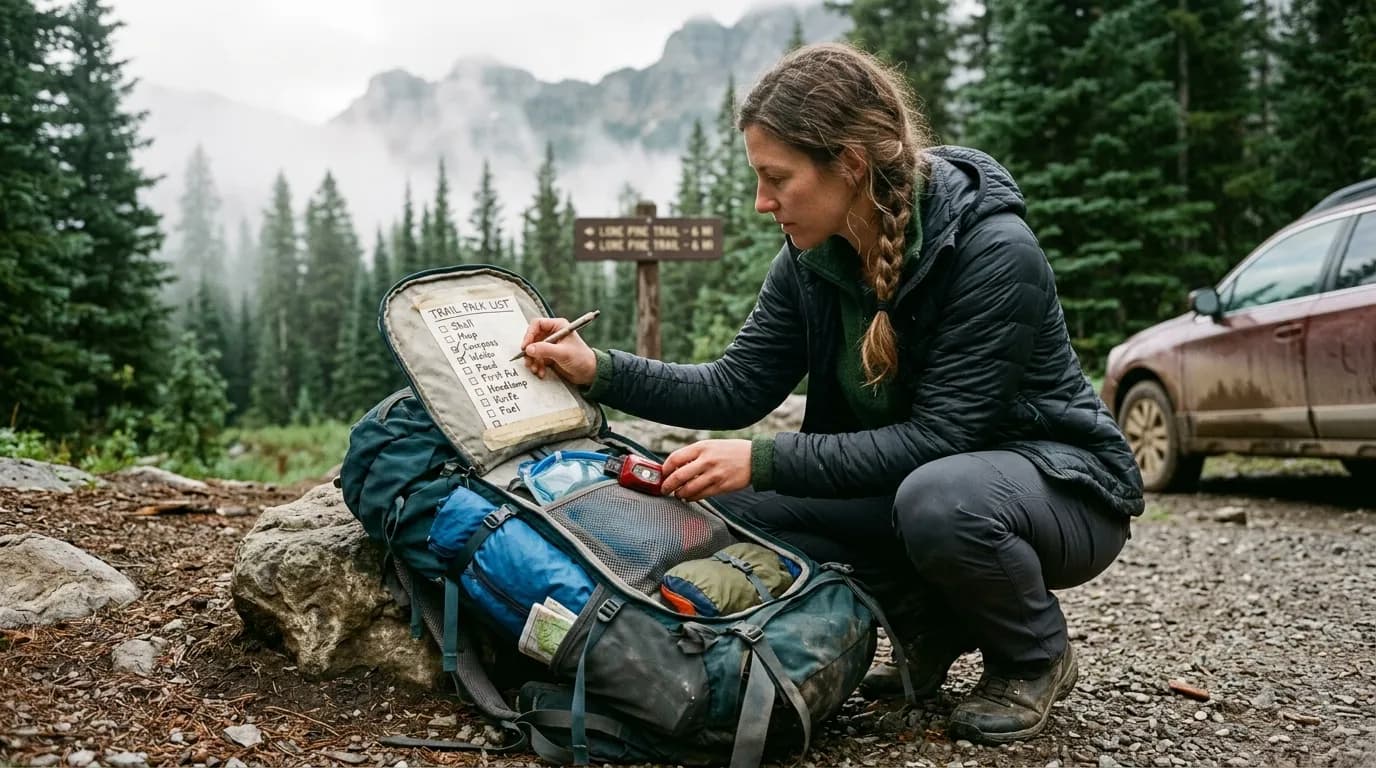
A kitchen scale that reads grams or ounces is enough. A notebook or spreadsheet with columns for item, weight, category, and decision works better than memory. Optional: a luggage scale for the full packed bag as a before-and-after score. Photograph the pack dump so you can compare seasons later.
Weigh items dry and clean. Muddy gaiters and half-full bottles distort the story. Weigh water separately as consumable weight—you will carry it, but you manage it differently than a multi-tool you never use.
Pick one reference hike. “Everything I might ever need” is not an audit target. Choose a real outing: eight miles, three thousand feet of gain, spring forecast, two people. Audit for that. Then note deltas for hotter days, kids, or photography days instead of merging every scenario into one obese kit.
Step-by-step: run the audit in one evening
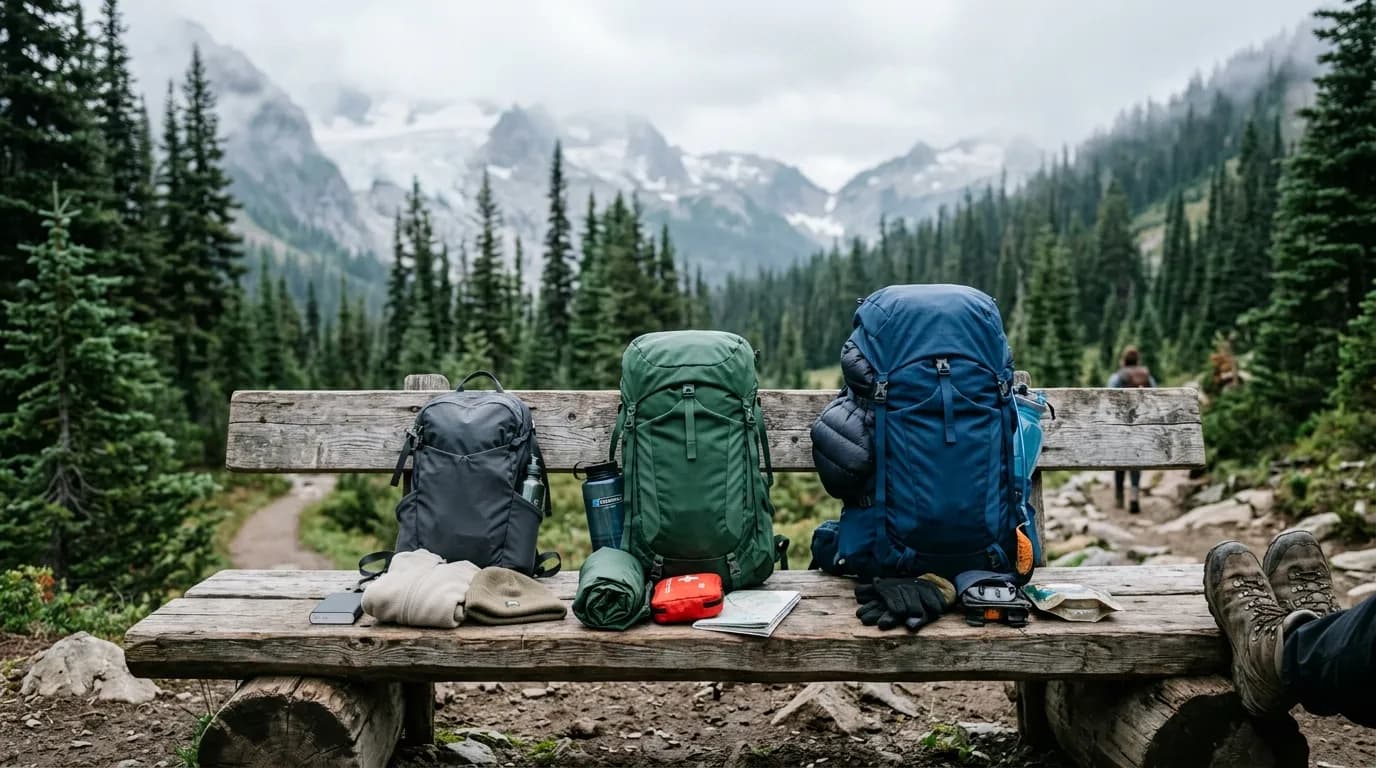
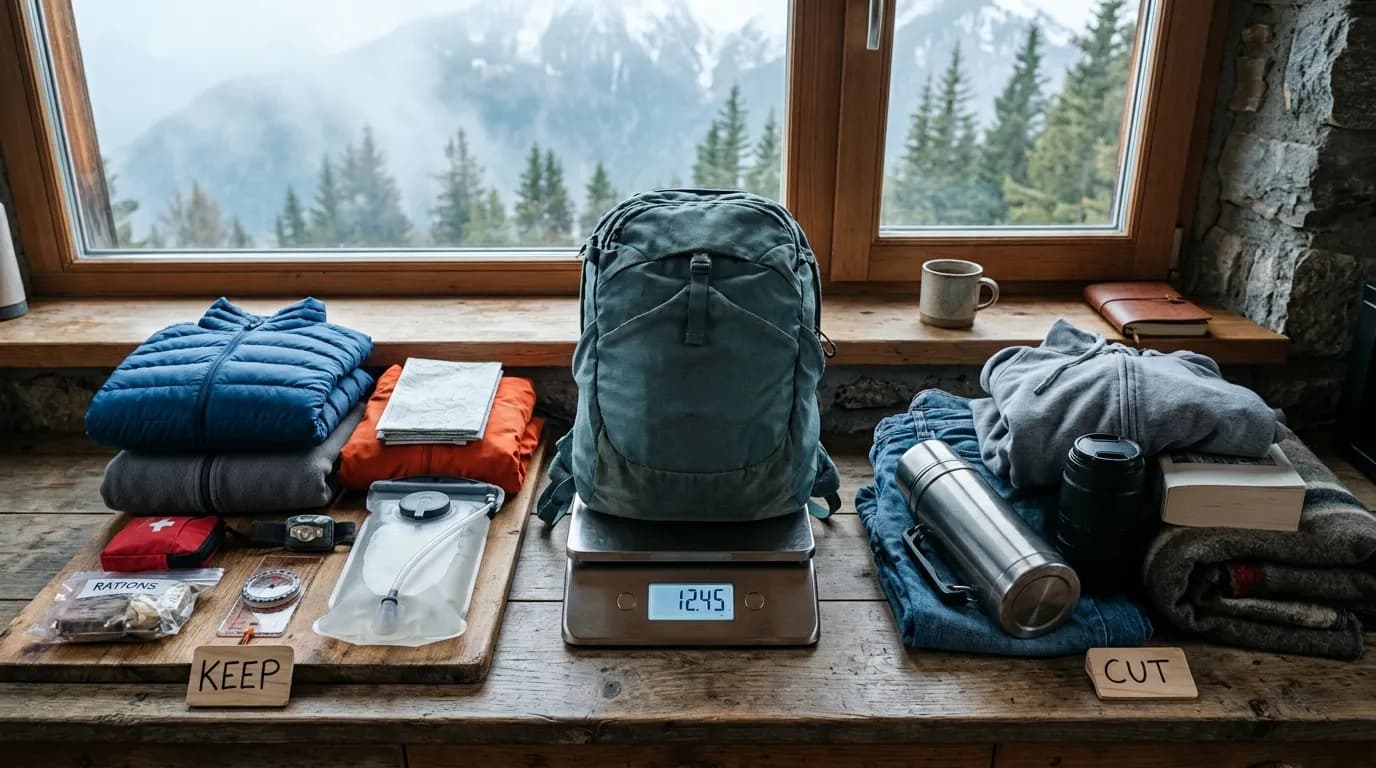
Empty the pack completely, including lid pockets and that mysterious zippered pouch. Lay everything on a towel. Add the items you usually wear that you might otherwise forget—belt kit, phone, pocket knife. Create rows. Weigh. Categorize. Sort heaviest first; big rocks hide among pebbles, but the rocks move the needle.
Mark each line: essential for this reference hike, situational, or luxury. Situational items get rules: “poles only if descent exceeds X,” “puffy only if summit forecast below Y.” Luxury items need a budget: maybe two hundred grams of niceties total. When niceties exceed the budget, something leaves.
Rebuild the pack with only essentials plus allowed situational and luxury grams. Weigh the full pack with water for the plan. Write the number on a sticky note inside the lid. Next month, weigh again. Creeping weight becomes visible instead of mysterious shoulder pain.
Audit categories that keep decisions honest
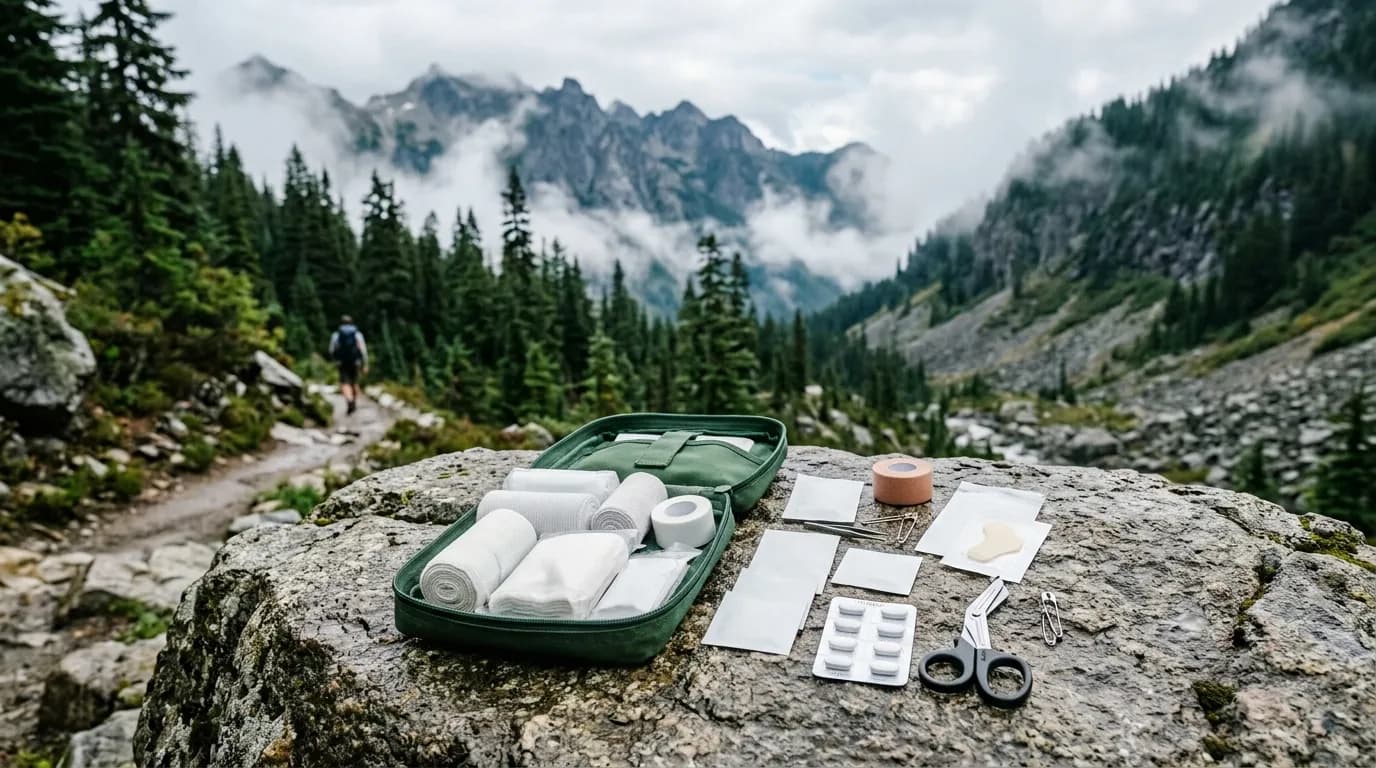
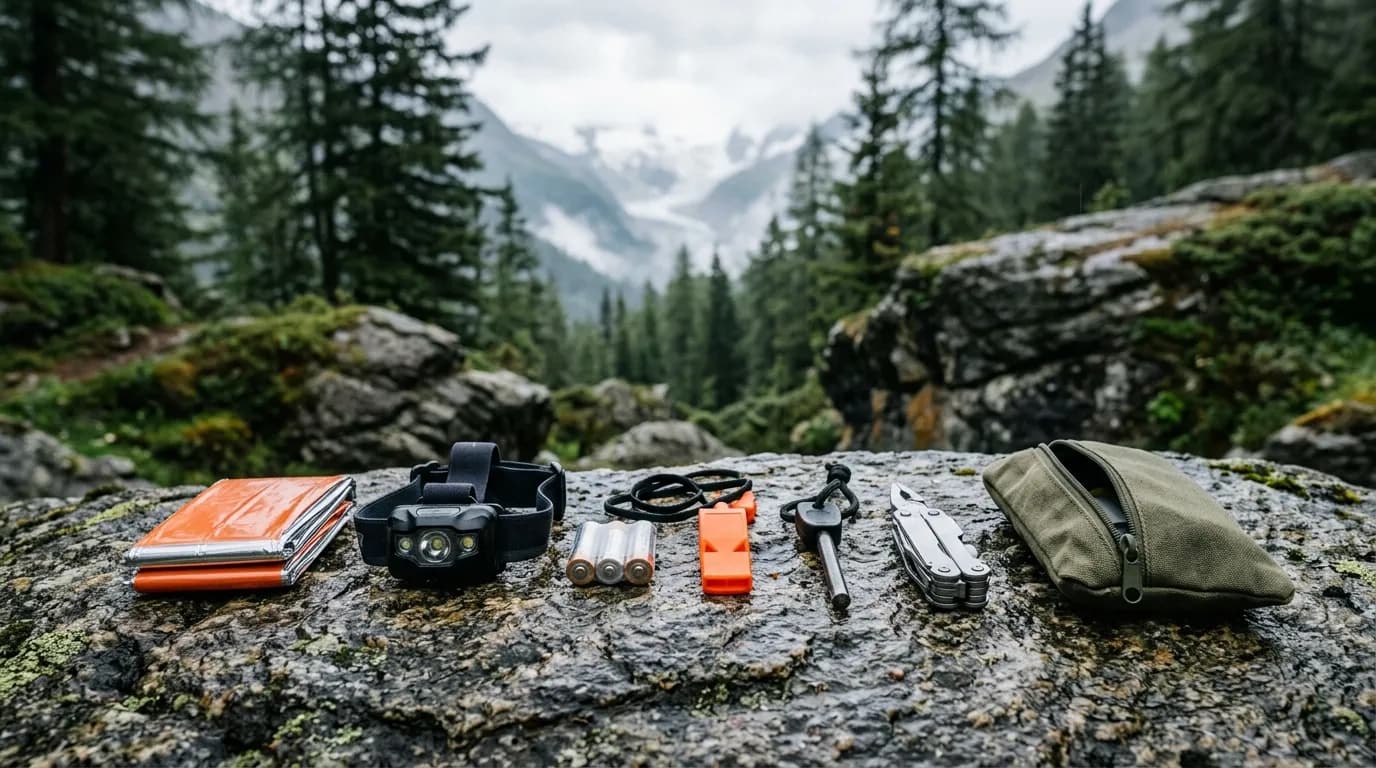
- Safety baseline — navigation, light, first aid basics, whistle, rain shell appropriate to forecast, enough water capacity
- Movement comfort — footwear already on feet, socks, poles if needed, blister kit
- Fuel — food and electrolytes matched to duration
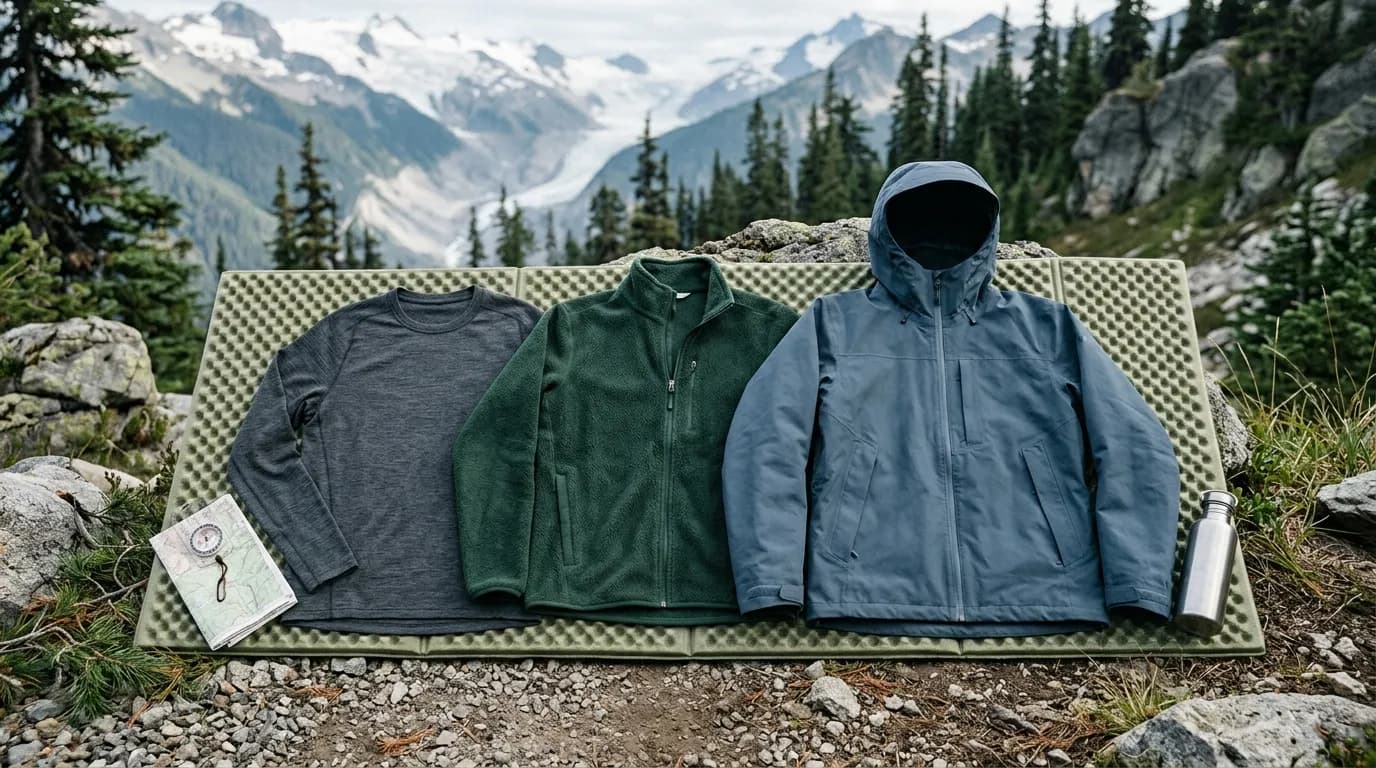
- Warmth and weather — insulation and sun layers matched to season
- Convenience — sit pad, camera, binoculars, extra gadgets
- Dead weight — duplicates, unused tools, packaging, “someday” items
Dead weight is the audit’s favorite prey. Convenience is negotiable. Safety baseline is not a diet category.
Where day hikers usually find free grams
Duplicates top the list: two multitools, three fire starters for a day hike near roads, a full-size towel, a hardcover guidebook, chargers for devices you will not empty, cotton “backup” shirts, and snack boxes still in retail packaging. Consolidate. Decant. Share group items so five people are not each carrying a full first-aid warehouse.
Heavy versions of rare needs come next. A huge flashlight when a compact headlamp suffices. A giant bottle of sunscreen instead of a small transfer bottle. A cast-iron attitude toward cookware on a day hike that needs only a thermos. Transfer liquids into small containers. Leave the kitchen at home.
Water is weight you should not “save” carelessly, but you can carry it smarter: know reliable sources, carry the right capacity for heat and distance, and avoid hauling three liters out of habit on a cool short loop. Pair this audit with how much water to carry on a day hike so hydration stays evidence-based.
Food packaging and “more bars than miles” add quiet pounds. Aim for calories you will eat, not a grocery aisle. See best trail snacks for energy without a heavy pack for dense options that do not require a cooler.
What not to cut (even when the scale tempts you)
Do not cut navigation backups to save a few grams on familiar trails that still fork. Do not cut light because you “never hike late”—delays happen. Do not cut rain protection in seasons that storm. Do not cut blister care on long descents. Do not cut water capacity for heat waves to hit a vanity base weight.
Group dynamics matter. If you are the only person with a map or first-aid kit, your pack carries shared responsibility. Audit shared kits at the group level so the lightest hiker is not also the least prepared while everyone else carries camera gear.
Medical personal needs are not optional grams. Inhalers, epinephrine if prescribed, personal medications—those stay. An audit that ignores health reality is fiction.
Replace, do not just remove
Sometimes the answer is a lighter version of the same function. A compact shell instead of a stiff bulky rain coat you hate wearing. A smaller power bank. A thinner sit pad. Trekking poles that nest smaller if you only need them half the day. Replacement is how you keep function while changing the scale reading.
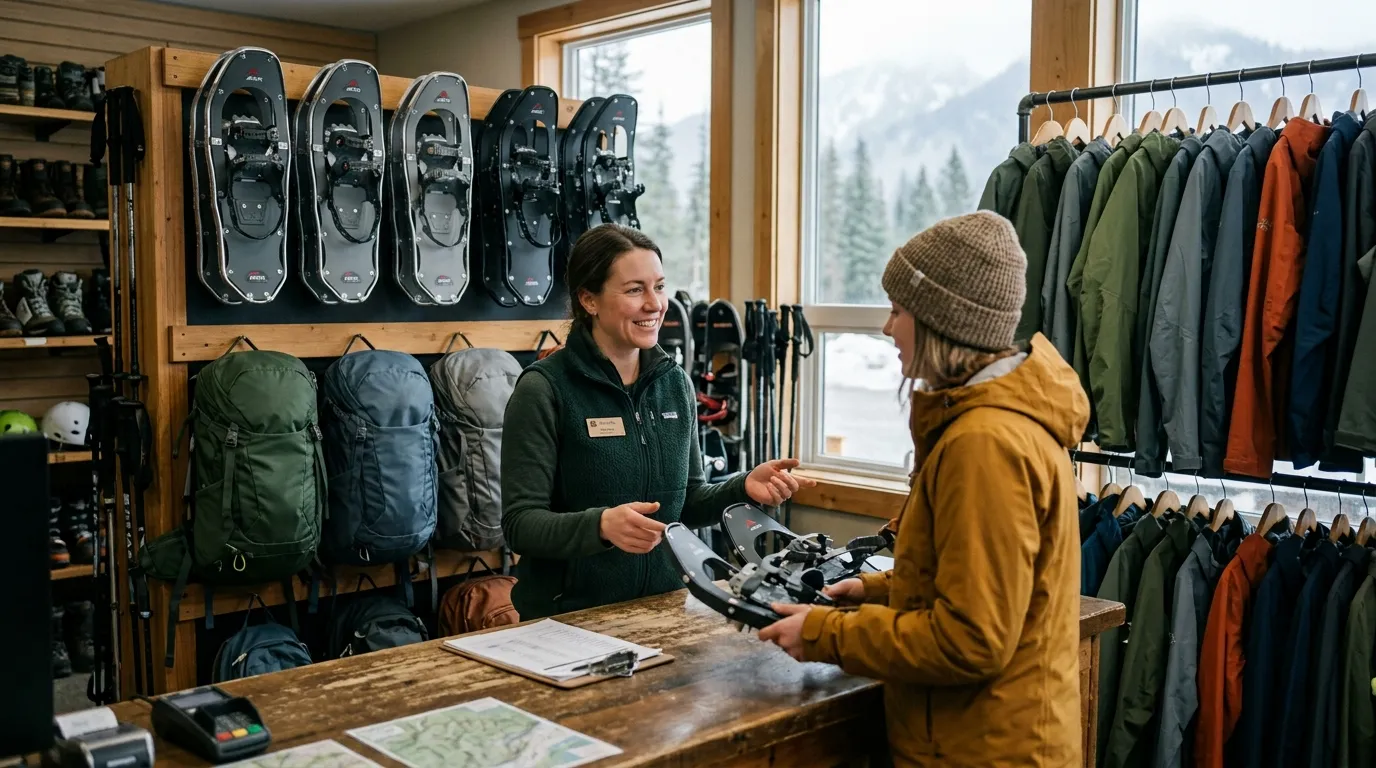
Beware fake savings. A cheaper ultralight item that fails in wind costs more than grams when you buy a backup mid-trail with misery. Prefer proven simple tools. Rent specialty bulk for rare trips instead of owning heavy gear that hikes with you unused every weekend—see rent vs buy outdoor gear as a beginner.
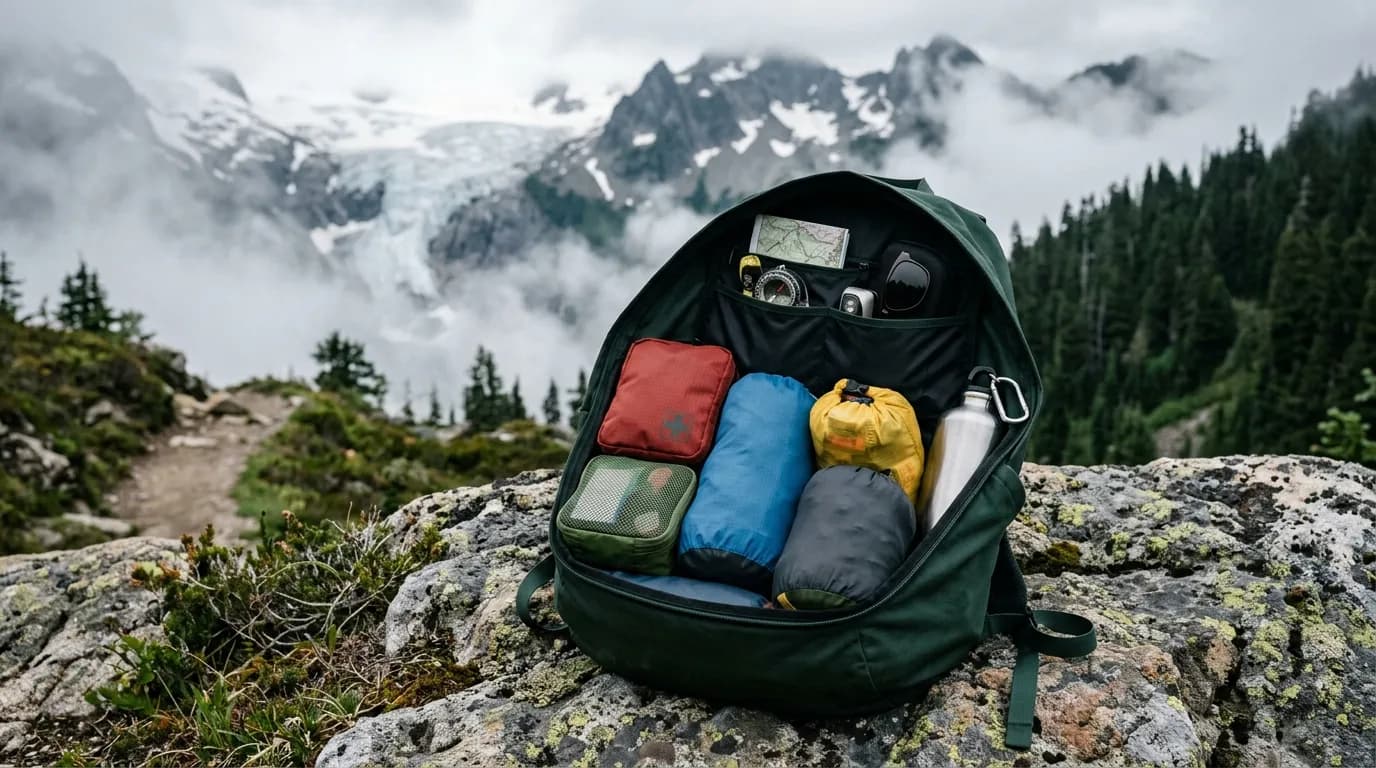
Pack organization can reduce duplicate carrying. If you cannot find the first-aid kit, you may pack a second one “just in case.” Cubes and stuff sacks help you trust what you already have; our guide to packing cubes and stuff sacks for trail days pairs well with audits.
Consumables vs base weight on day hikes
Backpackers talk about base weight excluding food and water. Day hikers benefit from the same split. Your “day base” might be pack, layers carried, navigation, kit, and tools. Consumables are water and food. Track both. A low base with reckless water cuts is not an improvement. A moderate base with smart water and food is.
Weigh the pack at the trailhead with consumables loaded. That number predicts shoulder feel better than a kitchen base weight alone. Reweigh at the car after the hike with trash and leftover food to learn how much you overpacked calories.
Seasonal audit cadence
Run a full audit at the start of each hiking season and a mini audit after any trip where the pack felt annoying. Summer audits often remove insulation and add sun and water capacity. Shoulder-season audits add wind layers and gloves. Winter-adjacent day hikes add traction and warmth that earn their grams when conditions demand them—and leave them home when trails are clear.
After gear purchases, re-audit within two weeks. New items sneak in beside old ones instead of replacing them. The audit forces the swap: new shell in, old shell out of the rotation or into the car emergency bin—not into every daypack.
Group audits without shaming
On friend weekends, weigh shared items once: stove if any, group first aid, shelter tarp, bear canister when required. Assign carriers. Avoid five copies of the same heavy gadget. Keep personal safety lights and layers individual.
Talk about weight as comfort and pacing, not virtue. Stronger hikers can volunteer for shared bulk, but not forever without rotation. Kids’ packs should stay light enough that joy survives; adults carry group safety weight.
Sample before-and-after day kit
Before: 20L pack stuffed with full-size sunscreen, hardcover notebook, two multitools, cotton hoodie, three extra shirts, canned snacks, dangling carabiners with unused widgets, liter of “extra” water on a cool short loop, and a DSLR with two lenses for a casual forest walk. Shoulders burn by mile four.
After: same pack with transfer-bottle sunscreen, phone notes, one small multi-tool, wind layer plus shell as forecast demands, one spare base layer in wet climates, dense snacks, water matched to distance and heat, phone and one compact camera or none. Same safety baseline. Several pounds gone. Mood improved.
Your numbers will differ. The pattern will not: remove clones, right-size consumables, replace bulky rare-use items, keep systems intact.
Linking audit to checklist habit
A checklist tells you what to bring. An audit tells you what deserves to stay on the checklist. After each audit, update the master list. Remove items that lost their place. Add situational rules in parentheses. The gear checklist habit then enforces the lighter kit automatically so you do not rebuild bloat from memory.
For longer days, cross-check with packing for a 10-mile day hike so calorie and water math scale up without random extras sneaking back in.
Common Mistakes
- Cutting water and shell to hit a number — vanity weight is not success.
- Auditing without a reference hike — vague scenarios recreate the junk drawer.
- Ignoring worn clothing weight — soaked cotton hoodies count.
- Never reweighing after new purchases — new gear stacks on old gear.
- Leaving group duplicates unexamined — five first-aid bricks help no one.
- Chasing ultralight fashion over function — fragile gimmicks fail when weather turns.
- Skipping food packaging waste — boxes and wrappers add grams and trash risk.
Starter Plan: One-Week Weight Reset
- Night 1: dump the pack, photograph, weigh every item into a simple list.
- Night 2: mark safety, situational, luxury, and dead weight; set a luxury gram budget.
- Night 3: remove dead weight; transfer bulky consumables into small bottles; update the checklist.
- Weekend: hike the reference route with the rebuilt kit; note hot spots and missing needs.
- Sunday evening: adjust one layer of items; write the trailhead pack weight inside the lid; schedule a seasonal re-audit.
Frequently Asked Questions
How light should a daypack be?
Light enough that you can move well while still carrying water, weather protection, and navigation for your route. There is no universal number. Track your own trailhead weight for similar hikes and improve against your baseline, not against internet strangers.
Should beginners care about grams?
Care about obvious bloat and comfort, not obsession. Removing duplicates and right-sizing water helps beginners immediately. Micro-shaving every strap can wait until habits and safety kit are solid.
Is base weight meaningful for day hikes?
Yes as a teaching tool. Separating kit weight from food and water clarifies whether the pack is heavy because of gear choices or because of a hot long day that truly needs more fluid.
What scale do I need?
A kitchen scale that reads to the gram or tenth of an ounce is enough. Consistency matters more than laboratory precision. Use the same scale each audit.
Can I audit without buying new ultralight gear?
Absolutely. Most savings come from leaving things home and sharing group items. Buy lighter replacements only when a heavy essential earns miles every weekend.
How often should I re-audit?
Each season and after any trip where the pack felt wrong. Also re-audit after adding new gear so old items actually retire.
What if I hike with kids or a dog?
Audit the family system. Adults carry shared safety weight; kids carry light pride items. Dog water and waste bags are real weight—plan them explicitly instead of stuffing randomly.
Related Guides
- Day Hike Packing List for Beginners — baseline kit before you trim
- Gear Checklist Habit: Pack the Same Way Every Time — lock in the lighter list
- Daypack Size Guide: 15L, 20L, or 30L? — volume that matches honest loads
- Packing for a 10-Mile Day Hike — scale systems for longer days
- Rent vs Buy Outdoor Gear as a Beginner — avoid owning heavy rare-use tools
A packing weight audit is a kindness to future-you on the climb. Weigh, categorize, cut clones, keep safety systems, and rewrite the checklist so the lighter kit becomes automatic. The ridge will still be steep. Your pack does not have to pretend it is a moving van to get you there and back with judgment intact.
Educational trail guidance only. Conditions, fitness, and local regulations vary; adjust decisions to your route and experience. This is not professional safety advice.