The first time I stood at a trailhead with a borrowed daypack, I had sunscreen, a half-empty water bottle, and a vague sense that I was forgetting something important. The trail was only six miles. The weather looked fine. I told myself I would figure it out as I went. By mile three, my shoulders ached from a bag stuffed with things I did not need, and I was thirsty because the one thing I had under-packed was water. That hike taught me something simple: a day hike packing list is not about carrying more. It is about carrying the right things in the right order, so your first miles feel calm instead of chaotic.
If you are new to hiking, the gear aisle can feel like a test you have not studied for. Hydration bladders, trekking poles, emergency blankets, ten types of socks—it is easy to either buy everything or freeze and bring almost nothing. This guide is the middle path. It walks through a beginner-friendly packing list for a typical half-day to full-day hike on established trails, explains why each item earns its place, and shows you how to adjust for weather, distance, and your own comfort. Think of it as a trail daybook entry you can reuse every time you lace up.
What Counts as a Day Hike Kit
A day hike kit is everything you carry from the parking lot to the turnaround point and back, with nothing assumed about overnight shelter. The goal is self-sufficiency for roughly four to ten hours on trail: enough food, water, clothing, and small tools to handle normal discomforts—heat, cold, thirst, a blister, a twisted ankle on smooth terrain, a sudden shower—without turning your pack into a mobile garage sale.
Beginners often ask whether they need the same gear as backpackers. Usually, no. You are not carrying a tent, stove, or sleeping bag. You are carrying a tighter version of the essentials: hydration, layers, navigation, first aid basics, and a few items that turn a bad hour into a manageable one. The list below assumes you are hiking on marked trails in a park or public land, not bushwhacking in remote alpine terrain. If your hike crosses into more serious country, you will add items—but most first hikes do not need that yet.
The Core Principle: Systems, Not Stuff
Organize your pack around five systems rather than a random pile of gear:
- Hydration and fuel — water and snacks that match the length and temperature of your hike
- Navigation and communication — map, app, or written directions plus a way to call for help if you have signal
- Weather and comfort — layers, sun protection, and rain protection appropriate to the forecast and elevation
- Foot care and movement — footwear you trust, socks, and optional poles for knees or balance
- Small emergencies — basic first aid, a light, and a whistle
When each system is covered, you stop second-guessing at the trailhead. You run a quick mental check, adjust for the day, and go.
Essential Day Hike Packing List for Beginners
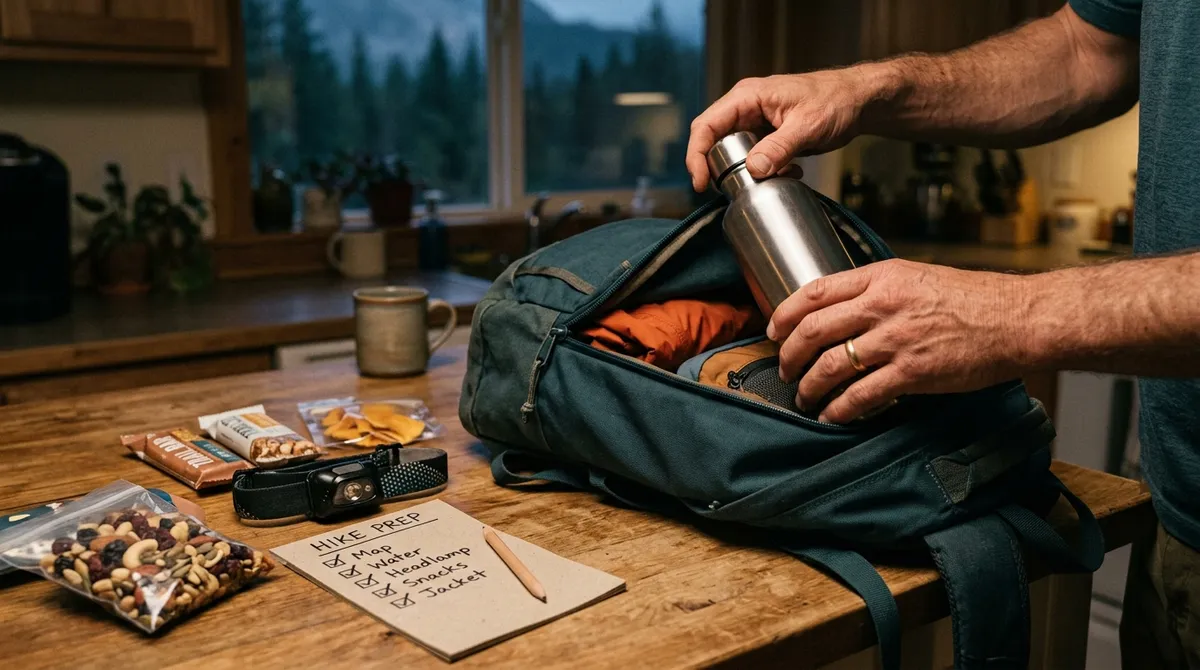
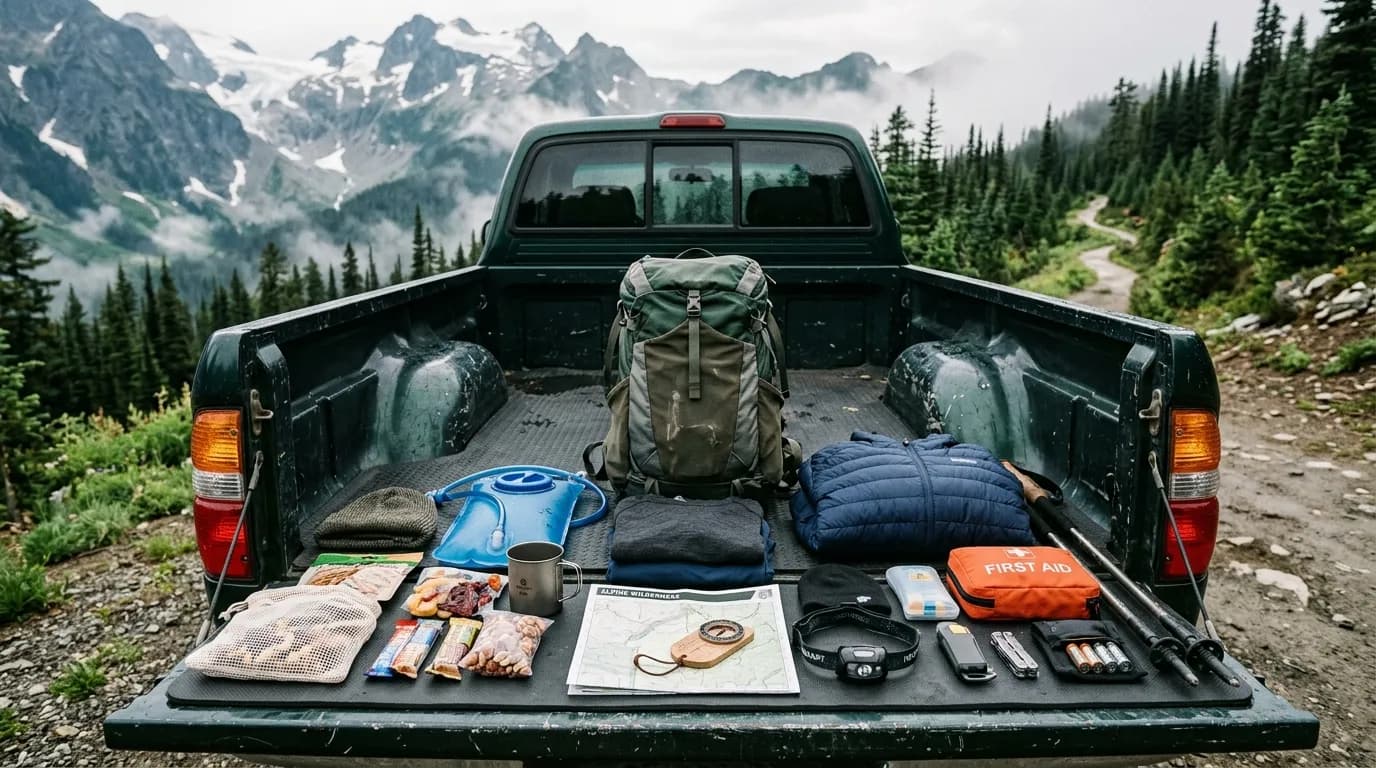
Here is a complete starter list for a typical three-to-eight-mile day hike in mild to moderate conditions. Treat it as a baseline, not a religion. Your local climate and the specific trail will nudge items up or down in priority.
1. Daypack (15–20 Liters Is Plenty to Start)
Choose a pack that fits your torso and sits close to your back without bouncing. For most beginner day hikes, 15 to 20 liters holds everything here with room to spare. Look for a sternum strap, hip belt (even a thin one helps), and at least one external pocket for quick-access snacks. Avoid hauling a school backpack with thin straps—it distributes weight poorly and turns a gentle climb into a shoulder workout.
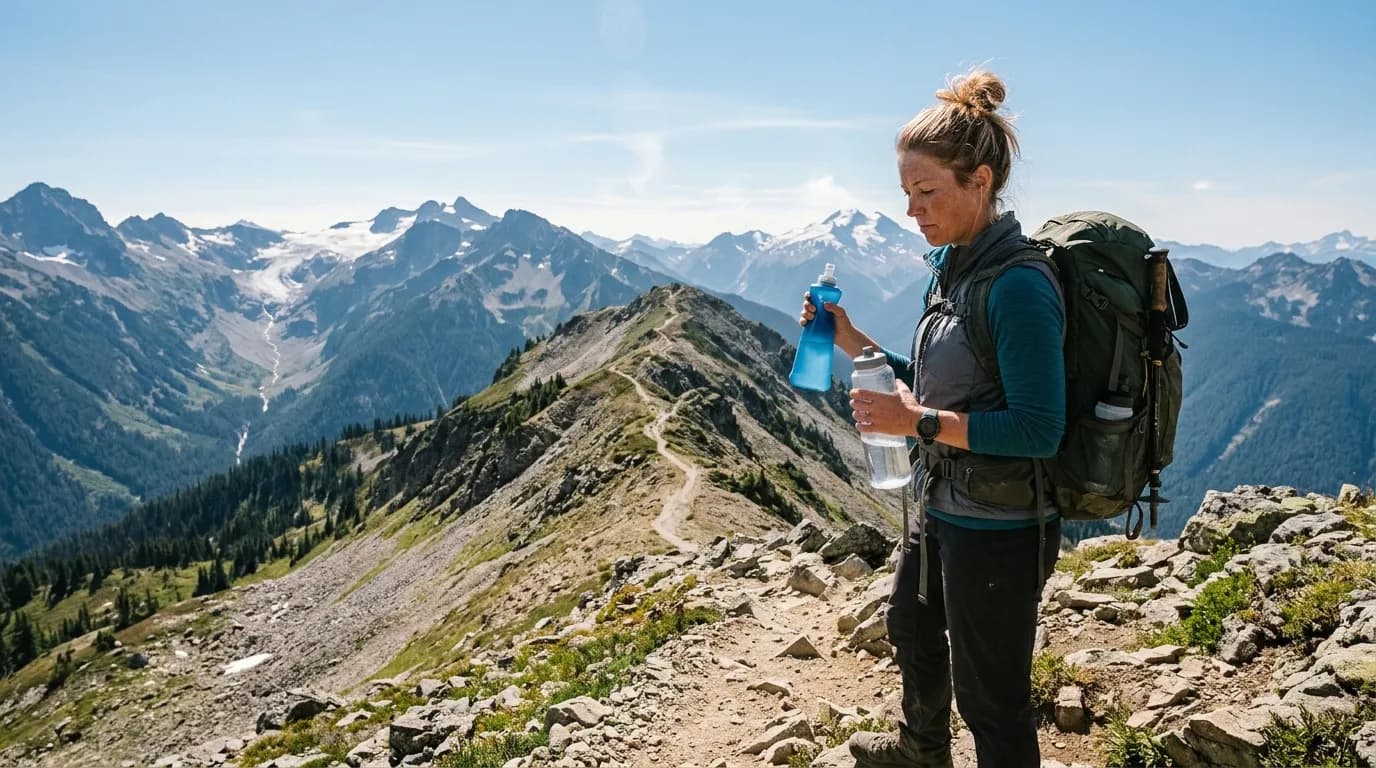
2. Water
Water is non-negotiable. How much depends on distance, heat, and your body, but beginners often underestimate. A useful starting point for a moderate day in temperate weather is roughly half a liter to one liter per hour of hiking, plus a small buffer. On a hot four-hour hike, that might mean two to three liters total. Read our full breakdown in How Much Water to Carry on a Day Hike before you guess at the trailhead.
Carry water in bottles or a hydration reservoir—whatever you will actually drink from. If you choose a bladder, practice taking it out and refilling before your first hike so you are not fumbling at a stream crossing.
3. Food and Snacks
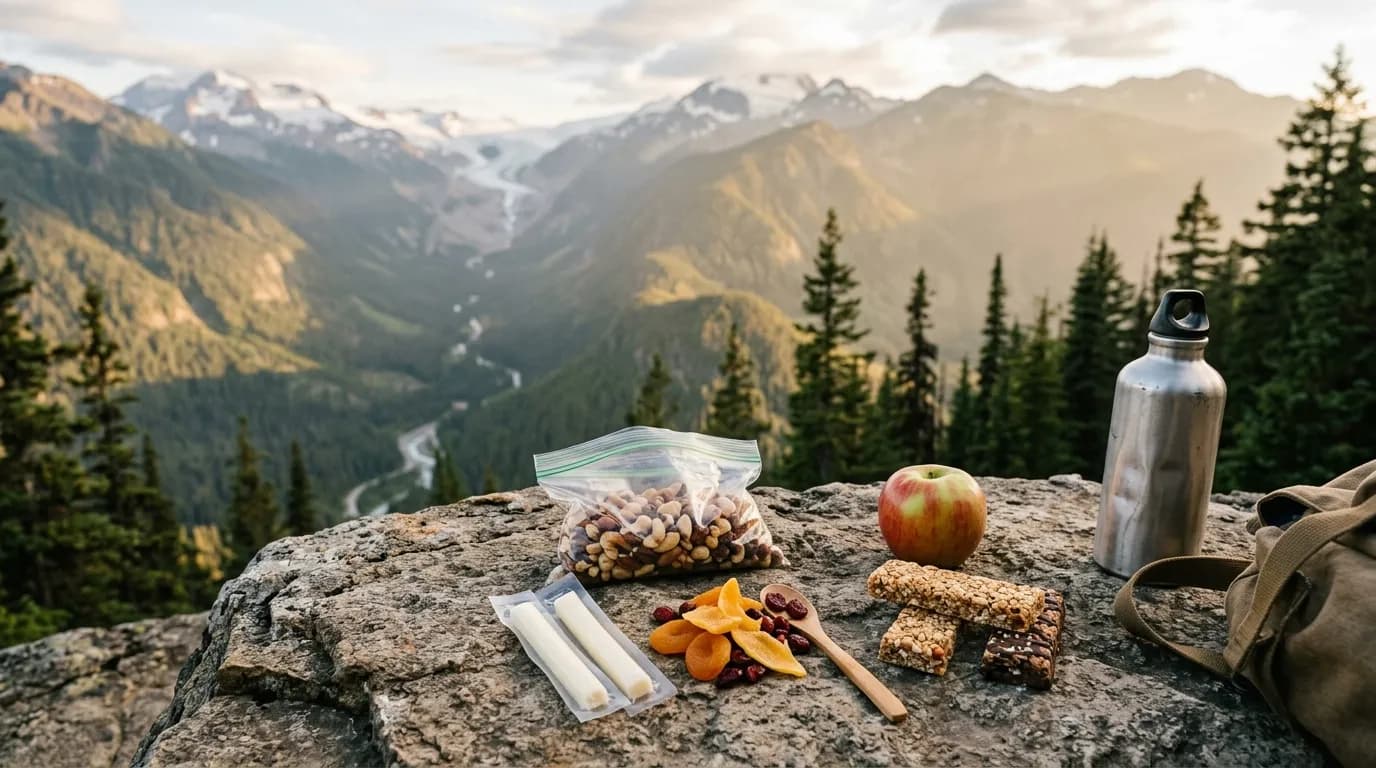
Bring more than you think you need for a half-day. Hunger on trail arrives suddenly, especially on uphill sections. Pack calorie-dense, easy-to-eat foods: trail mix, energy bars, dried fruit, cheese and crackers, or a peanut butter sandwich. Avoid messy items that require plates or heavy packaging. Aim for a mix of quick sugar and slower fuel so you do not spike and crash.
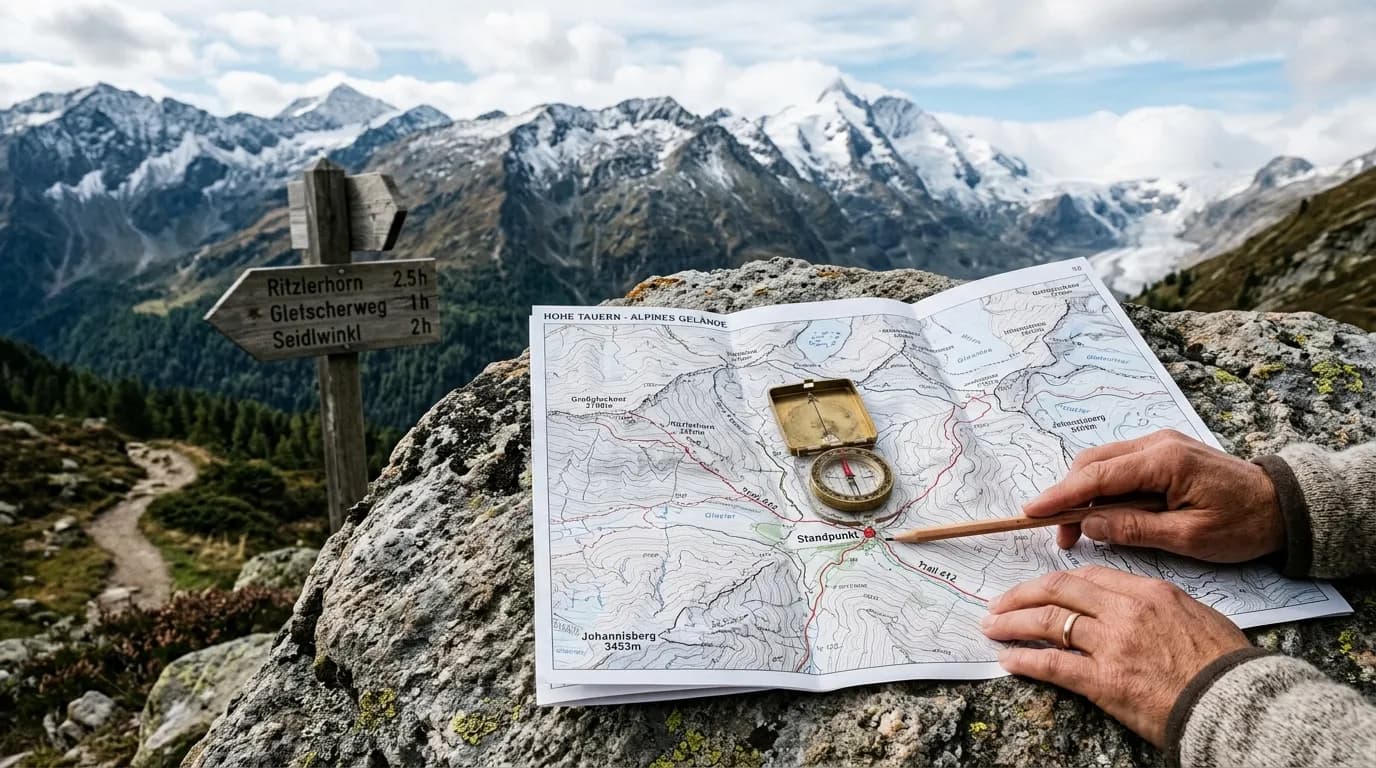
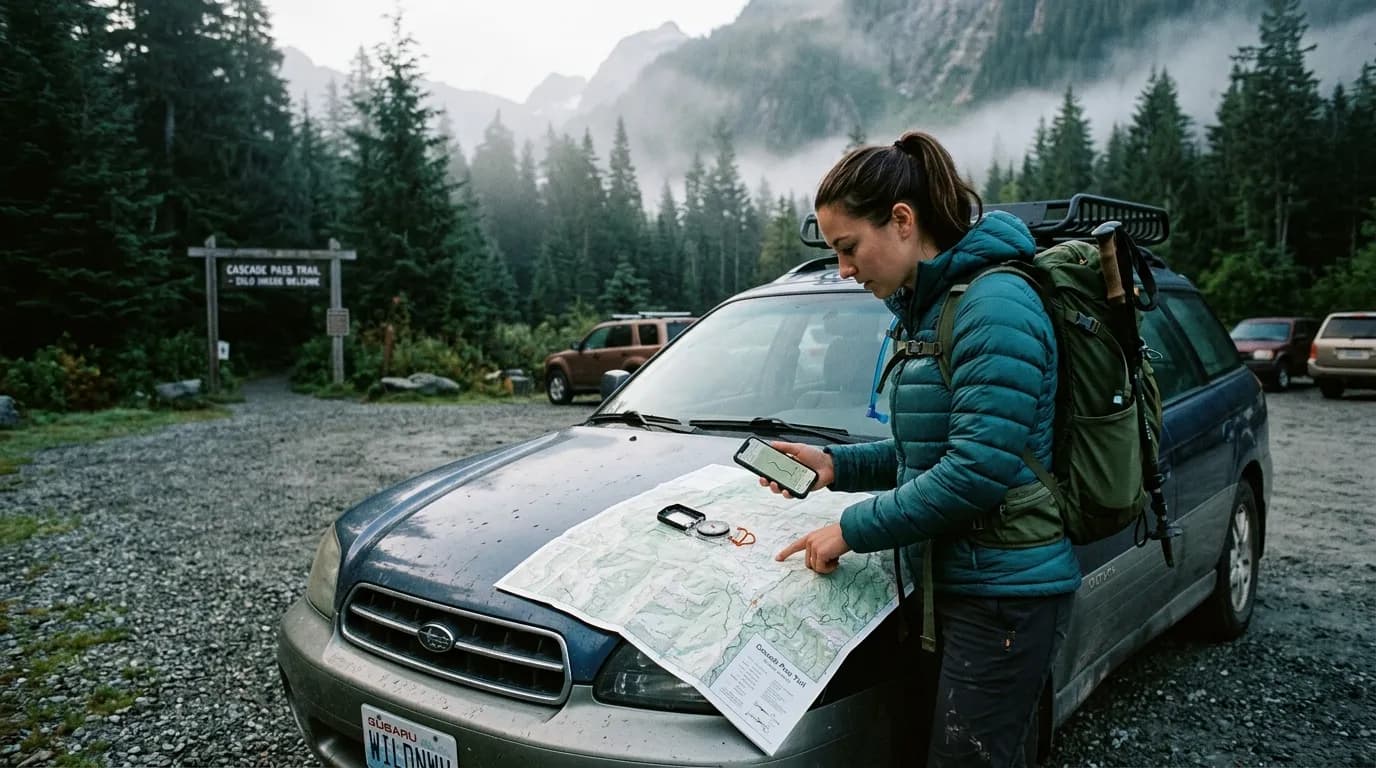
4. Navigation Tools
Even on popular trails, carry a backup to your phone. Download offline maps before you leave home, screenshot the trail description, or carry a paper map if the park provides one. Phone batteries die in cold weather and on long days. A simple compass helps if you know how to align it with your map; if not, the downloaded map plus trail markers is still better than wandering with a dead screen.
5. Clothing Layers
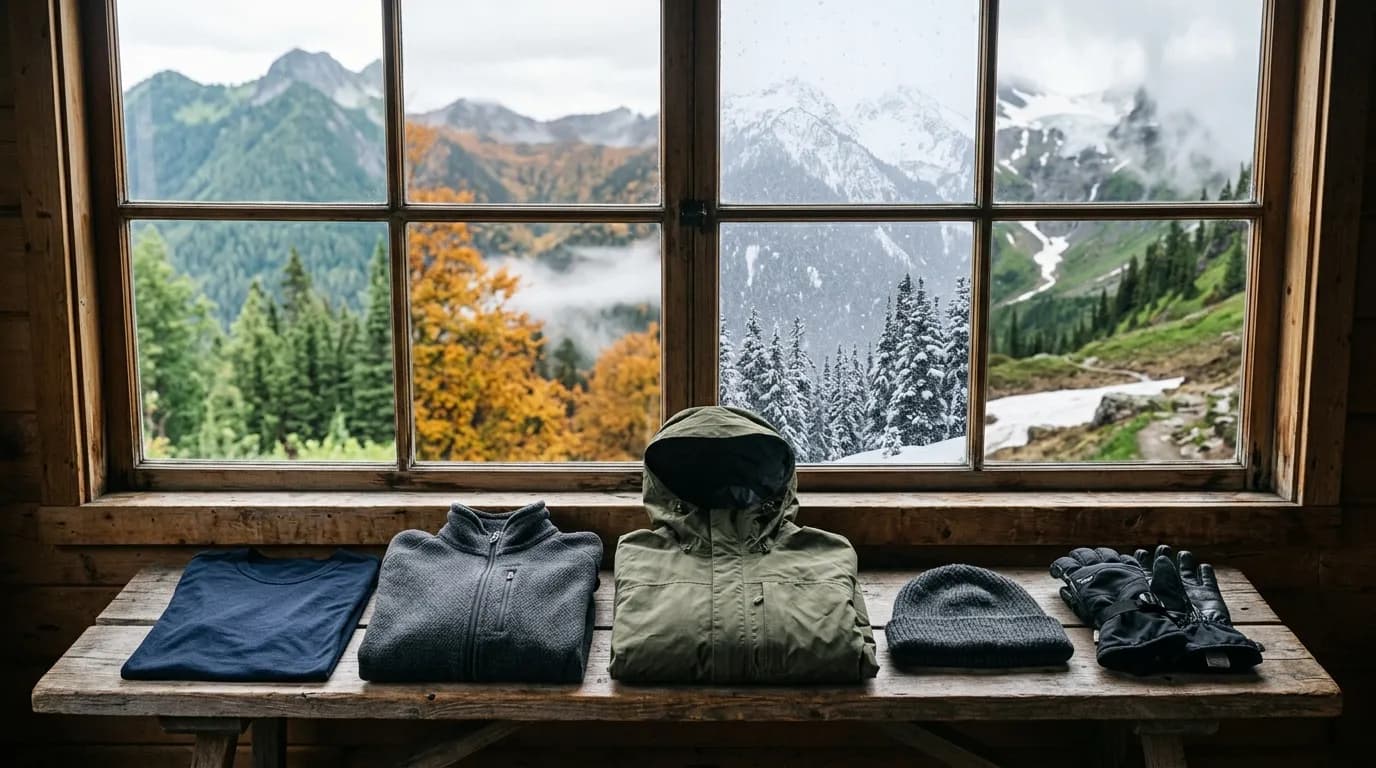
Dress for the forecast, then pack one layer beyond it. A typical three-season kit includes:
- Base layer — moisture-wicking shirt (avoid cotton for the layer against your skin on longer hikes)
- Insulating layer — fleece or lightweight puffy for rest stops and summits
- Rain shell — packable waterproof jacket, even if the sky looks clear
- Extra socks — one spare pair can save a hike if your feet get wet
- Hat and sunglasses — sun protection is part of your kit, not an afterthought
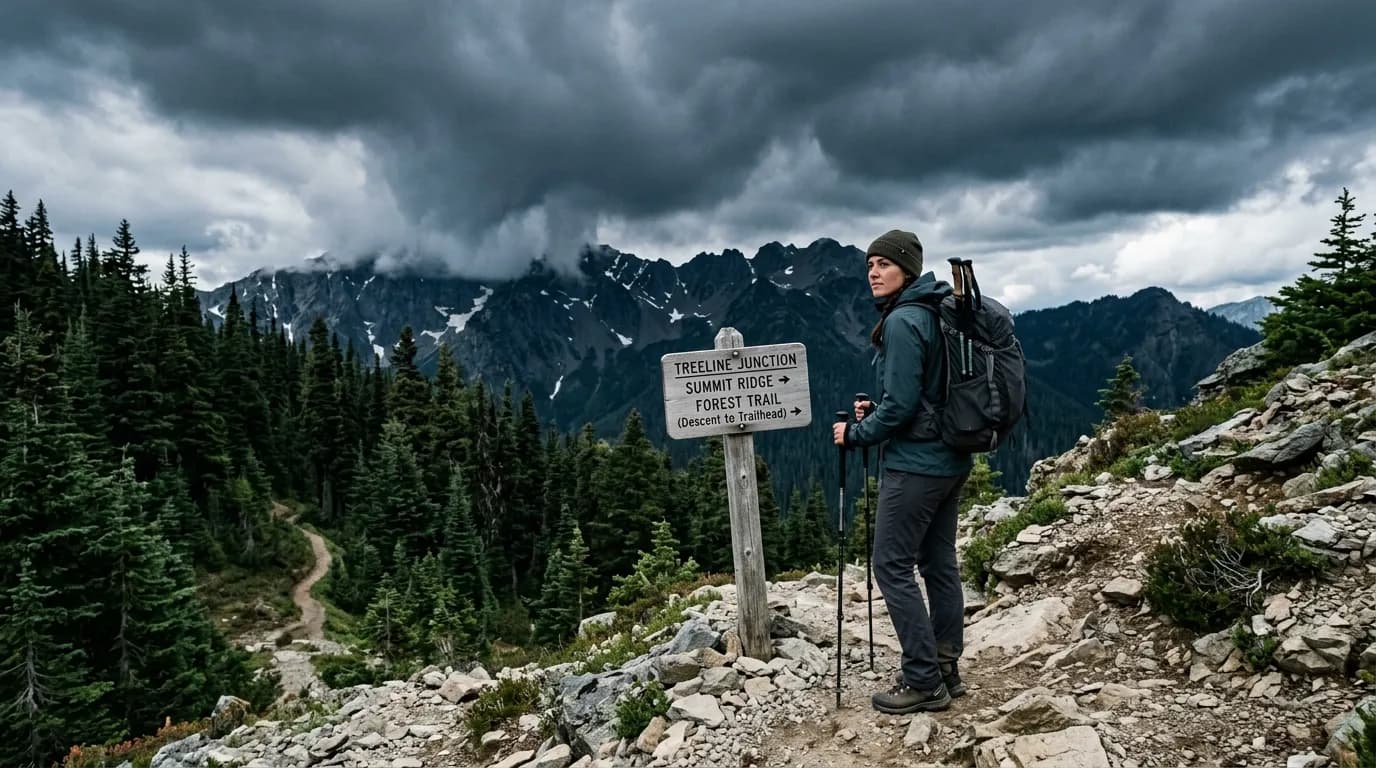
Mountains and coastlines create their own weather. A sunny parking lot often lies to you about conditions two thousand feet higher.
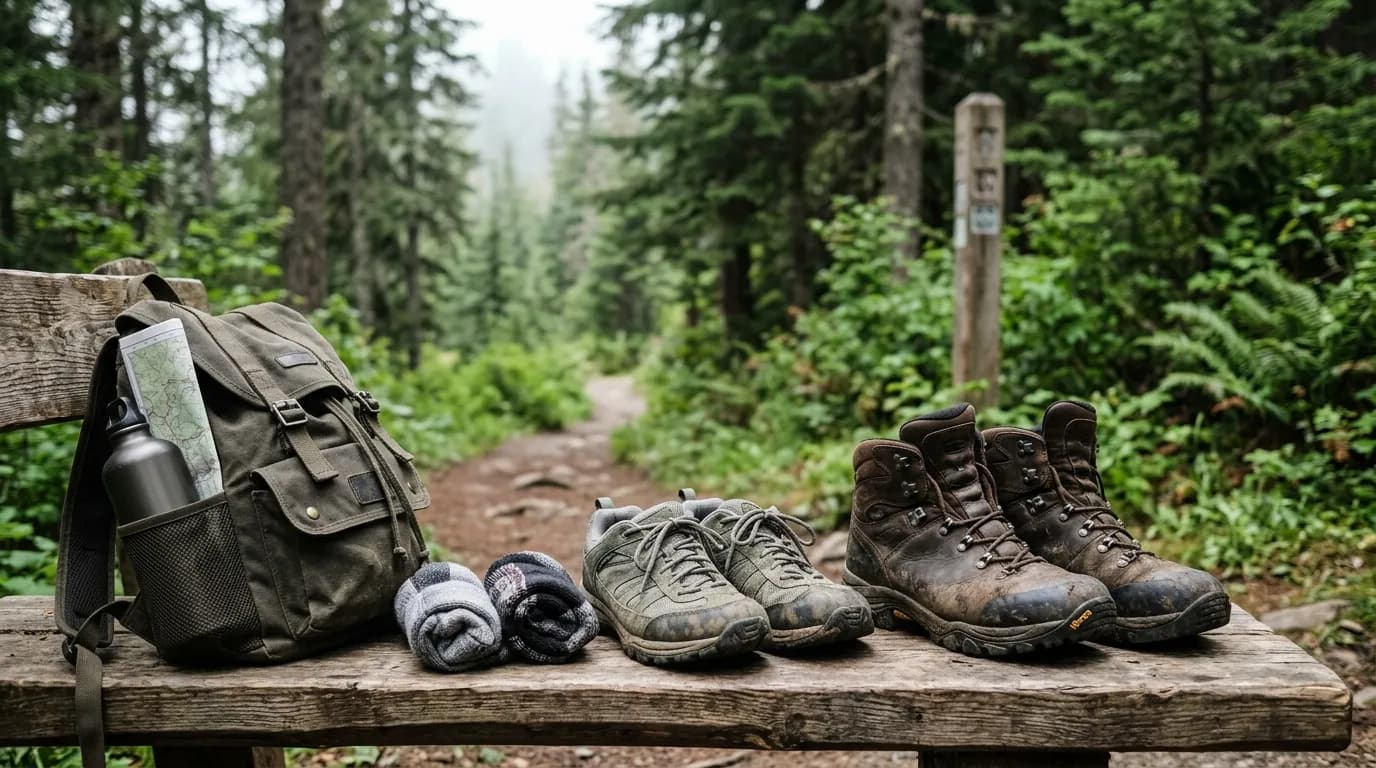
6. Footwear and Socks
Wear shoes or boots broken in on walks around your neighborhood, not fresh out of the box. Pair them with wool or synthetic hiking socks that fit smoothly without wrinkles. Footwear choice matters more than almost anything else in your pack; if you are deciding between shoes and boots, our guide Hiking Shoes vs Boots: What to Wear on Day Trails lays out the tradeoffs for day trails specifically.
7. Sun and Bug Protection
Sunscreen (SPF 30 or higher, reapplied on long days), lip balm with SPF, and insect repellent if your area has seasonal bugs. A sunburn or swarm of biting flies can end a hike faster than a steep climb.
8. Small First Aid Kit
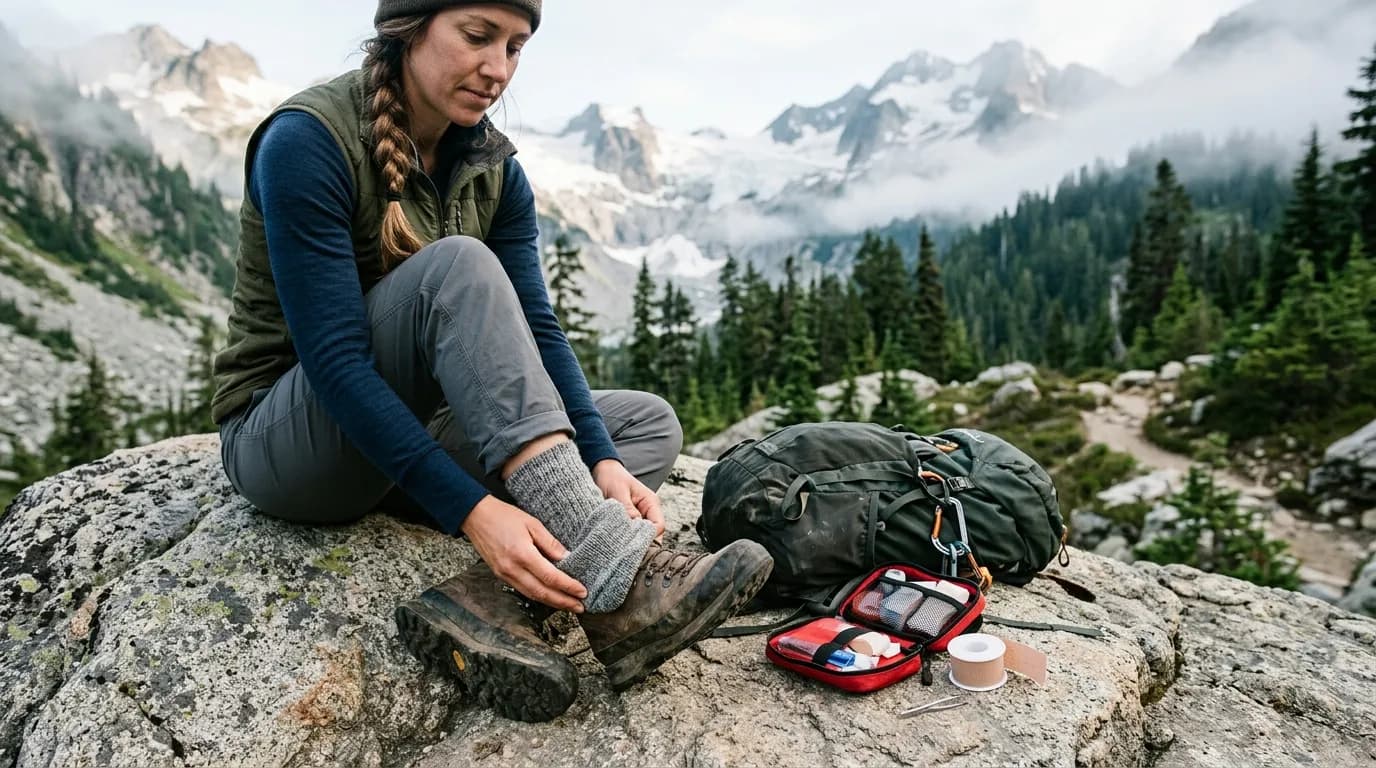
You do not need a trauma kit for a beginner day hike. You need the things that actually happen: adhesive bandages, blister treatment (moleskin or dedicated blister patches), antiseptic wipes, pain reliever you tolerate, tweezers for splinters or ticks, and any personal medication you use routinely. Pack it in a zip bag so you can find it quickly.
9. Light, Whistle, and Emergency Blanket
A headlamp or small flashlight weighs little and matters enormously if you misjudge time or help a slower hiking partner. A whistle carries farther than your voice if you need to get attention. An emergency bivy or mylar blanket folds to pocket size and adds warmth if someone has to wait for help. These items feel excessive until the day you hike later than planned.
10. Personal Items
ID, cash or card, car keys on a secure clip, phone in a case, toilet paper in a zip bag, hand sanitizer, and a small trash bag to pack out wrappers and fruit peels. If you use prescription glasses or contacts, bring a spare or a backup option. Leave valuables you do not need in the trunk or at home.
What You Can Leave at Home (For Now)
Beginners often over-pack because fear of the unknown feels heavier than an extra fleece. You can usually skip these on a standard day hike:
- Heavy camp stove and full cookset
- Multiple spare outfits
- Full-size bath towel
- Camp chair
- Book-sized hardcover novel (e-reader or nothing is kinder to your shoulders)
- Brand-new gear you have not tested at home
Save the specialized equipment for when your hikes grow longer, wilder, or overnight. Early hikes are for learning your rhythm, not proving you own every gadget in the catalog.
How to Pack Your Daypack
Pack weight close to your back and high in the bag. Heavy items—water and dense food—sit against your spine. Medium items like your rain jacket and first aid kit go in the middle. Light, frequently used things—snacks, map, sunscreen—go in top or side pockets. If your pack has a bottom zip, resist turning it into a black hole; keep one category per pocket so you are not unpacking everything to find a bar.
Before you leave, put the pack on and walk around the block. It should not pull you backward or dig into your hips. Adjust sternum and hip straps until the load feels like part of your body rather than a pendulum.
Adjusting Your List by Season and Distance
Short Hikes (Under 3 Miles, Easy Terrain)
You can trim slightly: less food, perhaps a liter of water if shade and cool temps cooperate, but keep navigation, rain layer, and first aid. Short hikes still twist ankles and surprise people with afternoon storms.
Longer Day Hikes (8+ Miles)
Add food, water capacity, extra socks, and electrolytes if you sweat heavily. Consider trekking poles if your knees complain on descents. Our article on daypack size helps match bag volume to longer days without overloading.
Hot Weather
Increase water, add electrolyte tablets or salty snacks, choose light colors and breathable fabrics, and start early. A sun hat with a brim beats a baseball cap for neck protection.
Cold Weather
Layer aggressively, pack gloves and a warm hat even if the morning feels mild, and keep snacks accessible—you burn more calories staying warm. Insulated bottle sleeves help if water tends to freeze on winter trails.
Starter Plan: Your First Packed Day Hike
Use this sequence the night before and morning of your first real hike. It builds the habit without turning preparation into a project.
Night before: Check the weather and trail conditions online. Download offline maps. Lay out clothing and confirm footwear is broken in. Pack non-perishable food and your first aid kit into the daypack so the morning is quiet.
Morning of: Fill water bottles. Add fresh items (sandwich, fruit). Run the five-system check: hydration, navigation, weather, feet, emergencies. Tell someone your route and expected return time. At the trailhead, do a final pocket check—keys, phone, ID.
On trail: Eat before you are starving. Drink on a schedule, not only when parched. At the turnaround, you should still have a snack and some water in reserve. That reserve is your margin for a slower return or helping a friend.
After: Empty and air out the pack. Note what you used and what sat untouched. Adjust the list for next time. The best packing list is the one you refine over five or six hikes, not the one you copy once and never revisit.
Common Mistakes Beginners Make
- Under-packing water — Dehydration sneaks up on cool, windy days too. When in doubt, carry more and drink steadily.
- Wearing cotton head to toe — Cotton holds sweat and chills you on ridges. Mix in synthetics or wool where it touches skin.
- Relying on phone signal alone — Download maps. Tell someone your plan. Phones fail; trails do not always have markers when you need them most.
- New boots on a long hike — Break footwear in on short walks first. Blisters at mile two ruin the learning curve.
- No rain layer because the sky is blue — Mountain weather shifts fast. A packable shell weighs less than regret.
- Treating the list like luggage for "just in case" hobbies — If you have not used it on three hikes, it probably stays home on the fourth.
- Forgetting to eat — Low blood sugar feels like fatigue or bad mood. Snack on climbs; your legs will thank you.
FAQ
Do I need trekking poles for my first day hike?
Not necessarily. Poles help on steep descents, stream crossings, and if you have knee issues, but many beginners complete their first seasons without them. Borrow a pair for one hike if you are curious. If your trails are relatively smooth and you feel stable, spend your first trips learning pace and pack weight before adding poles.
How heavy should my daypack be?
A common guideline is to keep total pack weight under about ten to fifteen percent of your body weight for day hiking, though comfort matters more than math. If the bag pulls or you dread putting it on, remove non-essentials. Water and food are non-negotiable; duplicate gadgets are not.
Can I hike in running shoes?
On smooth, dry trails, many people do. Running shoes lack the tread and foot protection of trail shoes on rocky or muddy terrain. For established beginner trails, trail runners or light hikers are a sweet spot. Save fashion sneakers for the coffee shop after the hike.
Should I buy expensive gear before my first hike?
Buy or borrow the basics—footwear that fits, a real daypack, a rain layer—and rent or defer the rest until you know you will hike regularly. A good pack and shoes prevent more misery than a premium jacket you never unzip.
What if I have to use the bathroom on trail?
Walk at least seventy steps off trail, away from water sources. Dig a small cathole six to eight inches deep for solid waste where regulations allow, or pack it out if required. Carry toilet paper in a zip bag and pack out used paper. Hand sanitizer afterward. Check local rules; some busy areas require pack-out kits.
Is a paper map still necessary if I have a GPS app?
Your phone with offline maps is excellent—but batteries die, screens crack, and apps glitch. A paper backup or a screenshot bundle you can view in airplane mode closes the gap. Navigation redundancy is one of the cheapest insurance policies in your pack.
Related Reading
- How Much Water to Carry on a Day Hike — dial in hydration for distance and heat
- Daypack Size Guide: 15, 20, or 30 Liters? — match bag volume to your typical trails
- Hiking Shoes vs Boots on Day Trails — choose footwear before you pack socks around the wrong choice
- Best Trail Snacks for Energy Without a Heavy Pack — fuel that does not weigh you down
This article is meant for general outdoor education. Trail conditions, weather, and personal health vary. Use your judgment, follow local regulations, and consult qualified professionals for medical or emergency preparedness questions specific to you.
The parking lot always looks the same when you return: cars, dust, maybe a dog barking at a tailgate. But the version of you that walks back to the trailhead after a well-packed first hike is slightly different—calmer, a little tired, already mentally rearranging the side pocket where the map should have been. Build the list once, then let the trail teach you what stays.