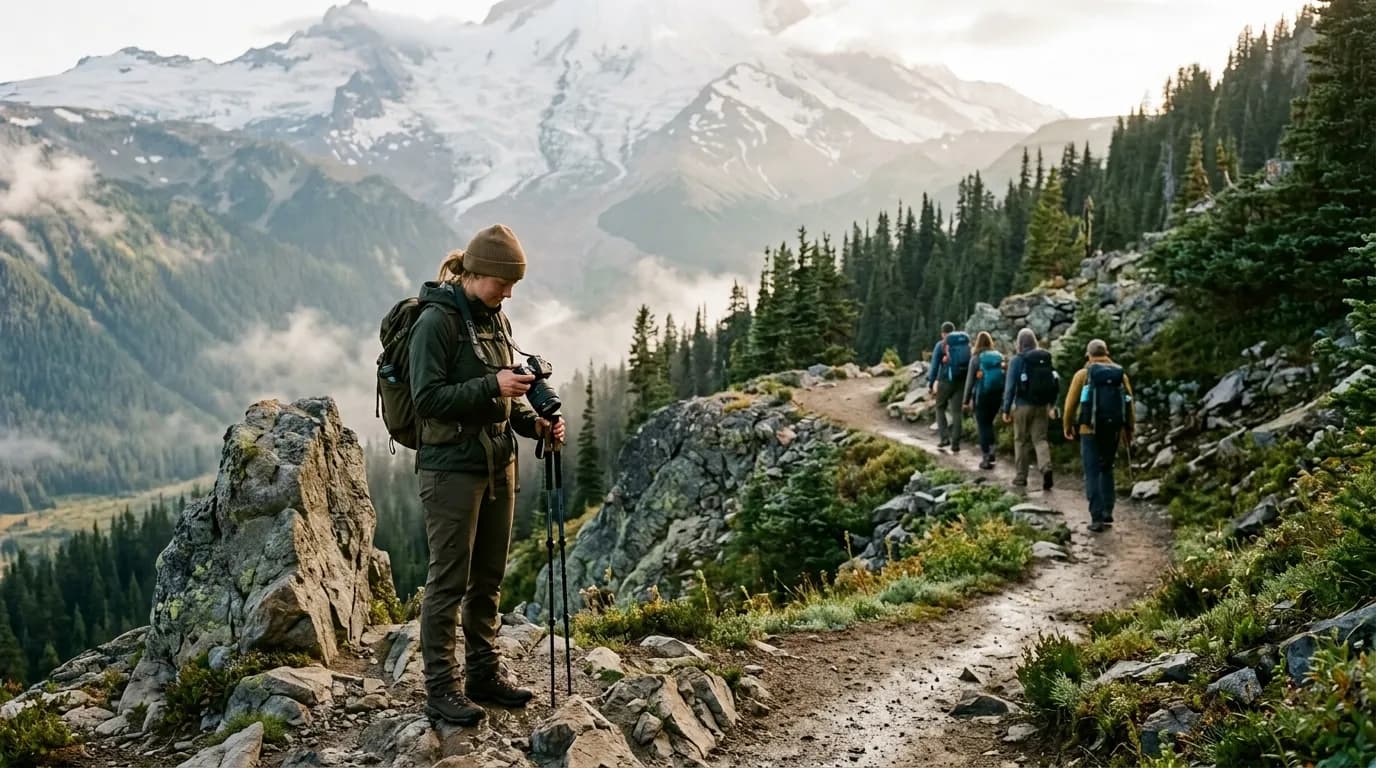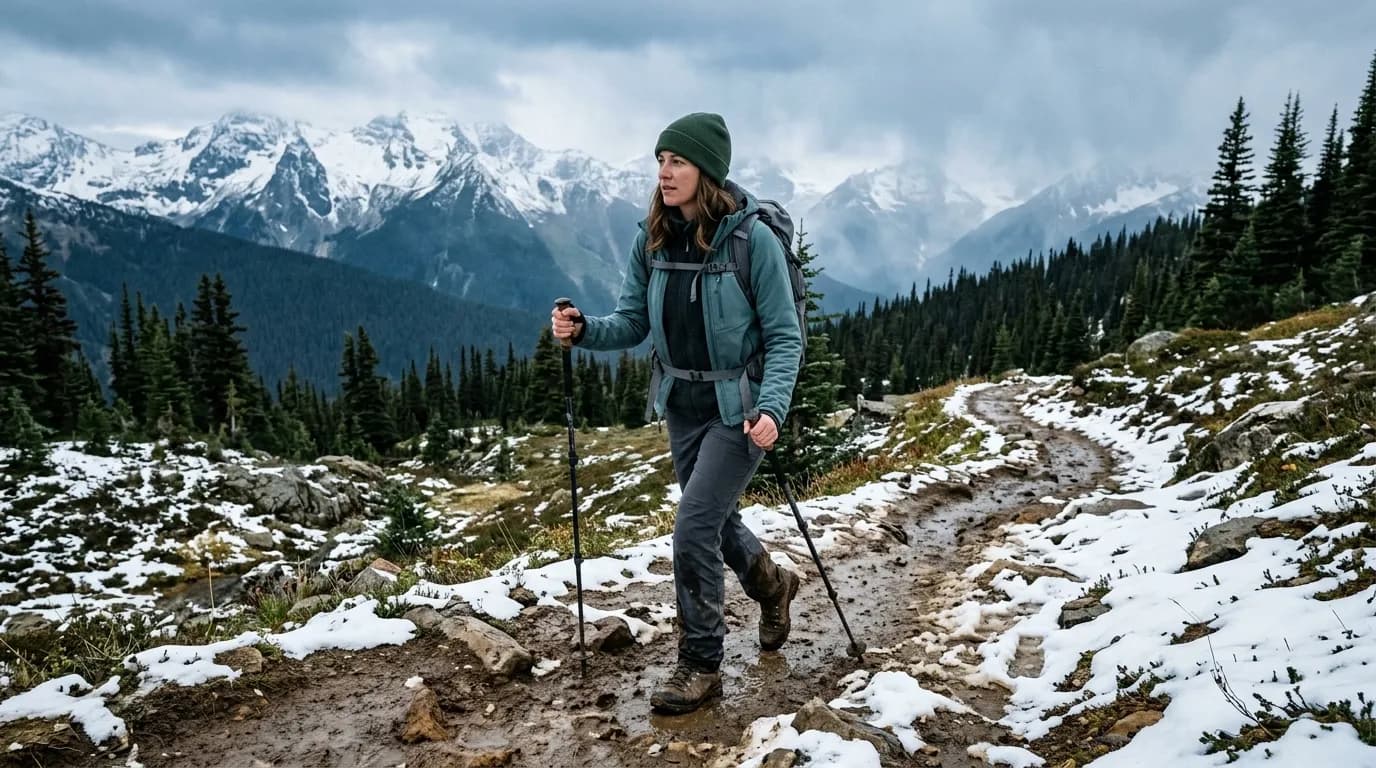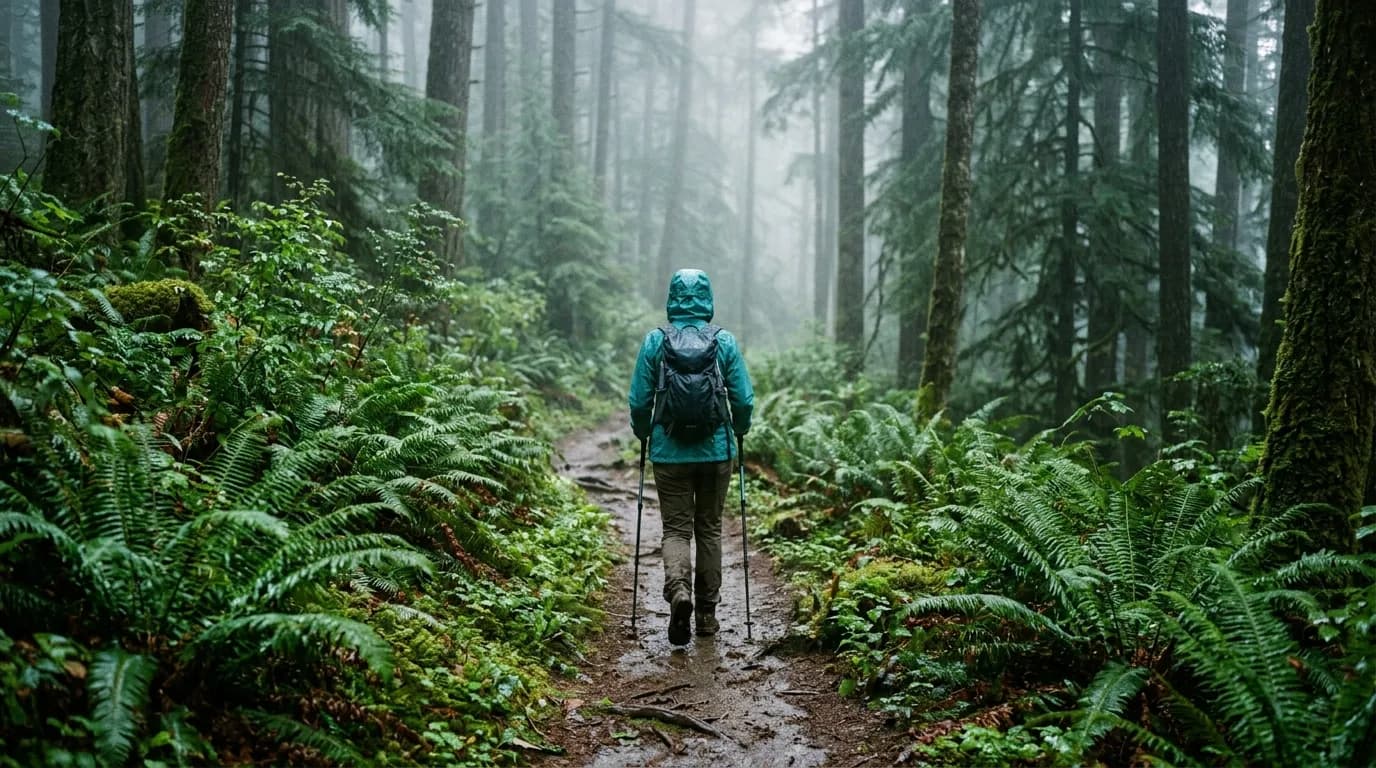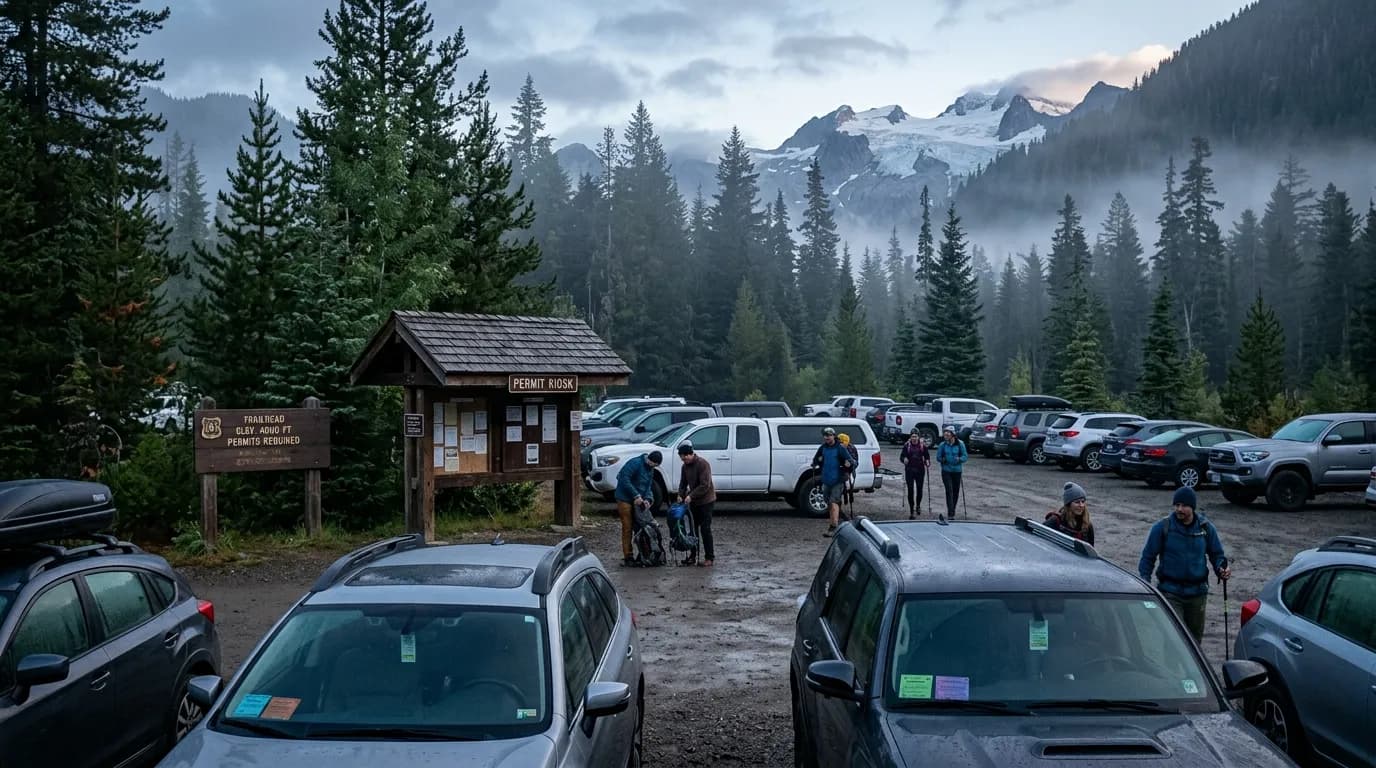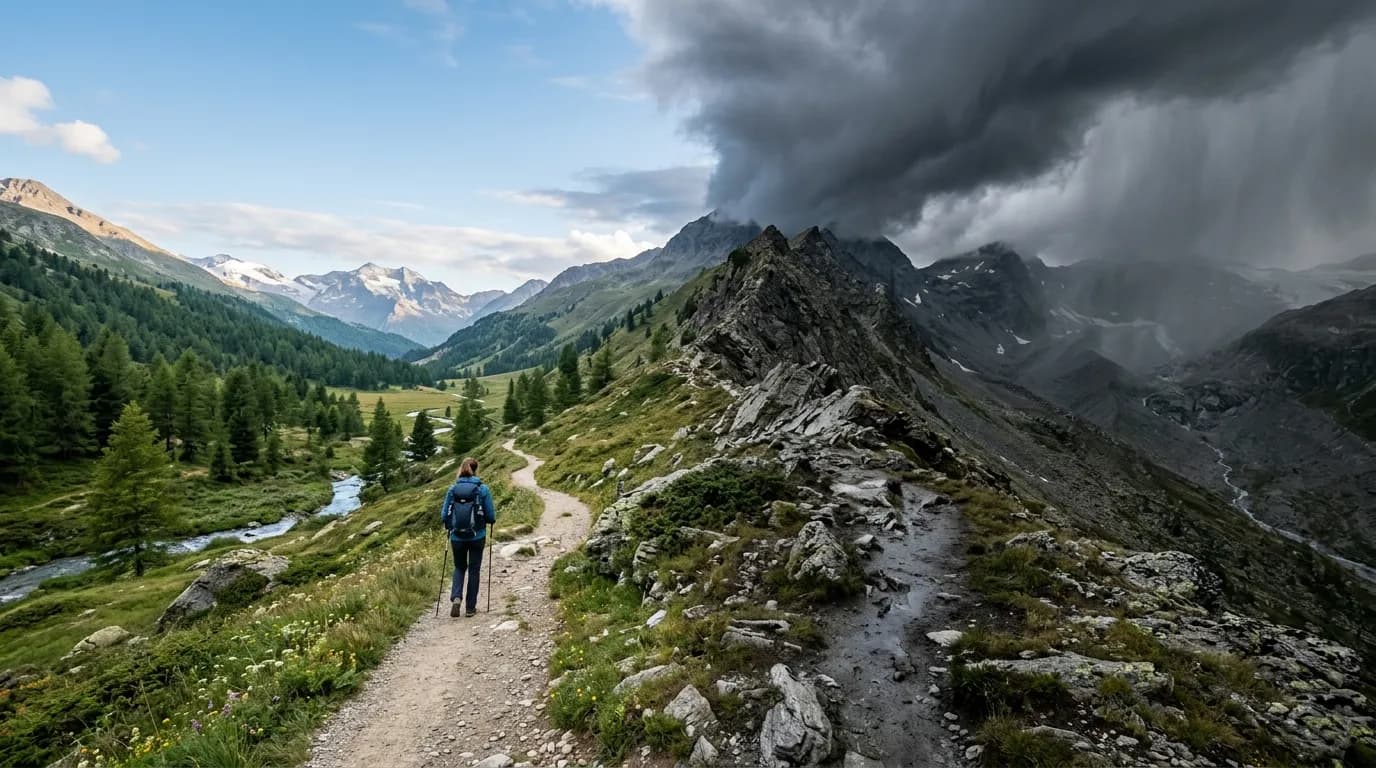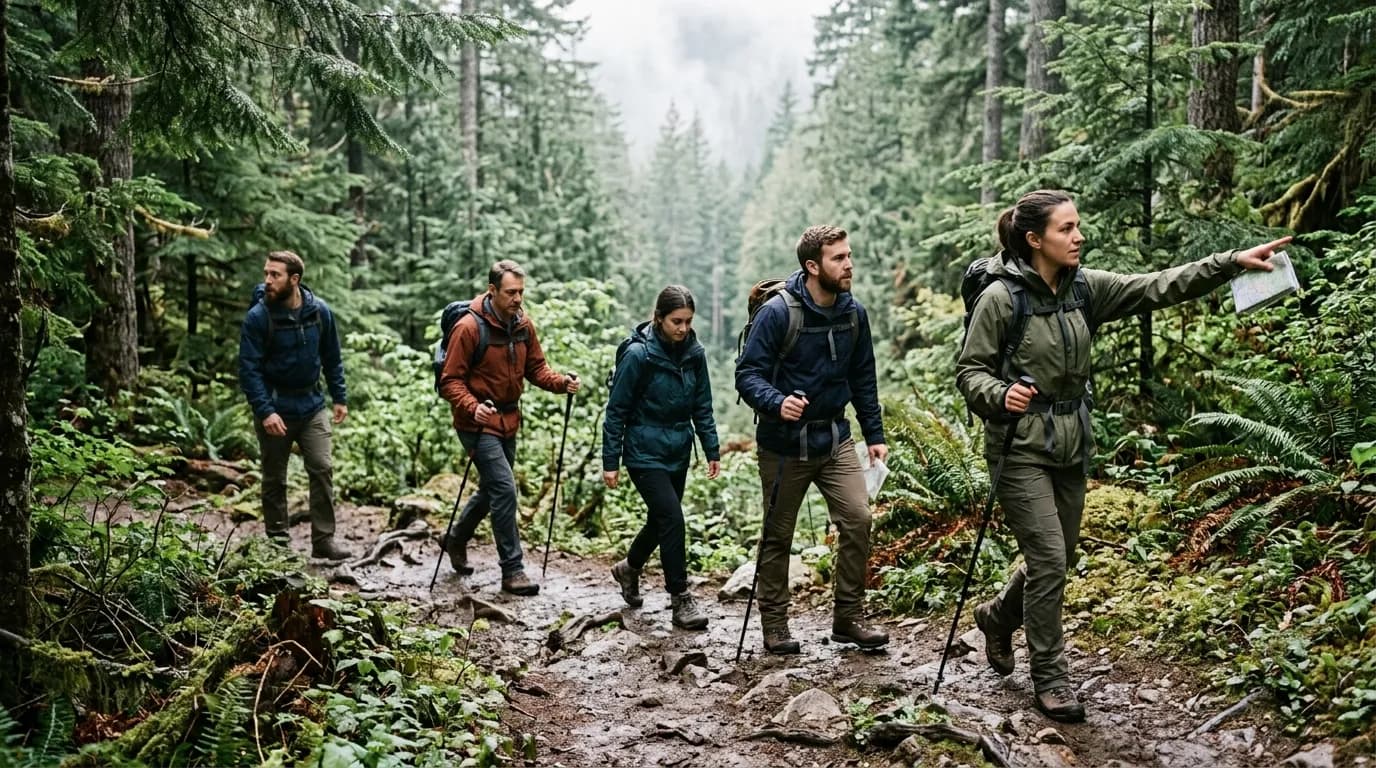
Groups come undone when everyone assumes someone else is watching the map, the slowest hiker, or the clock. Roles are not hierarchy — they are temporary jobs that prevent the slow drift into separation. On weekend trails with longer mileage and more junctions, unnamed responsibility becomes nobody's responsibility faster than on a two-hour local loop.
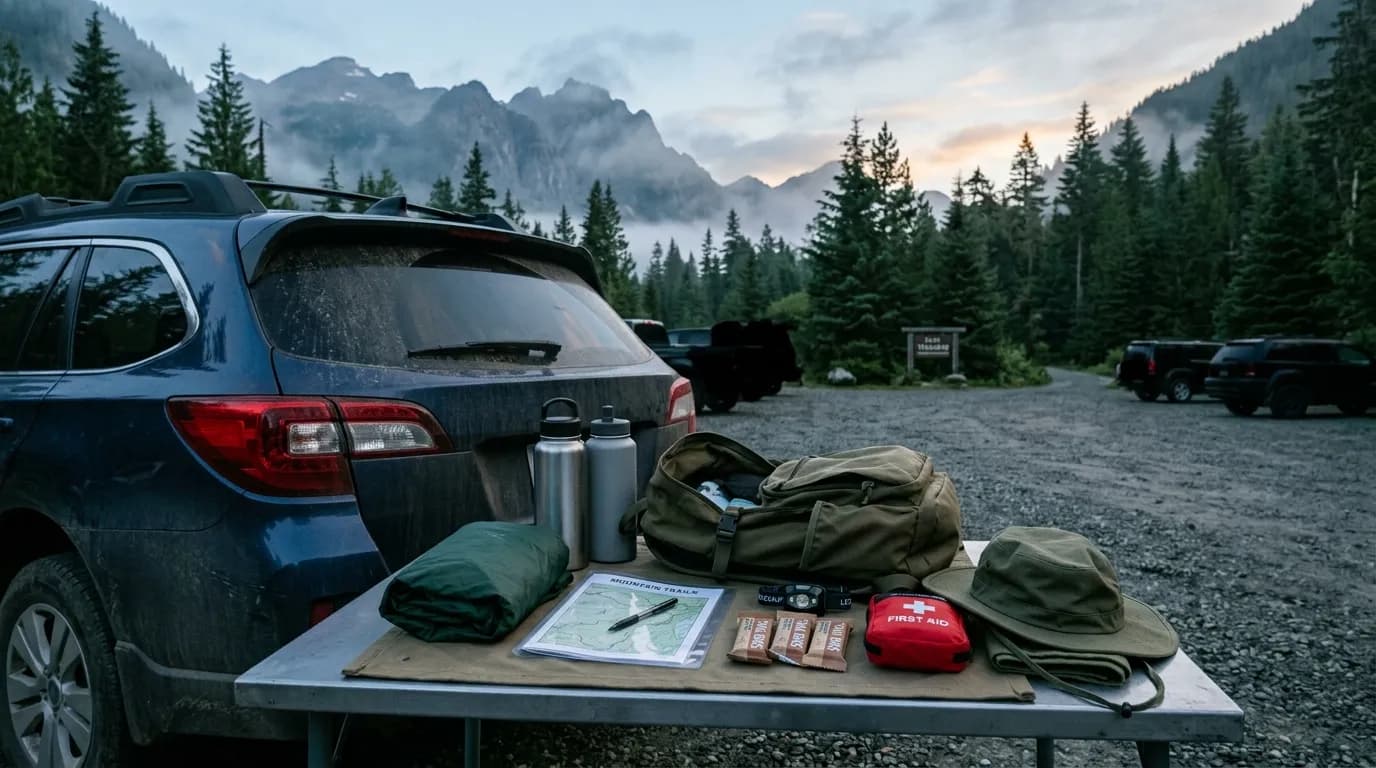
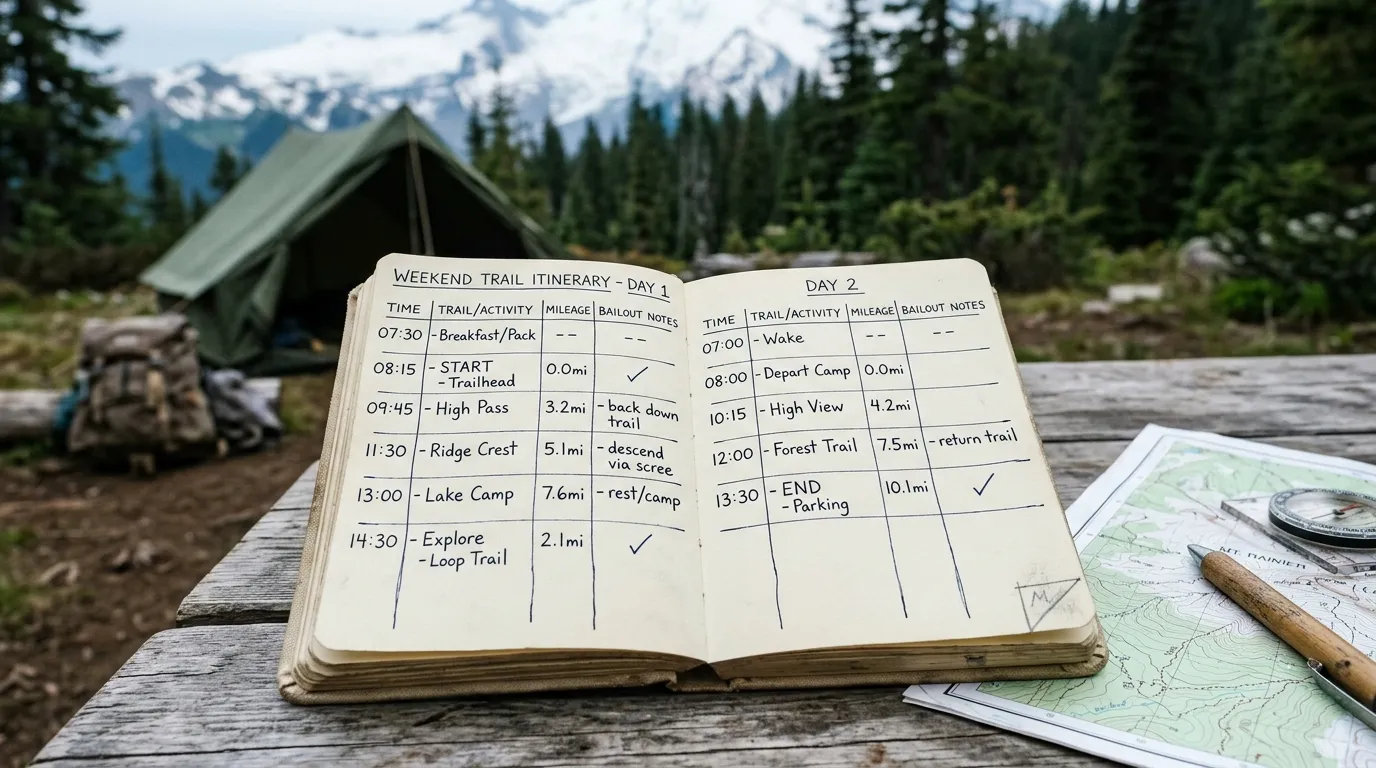
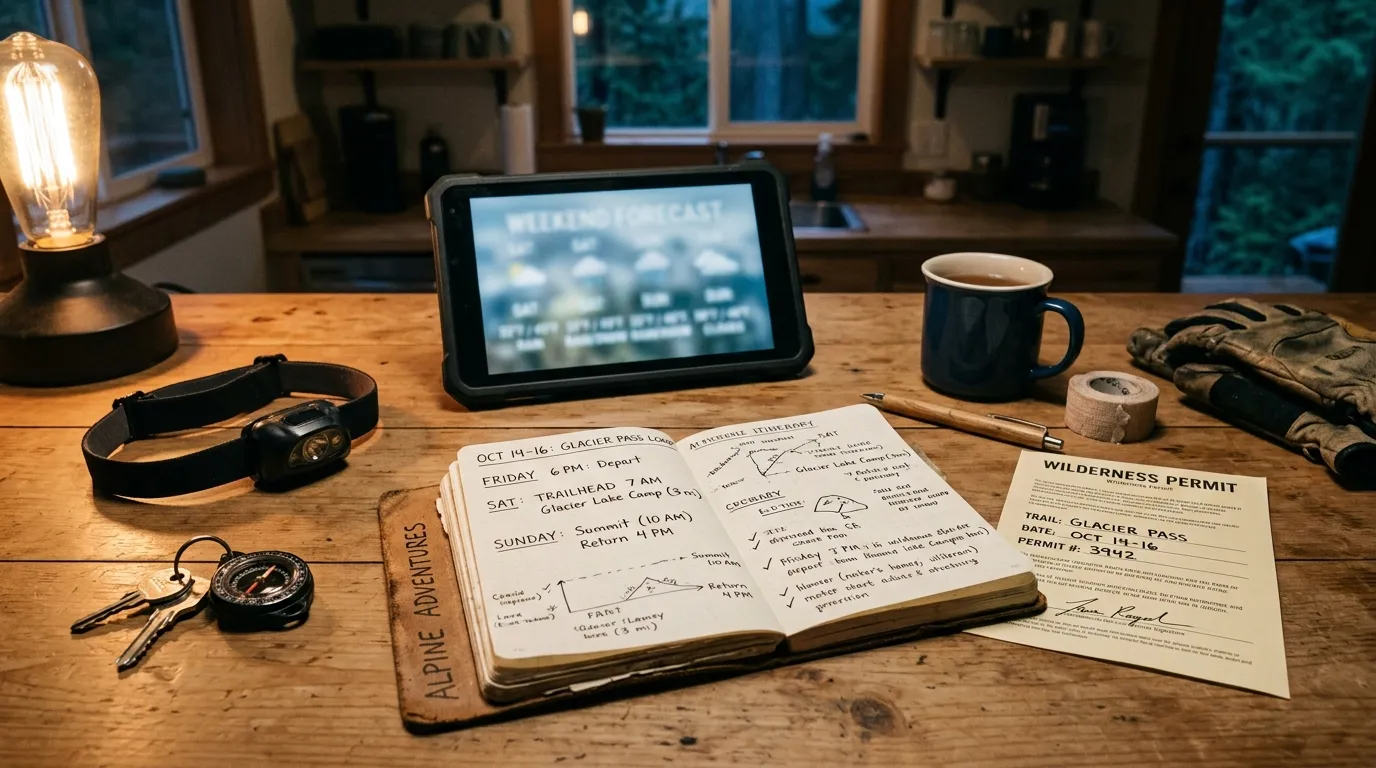
Assign roles at the trailhead in sixty seconds: names out loud, backups named, handoff points on the itinerary. Pair this checklist with a written plan from our Trail Itinerary Template for a Two-Day Weekend. Solo hikers cross-check group habits against Solo Day Hike Safety Checklist when joining mixed crews.
Core Roles
Navigator
Owns map, app, or guidebook at junctions. Calls direction before the group splits around switchbacks. Does not have to be fastest — must be willing to stop everyone for thirty seconds of confirmation.
Pace Lead
Sets sustainable uphill rhythm matched to the slowest willing member, not the fittest. Watches time against itinerary checkpoints. Communicates regroup plans at forks.
Sweep
Stays behind everyone always. Carries extra warmth layer, basic first-aid, whistle. Authorized to call turnaround when gap exceeds agreed limit — typically ten minutes sight or one junction.
Comms / Off-Trail Contact
Sends check-in messages at agreed times when signal exists. Knows emergency numbers and trip summary. Keeps phone warm and charged — not buried dead at pack bottom.
Water and Food Lead (Optional on Long Days)
Reminds group to drink at shade breaks, knows last water source, carries extra filter capacity if group is large.
How Roles Interact
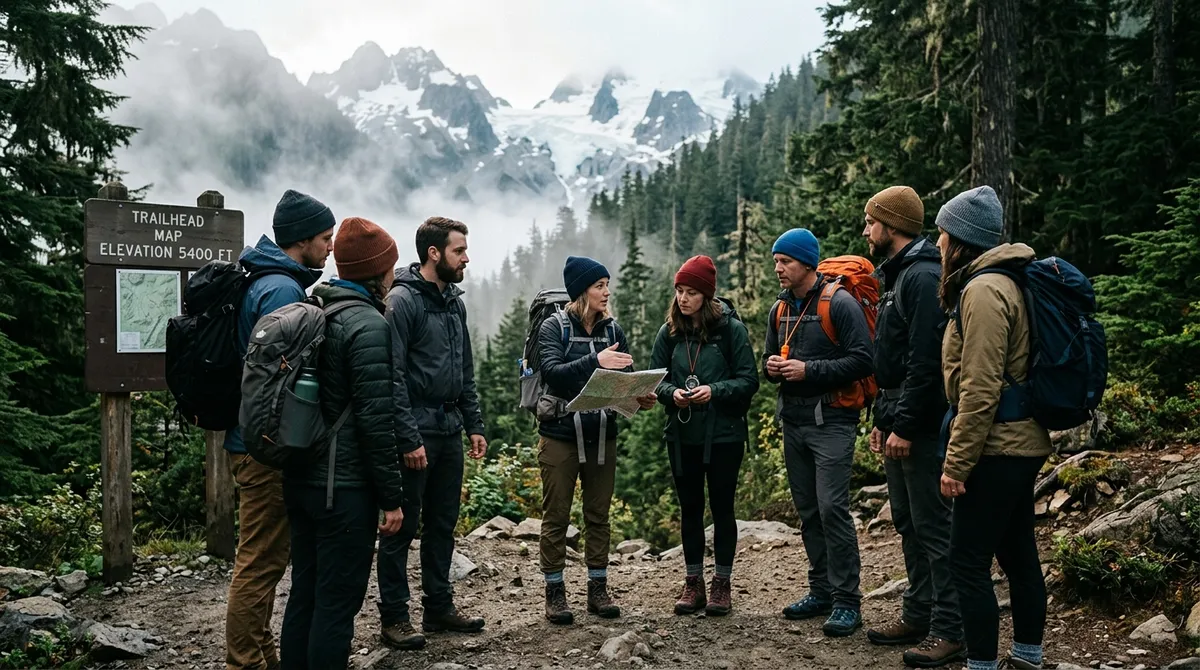
Navigator and pace lead can split: one reads terrain, one watches clock. Sweep and pace lead never the same person on technical or high-consequence days. Comms person should not also be sole navigator — overload causes missed turns and missed messages.
At every major junction: navigator confirms route, sweep confirms headcount, pace lead confirms next regroup point. Fifteen seconds prevents hour-long searches.
Starter Plan: Trailhead Role Brief
- Name navigator, pace lead, sweep, comms — and backups.
- State regroup rule: every junction or every forty-five minutes.
- Sweep shows whistle and extra layer location.
- Comms sends 'starting' message with trail name.
- Rotate roles day two so skills spread.
Common Mistakes
- Fastest hiker defaults to leader — fitness is not navigation.
- No sweep on out-and-back — turnarounds hide separation until too late.
- Roles never rotate — burnout and resentment by Sunday.
- Whistle only on sweep — whole group should know signals.
- Assuming headphones on trail — roles fail when people cannot hear calls.
When to Regroup
Regroup at every junction on unfamiliar trails. On well-marked straightaways, time-based regroups every forty-five minutes keep gaps visible. If regroup takes more than five minutes because someone is struggling, the itinerary — not pride — decides whether to shorten.
Splitting the Group (Rare)
Split only with explicit consent, written rendezvous, and equal capability on both subgroups. Each subgroup needs navigator and sweep. Default is stay together; split is exception with a plan, not frustration venting.
Frequently Asked Questions
Minimum group size for roles?
Three people can cover navigator, pace lead, and sweep minimally.. Pairs rely on staying together without formal sweep.
Kids in the group?
Assign adult sweep behind children always; pace lead sets kid-sustainable rhythm..
What if nobody wants sweep?
Rotate each hour or each mile block — permanent sweep is unfair on long weekends..
Does sweep carry the first-aid kit?
Ideal yes, or comms person — someone behind the front pack must have basics..
Trail runners joining hikers?
Runners leapfrog with mandatory rendezvous; they do not become default pace lead..
Educational guidance — not professional rescue or medical instruction.
Related Guides
Roles rotate on multi-day weekends so one person does not become the permanent navigator while others stop reading the map. Shared literacy beats single-expert dependency.
Sweep is not punishment for slowest hikers — it is a safety function. The sweep carries extra warmth, a basic first-aid kit, and authority to call turnaround when gaps grow.
Navigator and pace lead can be different people. One reads terrain; one watches the clock against checkpoints. Splitting jobs reduces the overload that causes missed turns.
Brief role handoffs at every major junction: "Navigator has map to lake; sweep is Alex until cedar grove." Thirty seconds prevents hour-long separations.
New hikers assigned sweep learn trail rhythm faster than when they chase an invisible front pack. Structure builds skill instead of anxiety.
Weekend trail culture runs on small repeatable decisions: what time you leave the trailhead, how you split snacks, whether you name a turnaround before the first viewpoint. Those decisions compound across two days more than any single gear upgrade. Write them down once and your next trip starts calmer.
Trail time differs from clock time in ways maps hide. A flat six miles with social pacing can take as long as a steep four with a fit solo hiker. Build your plan around hours on feet and elevation change, then adjust for group size and photo stops. Distance alone misleads packing and food math.
Communication beats equipment in most weekend friction stories. Saying "I need a layer stop" early prevents the cranky shuffle later. Saying "I think we are behind the itinerary" at lunch prevents the doomed push for a summit at dusk. Polite clarity is a safety skill.
Water planning deserves its own line on every itinerary. Mark last reliable sources on the map. Note whether streams are seasonal. Running dry on mile eight of ten turns a good day into a cautious retreat even when legs feel fine.
Food fatigue is real on long days — the bar you loved at mile two tastes like cardboard at mile seven. Pack variety: something chewy, something salty, something with quick sugar. Eat before you are empty; bonking makes every downhill feel steeper.
Foot care is recovery in disguise. Trim nails before multi-day weekends. Address hot spots when they tingle, not when they blister. Dry socks in the car for day two cost little space and save entire trips.
Weather windows on shoulder weekends are narrow. Morning starts are not heroic; they are arithmetic. Afternoon storms on ridges do not negotiate because you slept in. Align leave times with forecast trends, not with brunch preferences.
Parking logistics belong in planning. Popular trailheads fill by eight on fair weekends. Backup lots, permit kiosks, and pit toilets affect real departure times. Add those minutes before you promise someone you will be home for dinner.
Leave No Trace applies to group behavior too: yield on narrow trails, keep voices low near camps, pack out orange peels and apple cores. Weekend crowds test trail ethics; your group can either add stress or model calm trail citizenship.
Navigation confidence grows when everyone glances at the map, not only the designated navigator. Rotate who reads the junction sign aloud. Shared awareness prevents one tired person from missing a critical fork at dusk.
Emergency plans need not be dramatic. Know the nearest road crossing, cell pockets if any, and who calls home if you are late. A laminated card in the pack beats a heroic story about improvising under stress.
Fitness varies within friend groups. Weekend trips survive when pace matches sustainable effort for the whole crew, not the person who ran a 5K last month. Pride is heavy; slow is smooth, smooth is fast over ten miles.
Sleep debt from Friday night drives affects Saturday more than people admit. If the group stayed up late, build a later but shorter route instead of pretending everyone is fresh at 5 a.m. Honest starts beat miserable slogs.
Gear familiarity matters: new boots, new pack, new rain jacket — test on shorter outings before a ten-mile weekend centerpiece. Unknown friction points appear around hour four, exactly when you have no spare attention.
Sun exposure accumulates on open ridges even in cool air. Burned necks and squint headaches degrade decisions on descent. Sunscreen, lips, and eyes are not summer affectations; they are ten-mile essentials.
Stream crossings slow groups disproportionately. Plan extra time if the route crosses multiple creeks in spring runoff. Unbuckle hip belts before deep crossings, face upstream, use poles — and count that teaching time in the itinerary.
Dogs, kids, and photographers change pace math. If your group includes any of the three, widen time buffers and shorten distance before you widen ambition. Successful weekends repeat; overreach once and people decline the next invite.
Post-trip review takes ten minutes in the car: what worked, what we carry next time, what we leave home. That review is how casual hikers become reliable partners without formal training.
Altitude affects appetite and hydration even below mountaineering heights. If the weekend includes new elevation for your crew, add snacks and water capacity beyond flatland habits.
Trail maintenance changes routes. Downed trees, washed bridges, and seasonal closures appear on social feeds before official pages update. Check recent trip reports the night before and mark alternatives on the map.
Roles rotate on multi-day weekends so one person does not become the permanent navigator while others stop reading the map. Shared literacy beats single-expert dependency.
Sweep is not punishment for slowest hikers — it is a safety function. The sweep carries extra warmth, a basic first-aid kit, and authority to call turnaround when gaps grow.
Navigator and pace lead can be different people. One reads terrain; one watches the clock against checkpoints. Splitting jobs reduces the overload that causes missed turns.
Brief role handoffs at every major junction: "Navigator has map to lake; sweep is Alex until cedar grove." Thirty seconds prevents hour-long separations.
New hikers assigned sweep learn trail rhythm faster than when they chase an invisible front pack. Structure builds skill instead of anxiety.
Weekend trail culture runs on small repeatable decisions: what time you leave the trailhead, how you split snacks, whether you name a turnaround before the first viewpoint. Those decisions compound across two days more than any single gear upgrade. Write them down once and your next trip starts calmer.
Trail time differs from clock time in ways maps hide. A flat six miles with social pacing can take as long as a steep four with a fit solo hiker. Build your plan around hours on feet and elevation change, then adjust for group size and photo stops. Distance alone misleads packing and food math.
Communication beats equipment in most weekend friction stories. Saying "I need a layer stop" early prevents the cranky shuffle later. Saying "I think we are behind the itinerary" at lunch prevents the doomed push for a summit at dusk. Polite clarity is a safety skill.
Water planning deserves its own line on every itinerary. Mark last reliable sources on the map. Note whether streams are seasonal. Running dry on mile eight of ten turns a good day into a cautious retreat even when legs feel fine.
Food fatigue is real on long days — the bar you loved at mile two tastes like cardboard at mile seven. Pack variety: something chewy, something salty, something with quick sugar. Eat before you are empty; bonking makes every downhill feel steeper.
Foot care is recovery in disguise. Trim nails before multi-day weekends. Address hot spots when they tingle, not when they blister. Dry socks in the car for day two cost little space and save entire trips.
Weather windows on shoulder weekends are narrow. Morning starts are not heroic; they are arithmetic. Afternoon storms on ridges do not negotiate because you slept in. Align leave times with forecast trends, not with brunch preferences.
Parking logistics belong in planning. Popular trailheads fill by eight on fair weekends. Backup lots, permit kiosks, and pit toilets affect real departure times. Add those minutes before you promise someone you will be home for dinner.
Leave No Trace applies to group behavior too: yield on narrow trails, keep voices low near camps, pack out orange peels and apple cores. Weekend crowds test trail ethics; your group can either add stress or model calm trail citizenship.
Navigation confidence grows when everyone glances at the map, not only the designated navigator. Rotate who reads the junction sign aloud. Shared awareness prevents one tired person from missing a critical fork at dusk.
Emergency plans need not be dramatic. Know the nearest road crossing, cell pockets if any, and who calls home if you are late. A laminated card in the pack beats a heroic story about improvising under stress.
Fitness varies within friend groups. Weekend trips survive when pace matches sustainable effort for the whole crew, not the person who ran a 5K last month. Pride is heavy; slow is smooth, smooth is fast over ten miles.