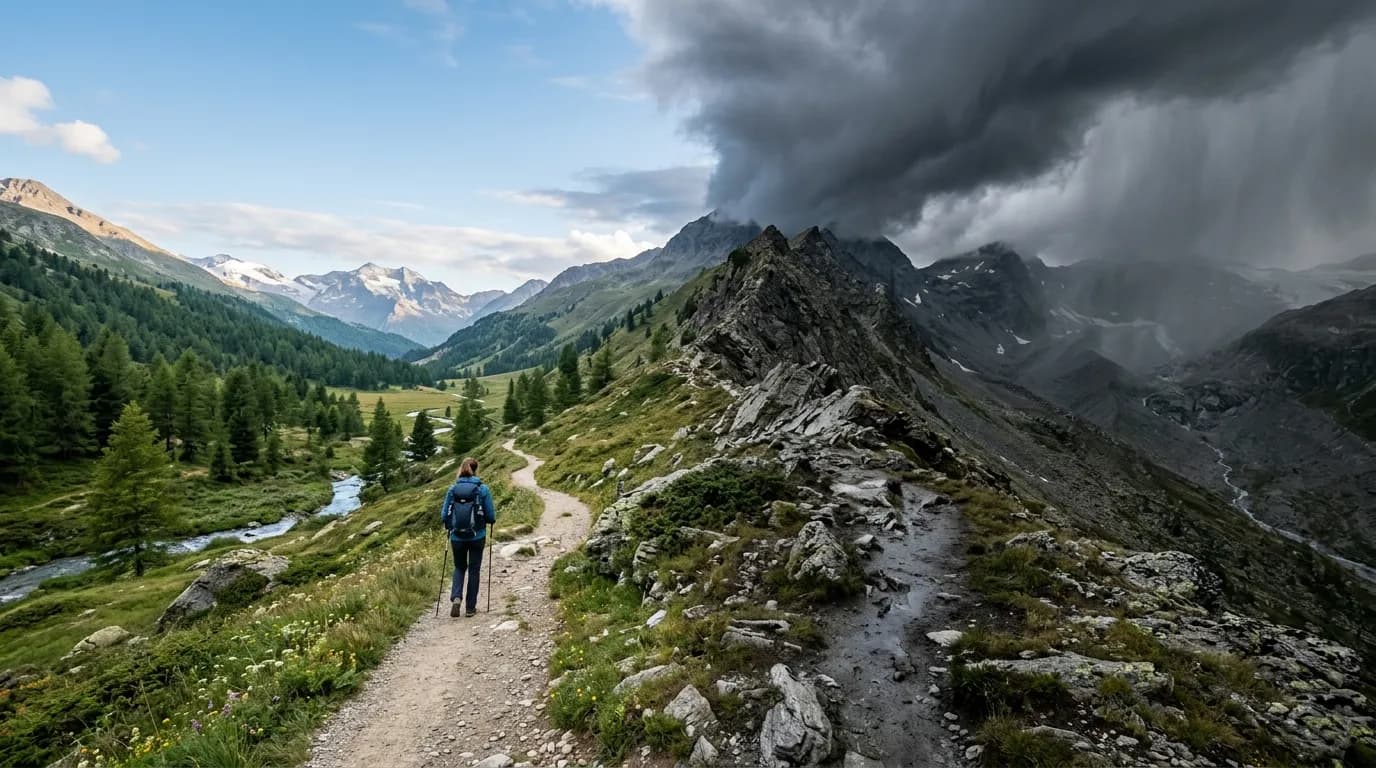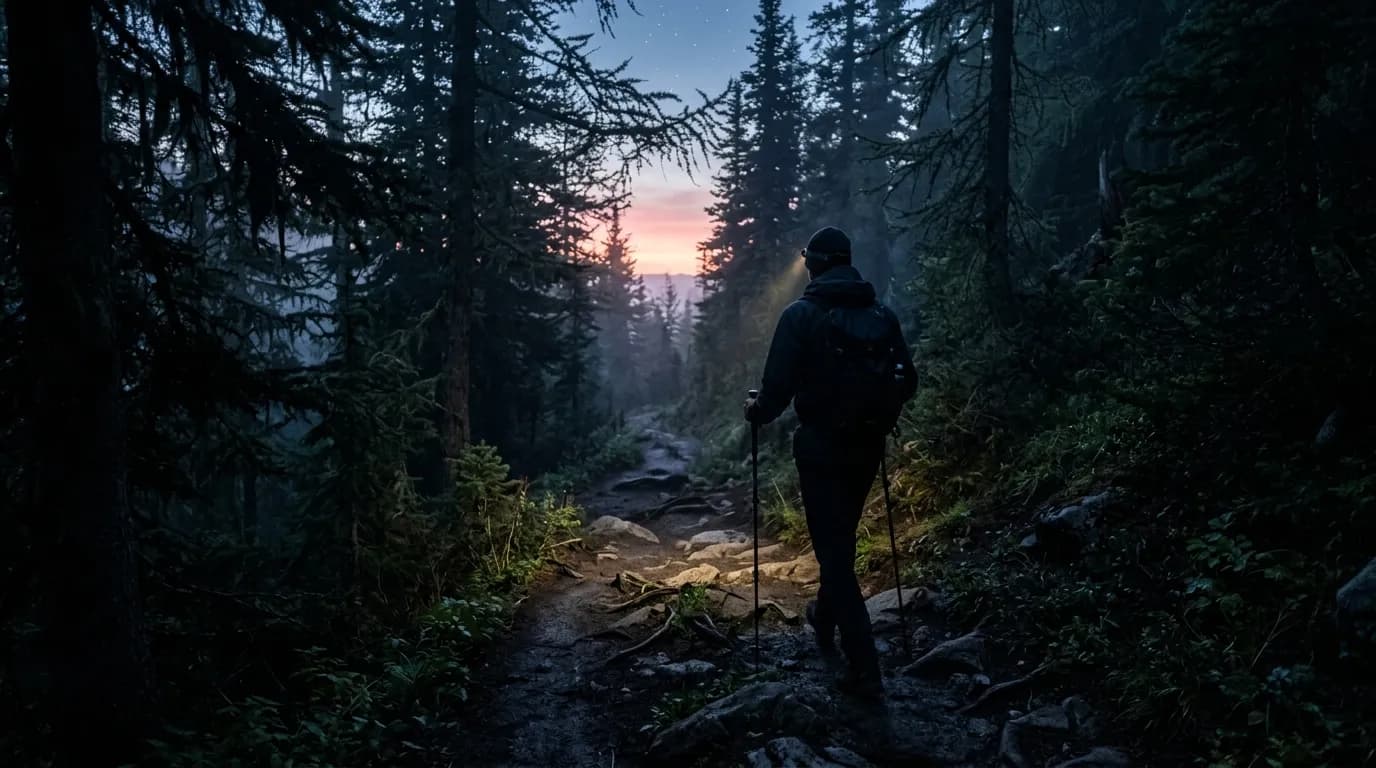
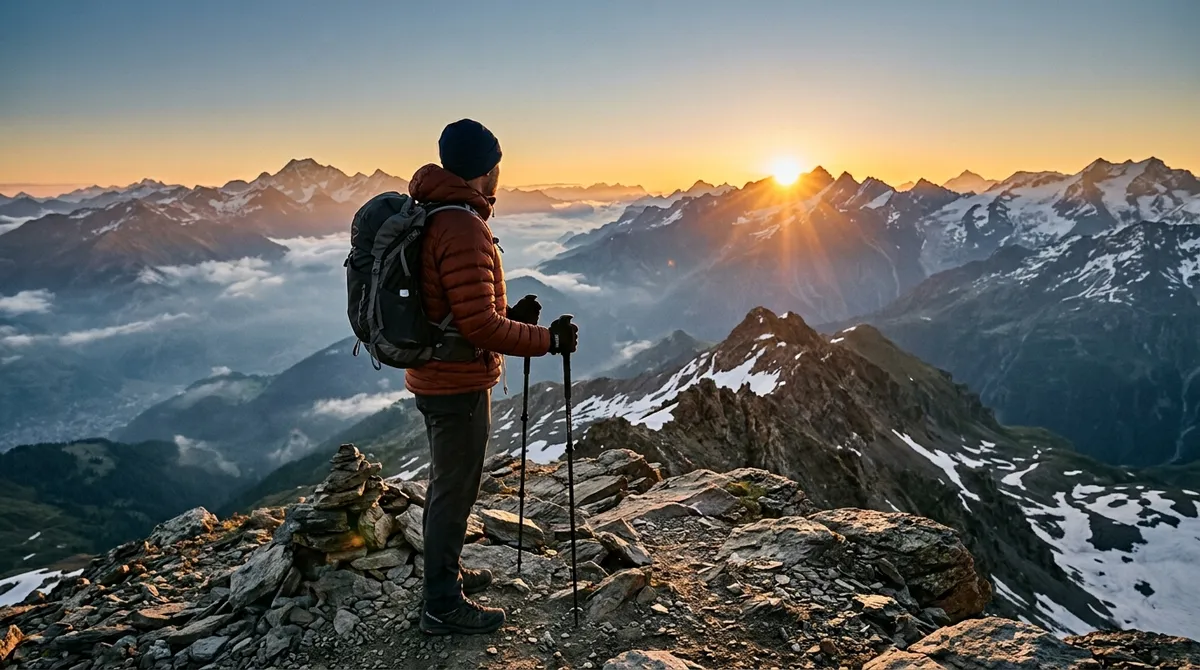
Sunrise hikes sell themselves with photos: pink light on ridges, empty trails, coffee steam in cold air. The part nobody posts is the 3:15 a.m. alarm, the headlamp mile where you question every life choice, and the group that arrives at the viewpoint forty minutes early and shivers in wind that did not exist at the trailhead. Timing a sunrise hike is not about leaving "super early." It is about working backward from the light you want to the pace you actually hike, then adding buffers for darkness, cold, and the human tendency to underestimate forest miles.
This guide helps you pick a leave time that works on paper and on trail. We will cover how to calculate hiking time in the dark, when to start headlamp miles versus when to waste sleep, how weather and season shift sunrise math, and how to set turn-around rules so a dawn objective does not become a tired afternoon gamble. For gear that makes dark starts tolerable, see our headlamp day hike basics kit. For the conversation about when ambition should stop, keep when to turn around on a hike in your back pocket before you commit to a pre-dawn push.
Define the sunrise you are actually chasing
Not every sunrise hike needs a summit. Some of the best dawn light is twenty minutes from the car at a lake shore or east-facing meadow. Clarify the goal: do you want the sun disk breaking at a specific bearing, warm light on a peak face, or simply to walk in cool air before crowds? Each goal has different timing tolerance. Summit sun disks require precision. "Pretty morning light" allows a wider window.
Write down the viewpoint coordinates or name, expected bearing of sunrise for that date, and how much pre-sun glow you want. Alpenglow can be more dramatic than the moment the sun clears the horizon. Many photographers prefer thirty to forty-five minutes before official sunrise; casual hikers often care more about not hiking in full dark on the final scramble.
Also define success without perfection. Cloud bands can hide the disk and still deliver a beautiful hike. If your mood requires a calendar poster or nothing, you will turn small weather uncertainty into a cancellation. If your mood accepts soft light and birdsong, you gain flexibility and sleep.
Work backward from arrival time at the viewpoint
Start with when you want to stand at the viewpoint, not when you want to leave the car. Subtract hiking time from that moment to get trailhead departure. Subtract drive time to get wake-up. Subtract packing and food to get alarm time. This backward chain exposes whether your plan is a dawn stroll or a middle-of-the-night operation.
Example structure: desired viewpoint arrival 5:45 a.m., official sunrise 6:12 a.m., hiking distance four miles with moderate gain, typical pace thirty minutes per mile in daylight. In dark on uneven trail, add twenty-five to forty percent time unless you have hiked this route before. That turns two hours into roughly two hours forty-five. Leave the trailhead around 3:00 a.m. if you want margin for photos and layer adjustments.
Margin is not cowardice. It is heat management and safety. Cold pre-dawn stops steal time when fingers fumble with zippers. Groups regroup. Headlamp batteries dim. A fifteen-minute buffer at the top beats a sprint that raises sweat before you stand still in wind.
Timing worksheet items
- Official sunrise and civil twilight begin times for the date.
- Miles and elevation to viewpoint; note technical sections.
- Your recent pace on similar terrain, loaded pack included.
- Darkness penalty if most miles are pre-twilight.
- Drive time to trailhead at that hour—often faster, sometimes not if gates are timed.
Dark miles: pace, navigation, and headlamp reality
Hiking in darkness changes more than vision. Depth perception weakens. Roots and rocks hide in pooled shadow. You scan closer to your feet, which slows pace. Stream crossings feel louder and less friendly. Groups spread out or bunch too tight. All of this is normal; your timing must account for it.
Use a headlamp setup you trust—details in our headlamp basics guide—and carry backup light. Download offline maps and know major junctions by distance, not just by sight. If the route relies on cairns or faint social trails, reconsider a dark start unless you have daylight backup time. Getting lost before sunrise is how dawn hikes become search stories.
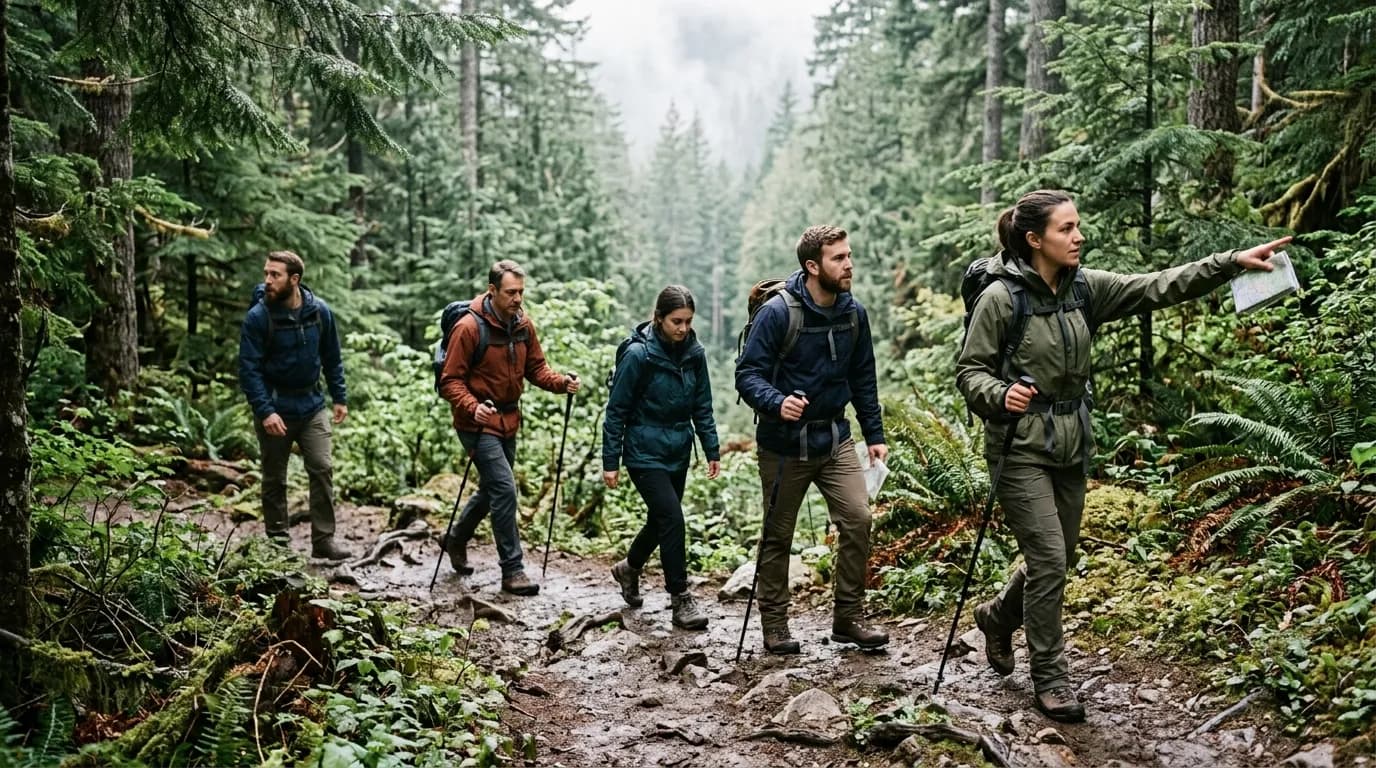
Assign a navigator and a sweep in the group. Agree on regroup intervals. Dark hiking amplifies anxiety; calm voices and predictable stops keep the mood steady. If someone hates night walking, do not moralize—split roles or pick a later-start route with partial dark miles only.
Season and latitude change everything
June sunrise near forty-five degrees north might be before 5:30 a.m.; December pushes later but brings much longer pre-dawn cold. Summer may mean you need less insulation at the trailhead and more water than you expect by 8:00 a.m. Shoulder seasons can mean ice on shaded sections while the parking lot feels mild.
Check civil twilight, not just sunrise. Civil twilight begins when the sun is six degrees below the horizon—often enough light to dim headlamps on open trail, still not enough in dense forest. Mountain horizons also delay visible sun even after official sunrise time; east-facing ridges above you may block the disk longer than apps suggest.
Altitude adds temperature drop. A plan that works in town may be brutal at the viewpoint. Pack a puffy, gloves, and a wind layer you can wear standing still for thirty minutes. Sweat from a fast dark approach becomes chill fast when you stop for photos.
Route selection for sunrise success
Choose routes with safe dark sections: wide trail, gentle grade, no exposed scrambling before light. Save knife ridges and loose talus for after dawn. If the final half mile is class two above treeline, schedule arrival at treeline before full light, then proceed carefully.
Loops with known junctions beat obscure shortcuts in darkness. Out-and-backs let you turn when timing slips without navigation drama. Consider whether the viewpoint faces east; a north-facing summit may never give you the classic disk photo even if the hike is beautiful.
Have a lower bailout viewpoint. If pace slips, you can still win the morning at a sub-summit rather than pushing unsafe sections to "make" sunrise. That decision pairs with turn-around principles: the best dawn hike is the one where everyone descends with working knees and good humor.
Leave-time scenarios and how they feel on the ground
Scenario A: short lake walk, one mile. Official sunrise 6:10 a.m., goal soft glow. Leave trailhead 5:15 a.m., arrive 5:35 a.m. Minimal headlamp time, family-friendly, low risk. Great first sunrise hike.
Scenario B: moderate summit, six miles round trip. Goal standing on summit for sun disk. Dark forest for first two miles, open ridge near twilight. Leave 2:45 a.m., accept fatigue later in the day, prioritize headlamp navigation and warm layers at top.
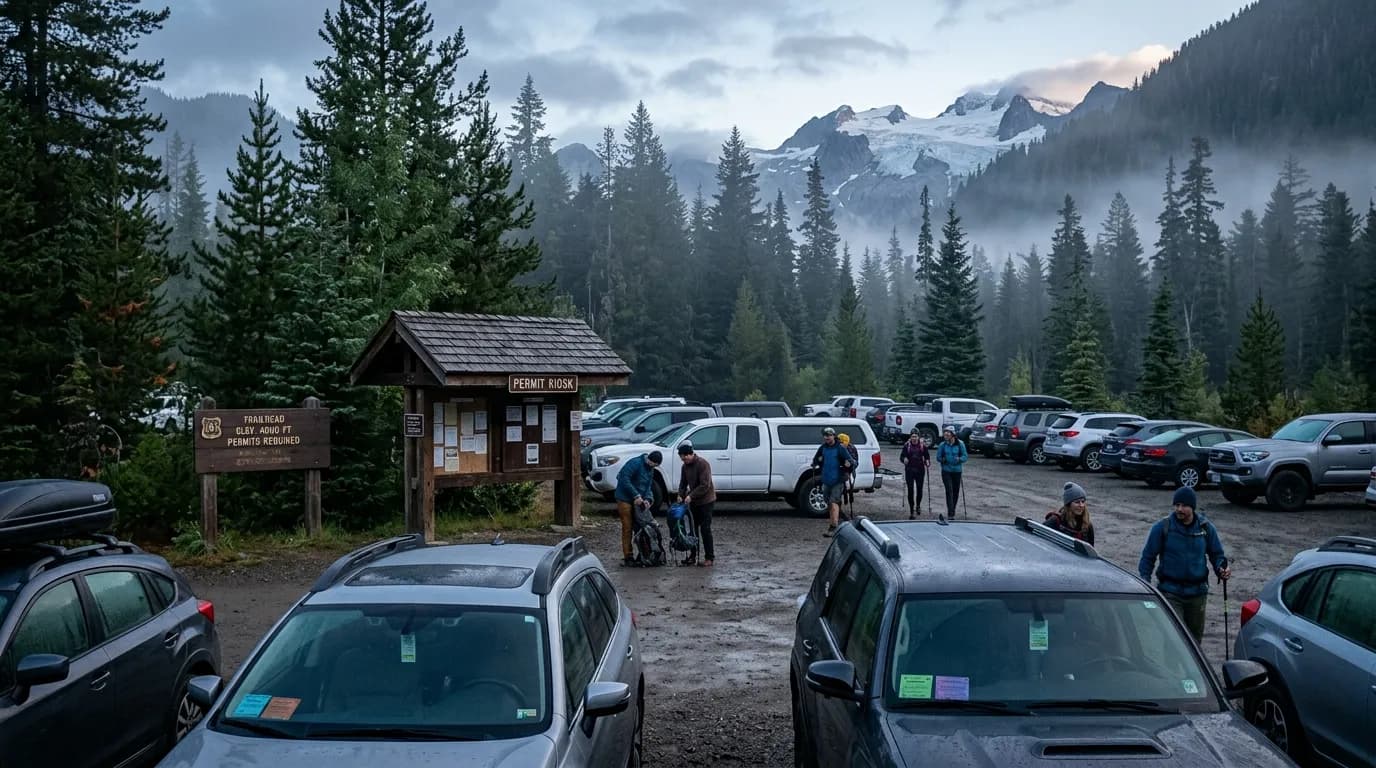
Scenario C: famous crowded viewpoint. Add twenty minutes buffer for parking weirdness and permit checks even pre-dawn. Full lot at 3:00 a.m. happens on peak weekends. Consider weekday or lesser-known parallel trail.
Write your scenario like a script. Who drives, who makes coffee, who confirms weather at 10:00 p.m. Scripts reduce 4:00 a.m. arguments.
Weather checks specific to dawn starts
Overcast skies can erase the sun disk but still offer calm hiking. High clouds sometimes produce better color than clear horizons. Low valley fog can create inversions you will not see from home. Check mountain forecasts, not only town icons. Wind at the viewpoint matters more than wind at the car.
Hard no-go signs: active thunderstorms in the forecast window, high wind advisories on exposed ridges, dense fog on routes with cliff edges, or temperature so low your group lacks gear to stand still safely. Soft maybe signs: partial cloud cover—go, but adjust expectations. Rain with warm layers can still be fine on forest trails; rain on alpine scrambles is different.
Energy management after the sun is up
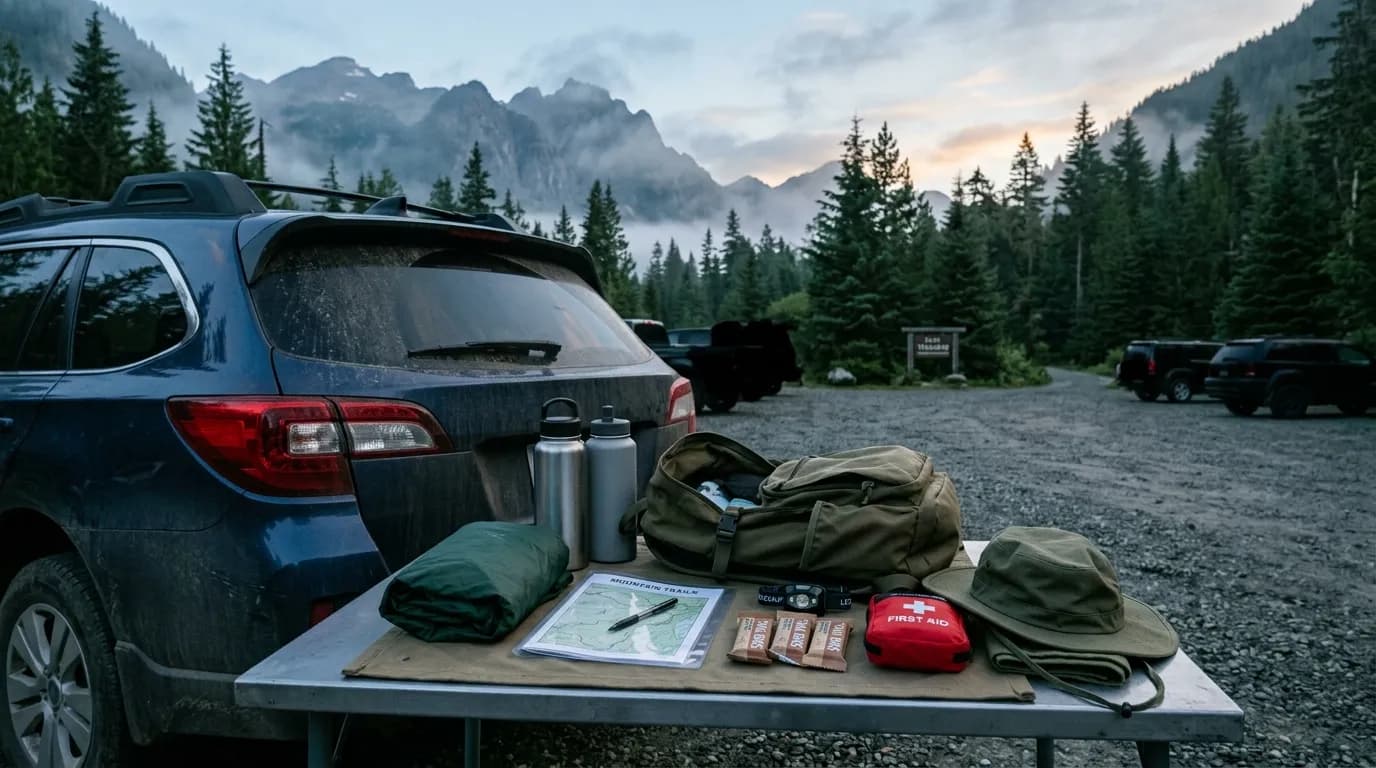
Many sunrise hikes end with a long tired day because all the hard miles happened before breakfast. Plan food: quick calories before you start, something substantial at the viewpoint if safe to eat without littering, and hydration you will actually drink in the dark. Caffeine helps some hikers and wrecks others; know your stomach.
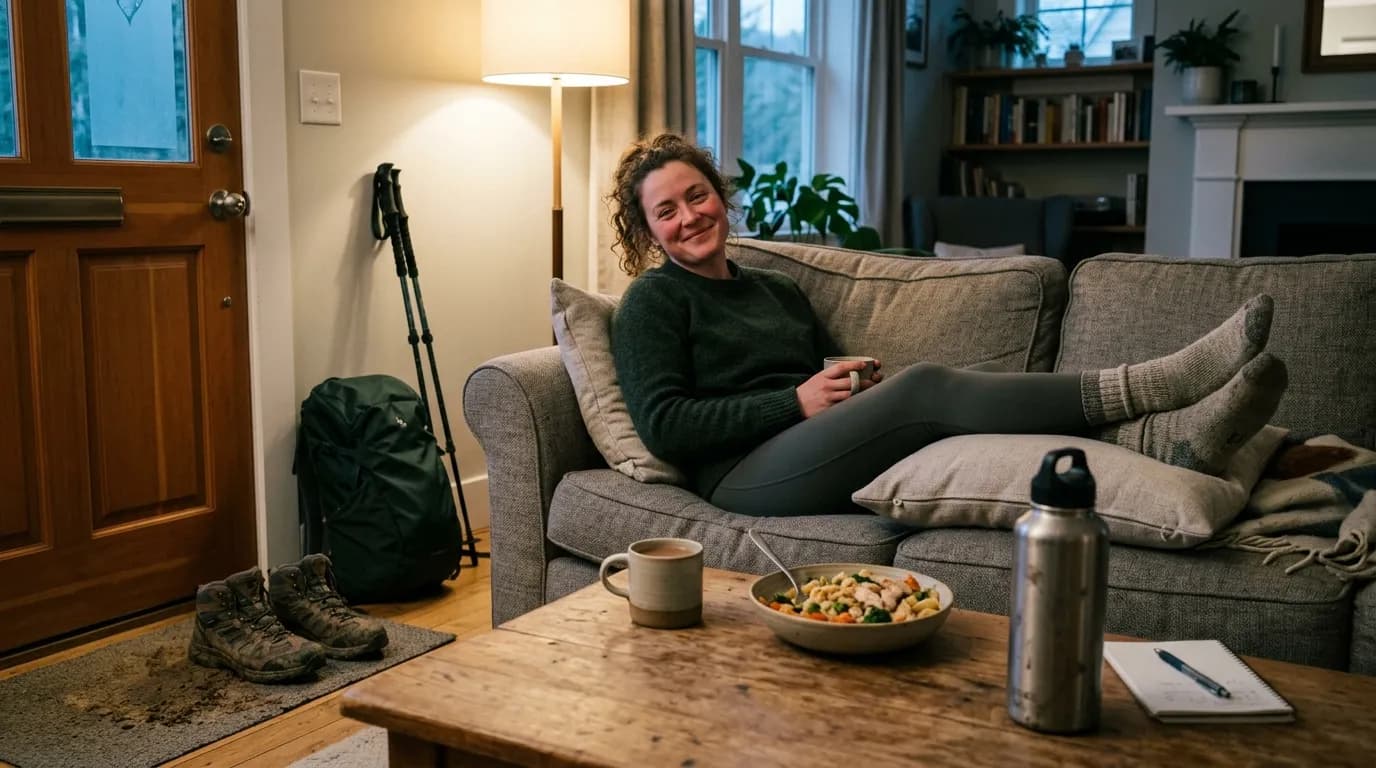
Decide in advance whether you descend immediately after light or nap at the top. Naps can be lovely with zero wind and good pads; they become hypothermia risks on exposed summits. If you have a full day planned after sunrise, keep the morning push from consuming every spare watt—see recovery notes linked from our weekend guides.
Common timing mistakes
- Using fastest daylight pace for all dark miles.
- Ignoring gate open times on forest roads.
- Forgetting that hiking east may mean long shadows still hide hazards after sunrise time.
- Arriving an hour early with inadequate insulation.
- Pushing past safe turn-around because "we're almost there" in dim light.
- Skipping backup light and offline maps because the route is "easy."
Putting it together: a repeatable formula
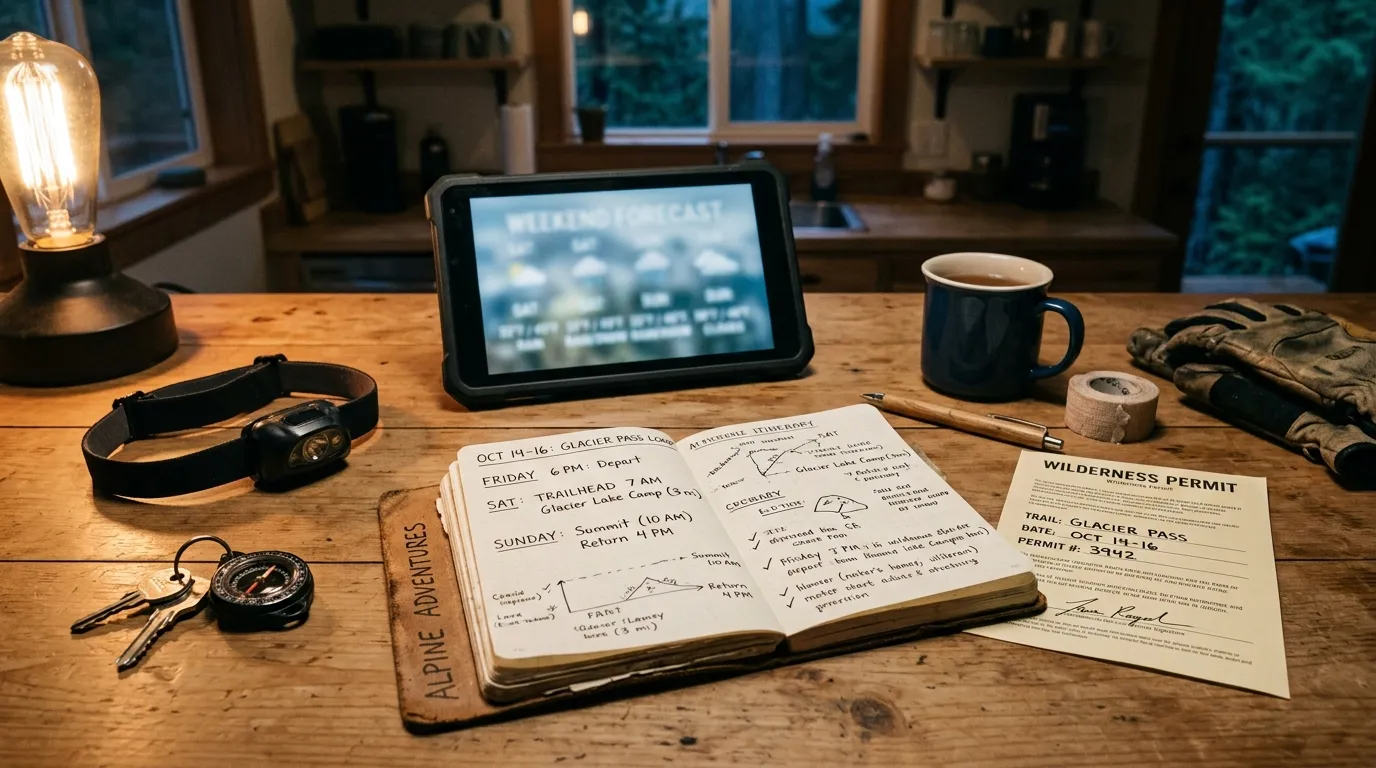
Pick viewpoint and date. Record sunrise and civil twilight. Estimate daylight pace on this terrain, add dark penalty, add ten to fifteen minutes of stop time. Subtract total from desired arrival to get trailhead leave time. Subtract drive and prep for alarm. Sanity-check against sleep budget—if alarm time is incompatible with safe driving, pick a closer viewpoint or a later light goal.
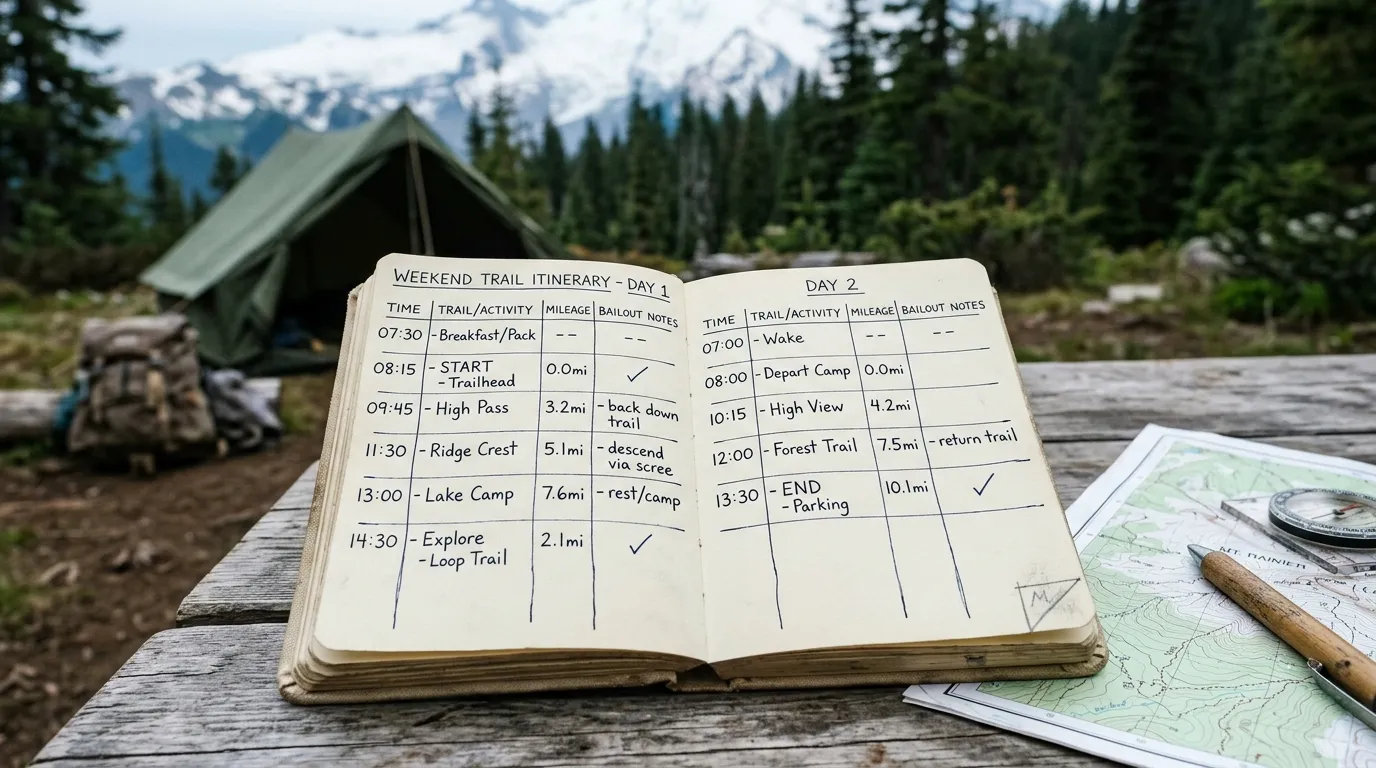
Share the plan with the group as a table, not a vibe. "Leave trailhead 3:10 a.m." is clearer than "super early." Confirm turn-around time if the viewpoint is not reached by a set hour. Enjoy the quiet miles; the light is a bonus to a well-timed walk, not a contract with the sky.
Using apps and almanac data without over-trusting them
Sunrise apps provide local time for a reference elevation. Your viewpoint may sit higher or lower, shifting visible sun later or earlier. Use apps for civil twilight and moon phase—moonlight on open trail can reduce headlamp dependency on clear nights. Check moonset time; a moon that drops before your final dark mile means deeper blackness exactly when fatigue peaks.
Save screenshots of timing data offline. Battery dies faster in cold pre-dawn hours. Write leave time, turnaround time, and emergency contact on paper in your pack lid.
Family and mixed-experience groups
Sunrise hikes with kids or beginners need shorter dark sections and warmer bail options. Choose viewpoints under two miles one way when anyone is new to night walking. Assign a buddy system. Pack extra layers sized for the slowest person. Celebrate partial success—a meadow at first light beats forcing a cranky summit push that poisons future trips.
Older hikers or those with knee issues may prefer viewpoints reachable without steep descents in dim light. Downhill in dark causes more falls than uphill. Plan routes where the return after sunrise happens in daylight on gentler grades.
Photography timing without freezing everyone
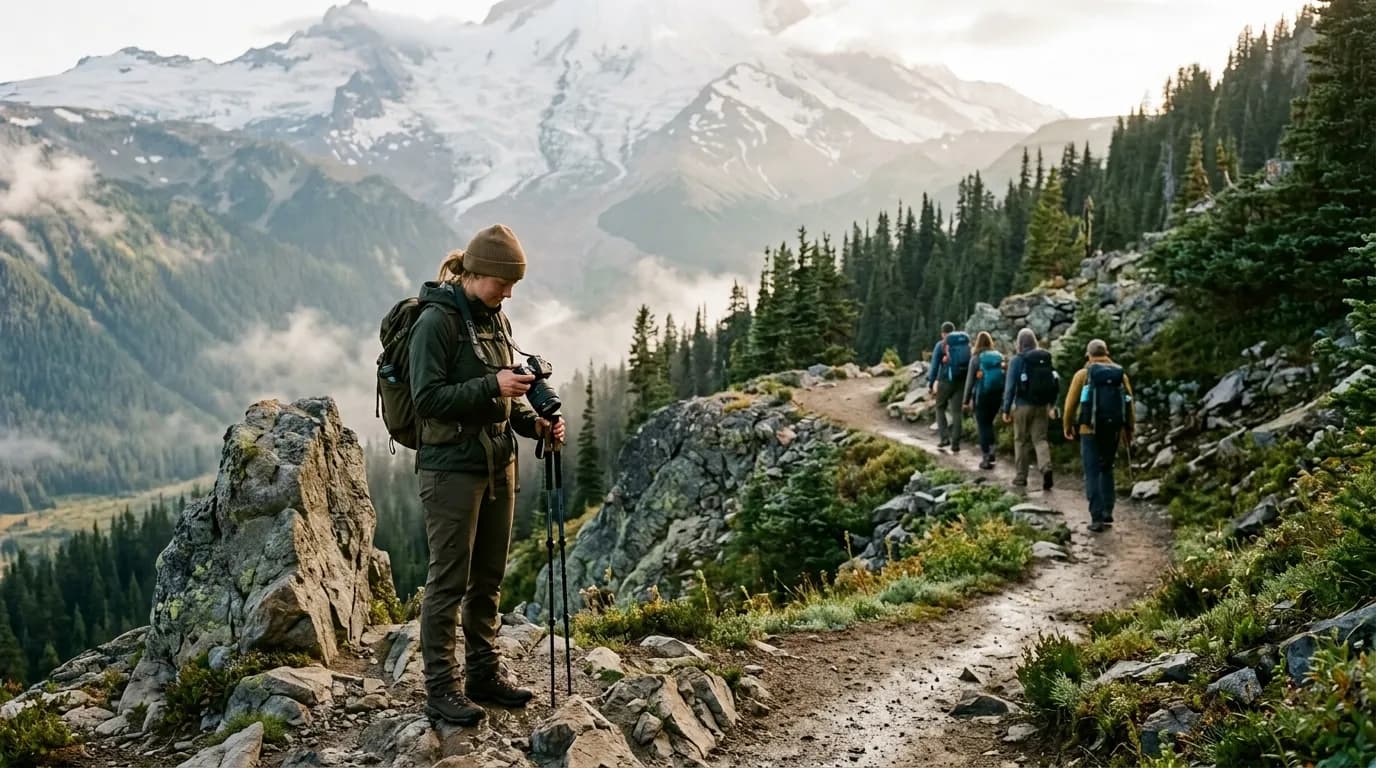
Photographers often want thirty minutes of bracketed shots while others shiver. Set expectations: five to ten minutes at the viewpoint for group photos, then optional extended shoot for those who packed hand warmers and extra puffy layers. The hike is a shared trip, not a solo shoot with porters.
Post-sunrise descent timing
After the light show, decide whether to descend immediately or continue a longer loop. Crowds arrive on popular trails between 8:00 and 10:00 a.m.; your early start may mean quiet descent while day hikers ascend. Use that window if you planned a bigger mile day. If you are done, descend before heat builds on south-facing returns.
Alarms, sleep, and the night before
Pre-sunrise starts fail on sleep debt more than on math. Protect the prior evening: pack before dinner, limit alcohol, set two alarms with one across the room, and agree on a no-snooze policy for the driver. If you cannot get four hours of sleep and still drive safely, pick a closer viewpoint or a later civil-twilight start. Fatigue on dark forest roads is a real hazard—treat it like weather.
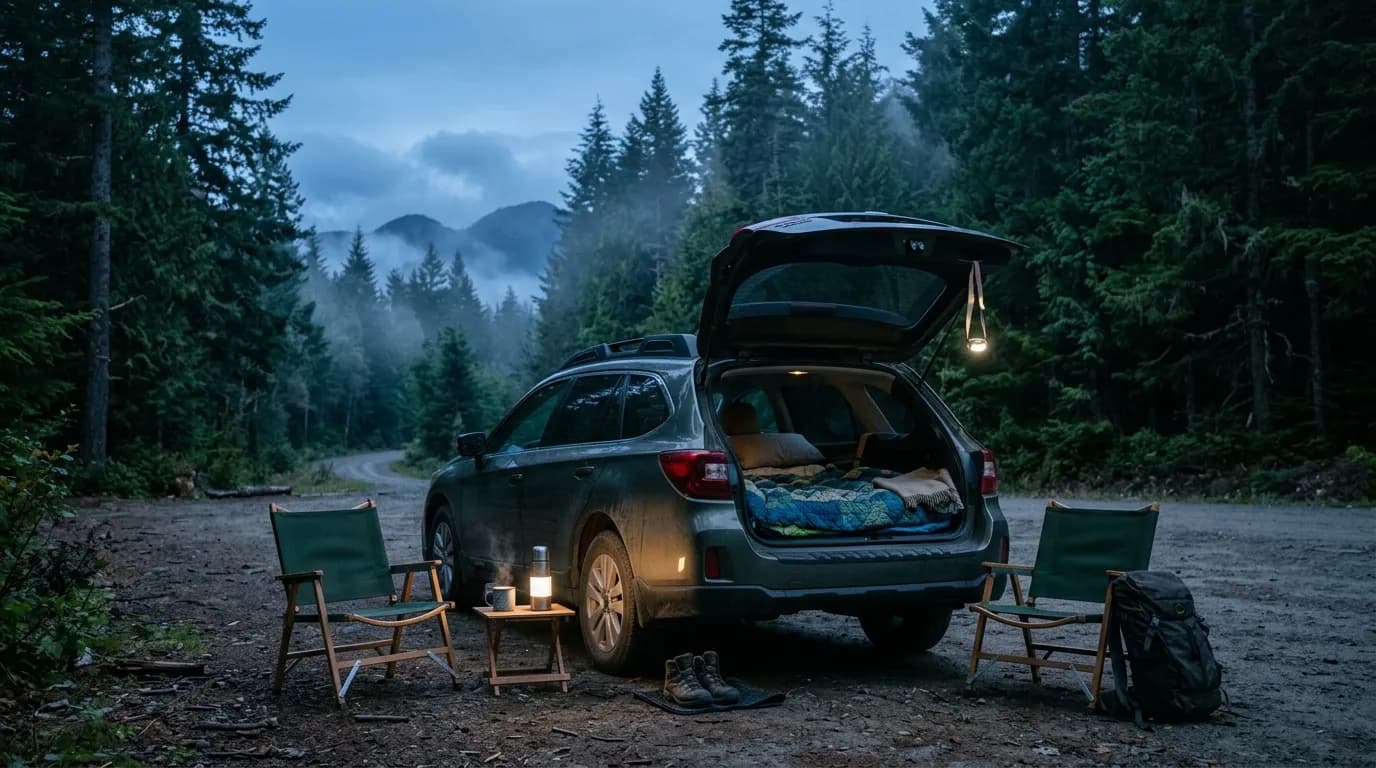
Car sleep near the trailhead can buy an hour compared to driving from home. Pair timing math with overnight proximity when the alarm would otherwise be cruel. Even ninety minutes of extra sleep changes dark-mile navigation and group patience.
Checklist you can copy each trip
- Viewpoint, date, sunrise, civil twilight times saved offline.
- Dark-mile pace penalty applied to distance.
- Trailhead leave time, drive time, alarm time written.
- Turn-around time if viewpoint not reached.
- Headlamp plus backup; layers for standing still.
- Group aligned on sub-summit success.
FAQ
How early is too early to leave for a sunrise hike?
Too early is when sleep debt makes driving unsafe, dark miles exceed your navigation skill on that route, or you arrive more than forty-five minutes before useful light without insulation to stand still. If the math requires leaving before you can sleep four hours and drive legally, pick a closer viewpoint or chase civil twilight instead of the exact disk moment.
Do I need a headlamp for the entire hike?
Usually only until civil twilight or until forest canopy opens—often thirty to ninety minutes on typical summit pushes. Carry backup light anyway. Moonlit nights on open trail may allow dimmer settings; dense forest still needs full beam until you can see footing without strain.
What pace should I use for dark-mile calculations?
Add twenty-five to forty percent to your daylight pace on the same terrain unless you have repeated this route at night. Technical tread, stream crossings, and group size push toward forty. Smooth wide paths at the lower end. Track actual dark pace after trips to refine your personal formula.
Is a sunrise hike safe for kids?
Yes on short, familiar, wide trails with warm layers and minimal dark distance—under a mile each way is a good first test. Skip exposed scrambles and long pre-dawn forest sections until everyone is comfortable with night walking. Pack extra snacks and define sub-summit success so tired children never feel like they failed the mission.
Related Reading
- Headlamp and Day-Hike Basics Kit — light setup for dark starts
- When to Turn Around on a Hike — if pace slips before the viewpoint
- Hiking Weather Go / No-Go Checklist — dawn-specific weather hard stops
- How to Plan a Weekend Trail Trip — slot sunrise objectives into a full weekend
Dawn starts add fatigue and navigation risk. Adjust plans to your group's experience and never trade sleep-safe driving for a photo.
Sunrise hikes reward arithmetic more than bravery. Work backward, respect dark miles, dress for standing still in wind, and give yourselves permission to celebrate a sub-summit morning when the sky cooperates only halfway. The photo matters less than the feeling of watching a day begin while everyone you hiked with is still safe beside you.